


Both President Ma Ying-jeou’s (馬英九) and the Cabinet’s approval ratings have declined because of growing resentment over the government’s handling of recent incidents, from the Dapu farmland controversy to the Central Taiwan Science Park, a new survey shows.
The survey was conducted by Global Views magazine’s Survey Research Center on Monday and Tuesday and polled respondents’ approval of, and confidence in, government performance.
Confidence in Ma was at 41.9 percent, a decline of 2.9 percent from last month. Ma’s approval rating also fell 1.3 percent to 31 percent, while his disapproval rating rose from 56.2 percent last month to 57 percent, the survey showed.
Premier Wu Den-yih’s (吳敦義) approval rating sank 8 percent to 34.6 percent, which was the lowest since he polled 34.4 percent when taking office last year.
The survey also showed a low approval rating for Cabinet officials in general, with only 26.5 percent of respondents saying they were satisfied with the Cabinet’s performance.
The poll surveyed 1,018 Taiwanese, with a margin of error of plus or minus 3.1 percentage points.
Director of the center Tai Li-an (戴立安) attributed the low approval rating and confidence index on Ma, Wu and the Cabinet to the government’s poor crisis-solving abilities in the wake of several incidents.
The administration has been stumbling to address the public outcry over the Miaoli County Government’s expropriation of a total of 28 hectares of farmland in Jhunan’s Dapu Borough (大埔). Its handling of the issue came under fire even after Wu traveled to the borough and offered deals to the area’s farmers.
Public frustrations over the government’s handling of pollution from a petrochemical complex owned by the Formosa Plastics Group in Yunlin County’s Mailiao Township (麥寮) and the expansion of the Central Taiwan Science Park’s Houli (后里) site were also reflected in the survey, he said.
He added that following the signing of the cross-strait Economic Cooperation Framework Agreement (ECFA), the Ma administration has failed to present other solid policies or issues that attract public support. The government’s attempt to boost support by promoting the ECFA may not be effective because the economic pact has not taken effect yet, Tai said.

Conflict with Taiwan could leave China with “massive economic disruption, catastrophic military losses, significant social unrest, and devastating sanctions,” a US think tank said in a report released on Monday. The German Marshall Fund released a report titled If China Attacks Taiwan: The Consequences for China of “Minor Conflict” and “Major War” Scenarios. The report details the “massive” economic, military, social and international costs to China in the event of a minor conflict or major war with Taiwan, estimating that the Chinese People’s Liberation Army (PLA) could sustain losses of more than half of its active-duty ground forces, including 100,000 troops. Understanding Chinese
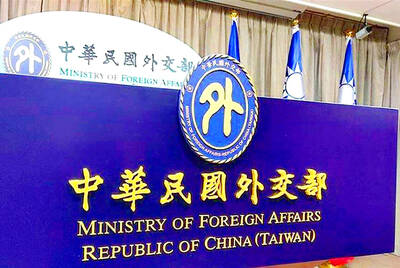
The Ministry of Foreign Affairs (MOFA) yesterday said it is closely monitoring developments in Venezuela, and would continue to cooperate with democratic allies and work together for regional and global security, stability, and prosperity. The remarks came after the US on Saturday launched a series of airstrikes in Venezuela and kidnapped Venezuelan President Nicolas Maduro, who was later flown to New York along with his wife. The pair face US charges related to drug trafficking and alleged cooperation with gangs designated as terrorist organizations. Maduro has denied the allegations. The ministry said that it is closely monitoring the political and economic situation

UNRELENTING: China attempted cyberattacks on Taiwan’s critical infrastructure 2.63 million times per day last year, up from 1.23 million in 2023, the NSB said China’s cyberarmy has long engaged in cyberattacks against Taiwan’s critical infrastructure, employing diverse and evolving tactics, the National Security Bureau (NSB) said yesterday, adding that cyberattacks on critical energy infrastructure last year increased 10-fold compared with the previous year. The NSB yesterday released a report titled Analysis on China’s Cyber Threats to Taiwan’s Critical Infrastructure in 2025, outlining the number of cyberattacks, major tactics and hacker groups. Taiwan’s national intelligence community identified a large number of cybersecurity incidents last year, the bureau said in a statement. China’s cyberarmy last year launched an average of 2.63 million intrusion attempts per day targeting Taiwan’s critical
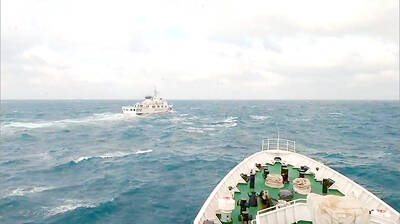
‘SLICING METHOD’: In the event of a blockade, the China Coast Guard would intercept Taiwanese ships while its navy would seek to deter foreign intervention China’s military drills around Taiwan this week signaled potential strategies to cut the nation off from energy supplies and foreign military assistance, a US think tank report said. The Chinese People’s Liberation Army (PLA) conducted what it called “Justice Mission 2025” exercises from Monday to Tuesday in five maritime zones and airspace around Taiwan, calling them a warning to “Taiwanese independence” forces. In a report released on Wednesday, the Institute for the Study of War said the exercises effectively simulated blocking shipping routes to major port cities, including Kaohsiung, Keelung and Hualien. Taiwan would be highly vulnerable under such a blockade, because it


 RSS
RSS