


Taiwan and China have agreed that an economic cooperation commission to be established under a recently signed trade pact will be headed by vice ministerial-level officials from each side, government sources said yesterday.
Vice Minister of Economic Affairs Francis Liang (梁國新) met with Chinese Vice Minister of Commerce Jiang Zengwei (姜增偉) in Beijing during an investment-soliciting visit last week. The pair discussed the structure and operation guidelines of the new body to be formed under the Economic Cooperation Framework Agreement (ECFA) signed on June 29, the sources said.
During the meeting, Liang expressed Taiwan’s expectation that a vice ministerial-level official from each side will be assigned to head the new commission.
The Chinese side did not oppose the proposal, the sources said, adding that as the commission will serve as a platform for negotiations on cross-strait economic and trade affairs, it will be manned by officials in the relevant fields.
The commission will become operational once the ECFA clears the legislative floor, the sources said.
High on the agenda of the new cross-strait economic cooperation commission will be negotiating four key agreements to fulfill the ECFA’s ultimate goals, the sources said.
The ECFA follow-up agreements will cover investment, merchandise trade liberalization, service market opening and a trade dispute settlement mechanism.
Talks will first focus on investment and trade dispute settlement, the sources said, adding that Taiwan hopes the new investment agreement will offer well-devised protection for Taiwanese investors in China.
The Legislative Yuan is scheduled to hold a provisional session next week to screen the ECFA.

Conflict with Taiwan could leave China with “massive economic disruption, catastrophic military losses, significant social unrest, and devastating sanctions,” a US think tank said in a report released on Monday. The German Marshall Fund released a report titled If China Attacks Taiwan: The Consequences for China of “Minor Conflict” and “Major War” Scenarios. The report details the “massive” economic, military, social and international costs to China in the event of a minor conflict or major war with Taiwan, estimating that the Chinese People’s Liberation Army (PLA) could sustain losses of more than half of its active-duty ground forces, including 100,000 troops. Understanding Chinese
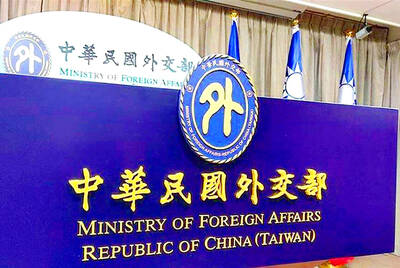
The Ministry of Foreign Affairs (MOFA) yesterday said it is closely monitoring developments in Venezuela, and would continue to cooperate with democratic allies and work together for regional and global security, stability, and prosperity. The remarks came after the US on Saturday launched a series of airstrikes in Venezuela and kidnapped Venezuelan President Nicolas Maduro, who was later flown to New York along with his wife. The pair face US charges related to drug trafficking and alleged cooperation with gangs designated as terrorist organizations. Maduro has denied the allegations. The ministry said that it is closely monitoring the political and economic situation
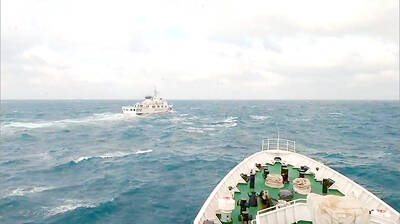
‘SLICING METHOD’: In the event of a blockade, the China Coast Guard would intercept Taiwanese ships while its navy would seek to deter foreign intervention China’s military drills around Taiwan this week signaled potential strategies to cut the nation off from energy supplies and foreign military assistance, a US think tank report said. The Chinese People’s Liberation Army (PLA) conducted what it called “Justice Mission 2025” exercises from Monday to Tuesday in five maritime zones and airspace around Taiwan, calling them a warning to “Taiwanese independence” forces. In a report released on Wednesday, the Institute for the Study of War said the exercises effectively simulated blocking shipping routes to major port cities, including Kaohsiung, Keelung and Hualien. Taiwan would be highly vulnerable under such a blockade, because it

UNRELENTING: China attempted cyberattacks on Taiwan’s critical infrastructure 2.63 million times per day last year, up from 1.23 million in 2023, the NSB said China’s cyberarmy has long engaged in cyberattacks against Taiwan’s critical infrastructure, employing diverse and evolving tactics, the National Security Bureau (NSB) said yesterday, adding that cyberattacks on critical energy infrastructure last year increased 10-fold compared with the previous year. The NSB yesterday released a report titled Analysis on China’s Cyber Threats to Taiwan’s Critical Infrastructure in 2025, outlining the number of cyberattacks, major tactics and hacker groups. Taiwan’s national intelligence community identified a large number of cybersecurity incidents last year, the bureau said in a statement. China’s cyberarmy last year launched an average of 2.63 million intrusion attempts per day targeting Taiwan’s critical


 RSS
RSS