


Authorities were searching for clues yesterday as to what touched off a sudden stampede at the Love Parade dance party in Duisburg, Germany, that killed at least 19 people.
About 15 others were seriously hurt and dozens more sustained lighter injuries as a crush occurred in or around a tunnel leading to the day-long open air festival, attended, officials said, by 1.4 million revelers.
“According to our current information, 18 people [now 19] have died and around 80 people have been injured at the entrance to the festival grounds,” the mayor of the host city Duisburg, Adolf Sauerland, said in a statement.
The exact causes of the disaster were unclear and it was not certain whether foreigners were among the dead at the event, which attracts thousands from all around the world.
Police initially said the crush happened in the tunnel itself, but an official from Duisburg, a city of 500,000 just north of Duesseldorf, said others also died on steps leading toward it.
Most revelers remained unaware of the incident and continued dancing and listening to the music long afterwards as authorities kept a lid on the news to avoid another panic.
Eyewitnesses said the horrific scenes were “unimaginable.”
One young female partygoer told Die Welt daily: “Everywhere you looked, there were people with blue faces.”
“My boyfriend pulled me out over the bodies, otherwise we would both have died in there. How can I ever forget those faces. The faces of the dead,” she said.
Another witness told the NTV rolling news channel that several people had fallen to the ground and had been trampled underfoot.
“Some people were on the ground while others were climbing up the walls,” said the witness, Udo Sandhoefer.
Police officers and security officials tried to get into the tunnel, “but it was already too full,” he said.
“People kept trying to get into the tunnel for about 10 minutes, then realized what had happened and turned around,” he said.
Another 18-year-old witness named Marius told the Bild daily: “There was no way of escaping. There was a wall of people in front of me. I was scared I was going to die.”
Panicked friends and family sent a raft of messages on Twitter in a bid to locate missing partygoers.
German Chancellor Angela Merkel said she was “aghast” at the catastrophe.
“In these difficult hours, my thoughts are with the relatives of the victims. They have my sympathy and my condolences,” Merkel said. “Young people came to party. Instead, there was death and injury. I am aghast and saddened by the sorrow and the pain.”
German President Christian Wulff said: “Such a catastrophe that has caused death, sorrow and pain during a peaceful festival involving young people from many countries is dreadful.”
Shock turned quickly to anger as partygoers criticized organizers for only allowing one entrance through the tunnel to the festival.
There was “simply nowhere to get out” of the area around the tunnel, one survivor told WDR television.

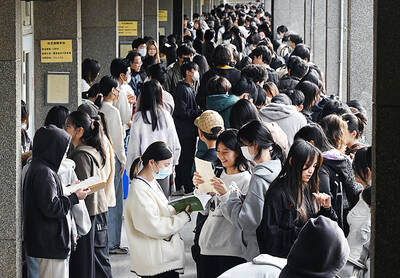
A global survey showed that 60 percent of Taiwanese had attained higher education, second only to Canada, the Ministry of the Interior said. Taiwan easily surpassed the global average of 43 percent and ranked ahead of major economies, including Japan, South Korea and the US, data from the Organisation for Economic Co-operation and Development (OECD) for 2024 showed. Taiwan has a high literacy rate, data released by the ministry showed. As of the end of last year, Taiwan had 20.617 million people aged 15 or older, accounting for 88.5 percent of the total population, with a literacy rate of 99.4 percent, the data

NEW LOW: The council in 2024 based predictions on a pessimistic estimate for the nation’s total fertility rate of 0.84, but last year that rate was 0.69, 17 percent lower An expected National Development Council (NDC) report expects the nation’s population to drop below 12 million by 2065, with the old-age dependency ratio to top 100 percent sooner than 2070, sources said yesterday. The council is slated to release its latest population projections in August, using an ultra-low fertility model, the sources said. The previous report projected that Taiwan’s population would fall to 14.37 million by 2070, but based on a new estimate of the total fertility rate (TFR) — the average number of children born to a woman over her lifetime — the population is expected to reach 12 million by
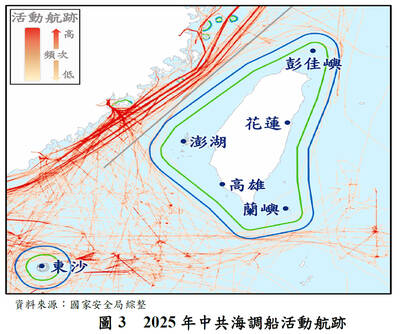
INTENSIFYING THREATS: Beijing’s tactics include massive attacks on the government service network, aircraft and naval vessel incursions and damaging undersea cables China is prepared to interfere in November’s nine-in-one local elections by launching massive attacks on the Taiwanese government’s service network (GSN), a report published by the National Security Bureau showed. The report was submitted to the Legislative Yuan ahead of the bureau’s scheduled briefing at the Foreign Affairs and National Defense Committee tomorrow. The national security team has identified about 13,000 suspicious Internet accounts and 860,000 disputed messages, the bureau said of China’s cognitive warfare against Taiwan. The disputed messages focus on major foreign affairs, national defense and economic issues, which were produced using generative artificial intelligence (AI) and distributed through Chinese

COUNTERING HOSTILITY: The draft bill would require the US to increase diplomatic pressure on China and would impose sanctions on those who sabotage undersea cable networks US lawmakers on Thursday introduced a bipartisan bill to bolster the resilience of Taiwan’s submarine cables to counter China’s hostile activities. The proposal, titled the critical undersea infrastructure resilience initiative act, was cosponsored by Republican representatives Mike Lawler and Greg Stanton, and Democratic Representative Dave Min. US Senators John Curtis and Jacky Rosen also introduced a companion bill in the US Senate, which has passed markup at the chamber’s Committee on Foreign Relations. The House’s version of the bill would prioritize the deployment of sensors to detect disruptions or potential sabotage in real-time and enhance early warning capabilities through global intelligence sharing frameworks,


 RSS
RSS