


There were chuckles and sniggers in Qatar last month when US Secretary of State Hillary Clinton warned that a military dictatorship was imminent in Iran. Threatening the US’ most intransigent adversary, Clinton seems to have been oblivious to her audience: educated Arabs in the Middle East where the US’ military presence has long propped up several dictators.
Of course, by her own standards, Clinton was being remarkably nuanced and sober: During the presidential campaign in 2008 she promised to “obliterate” Iran. An over-eager cheerleader of former US president George W. Bush’s administration’s serial bellicosity, Clinton exemplifies US President Barack Obama’s essential continuity with previous US foreign policymakers — despite the president’s many emollient words to the contrary. Clinton has also “warned” China with an officiousness redolent of the 1990s when her husband, former US president Bill Clinton, tried to sort out the New World Order.
However, the illusions of Western power that proliferated in the 1990s now lie shattered. No longer as introverted as before, China contemptuously dismissed Clinton’s warnings. The Iranians did not fail to highlight US skullduggery in their oil-rich neighborhood. However, Clinton is not alone among Anglo-American leaders in failing to recognize how absurdly hollow their quasi-imperial rhetoric sounds in the post-Sept. 11 political climate.
Visiting India last year, British Foreign Minister David Miliband hectored Indian politicians on the causes of terrorism, and was roundly rebuffed. Summing up the general outrage among Indian elites, a leading English-language daily editorialized that the British foreign secretary had “yet to be house-trained.” US Treasury Secretary Timothy Geithner provoked howls of laughter in his Chinese audience when he assured them that China’s assets tied up in US dollars were safe.
As foreign secretary of a nation complicit in two recent terrorist-recruiting wars, Miliband could have been a bit more modest. Resigned to financing the US’ massive deficits with Chinese-held dollars, Geithner could have been a bit less strident.
But no: Old reflexes, born of the victories of 1945 and 1989, linger among British and American political elites, which seem almost incapable of shaking off habits bred of the long Anglo-American imperium — what the US diplomat and writer George Kennan in his last years denounced as an “unthought-through, vainglorious and undesirable” tendency “to see ourselves as the center of political enlightenment and as teachers to a great part of the rest of the world.”
In Afghanistan, the Anglo-US alliance hopes to bomb the Taliban to the negotiating table, baffling Afghans who, like most people, believe that the end of war — not more war — is a necessary prelude to dialogue. Culturally blind, tough-guy tactics also tend to be strategically dumb. Western sanctions on Myanmar have pushed its despotic rulers into China’s sphere of influence. Relentless threats against Iran’s nuclear program force the “dissident” and former Iranian presidential candidate Mir Hossein Moussavi to accuse Iranian President Mahmoud Ahmadinejad of “selling out” to the West, hardening the bipartisan Iranian consensus on an issue of national prestige.
Decolonization seems to have dented little the sense of superiority that since 1945 has made US leaders in particular consistently underestimate the intensity of nationalist feeling in Asia and Africa. In proposing cash bribes for the “moderate” Taliban, the Obama administration reminds one of former US president Franklin Delano Roosevelt’s bright idea about the original inhabitants of Palestine: “What about the Arabs?” he once asked the Zionist leader Chaim Weizmann. “Can’t that be settled with a little baksheesh?”
This was undoubtedly a more subtle approach to the Middle East than the one proposed by former British prime minister Winston Churchill, who once threatened to “set the Jews on them [Egyptians] and drive them into the gutter.”
However, as the Cold War intensified, then US secretary of state John Foster Dulles assaulted new postcolonial leaders with you’re-either-with-us-or-against-us ultimatums.
Refusing to shake hands with former Chinese premier Zhou Enlai (周恩來), and denouncing former Indian prime minister Jawaharlal Nehru’s policy of non-alignment as “immoral,” Dulles alienated one major country after another in Asia and Africa.
The peremptory manner of officials like Dulles was likely shaped by a war-ravaged and politically supine Europe and Asia, where the US occupied two major countries — Germany and Japan — and subsidized several others. However, many postcolonial leaders, who had just seen off European empires after a protracted and bitter struggle, were unlikely to bend the knee before a new hegemony.
In the 1950s and 1960s, geopolitical intrigues did not much engage masses in Asia and Africa; it was something for elites to sort out. However, a new generation — highly politicized by TV and the Internet — now vigorously amplifies its opinions even in countries perceived as friendly to Western interests. Turkey’s leaders respond to public sentiment as they radically downgrade their country’s longstanding and beneficial relationship with Israel. China’s cyber nationalists, who have been nurtured on a history studded with instances of Western iniquity, retaliate faster than their government to perceived insults from the West. Droning on about the dangers of a nuclear Iran, Clinton in Qatar appeared to treat her Arab interlocutors as though they were children; but most children above a certain age in the Middle East know about the blatant contradiction in US policy of punishing Iran while mollycoddling the only country with undeclared nuclear weapons in the region.
What form will this political awakening take as power shifts, along with its rhetorical advantages, from the West to the East? In V.S. Naipaul’s prophetic novel, A Bend in the River, Salim, the Indian-African narrator, laments his community’s political immaturity, envying Africa’s European conquerors: “an intelligent and energetic people,” who “wanted gold and slaves, like everybody else,” but who also “wanted statues put up to themselves as people who had done good things for the slaves.”
Salim believes that the Europeans “could do one thing and say something quite different because they had an idea of what they owed to their civilization,” and “they got both the slaves and statues.”
The Chinese, Indians, Iranians and other emerging powers too have an idea of what they owe to themselves: The richness of the world that the West first claimed for itself. However, while getting what they want, they won’t claim the sanction of a superior morality and civilization. Indeed, the long and appalling history of European hypocrisy in Asia and Africa may be why Beijing dispenses altogether with talk of Chinese values as it strikes deals with nasty regimes in Africa, and why even democratic India keeps mum about the advantages of regular elections as it tries to offset Chinese influence over Myanmar’s military despots.
Unredeemed by any higher idea, this new scramble for resources is of course an ignoble spectacle: After all, as a French sage put it, hypocrisy is the tribute vice pays to virtue. Certainly, the new ruthless realpolitik of the East does not pretend to realize a universal good; but it may prove to be much less obfuscating, and maybe even less aggravating, than the moral didacticism of the West.
Pankaj Mishra is an Indian essayist and novelist.
KMT Chairwoman Cheng Li-wun’s (鄭麗文) recent visit to Beijing and her upcoming visit to Washington will serve as a high-level test of her diplomatic mettle. In Beijing, Cheng was received with symbolic gestures, a warm reception, and high-level access. In Washington, she will receive far less pomp and far sharper questions about the KMT’s vision for the future of Taiwan. Her challenge will be to persuade Washington that the KMT’s engagement with China can coexist with strong deterrence. Cheng’s April 7-12 visit to mainland China coincided with an intense period of conflict in Iran. Despite the strategic significance of Cheng’s trip,
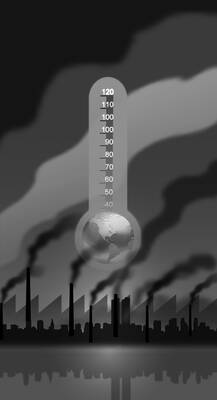
The closure of the Strait of Hormuz has sent the vast Asian chemicals industry into a tailspin. Deprived of the likes of Qatari natural gas and Saudi Arabian oil, the region’s fertilizer and plastics plants are slowing production or even shutting down. Everywhere except China, that is. In petrochemicals, China is unique. As well as a traditional industry that uses oil and gas as feedstock, it has parallel output that relies on its abundant domestic coal. Unsurprisingly, India and other regional powers want to copy and paste the Chinese method. This would not be easy — or climate friendly. The
US President Donald Trump recently repeated his claim that “Taiwan stole America’s chip industry,” reigniting public debate on the issue. As a former Taiwanese minister of economic affairs and an entrepreneur deeply involved in semiconductor supply chain development, I feel a responsibility to clarify this misunderstanding. From the perspective of global industrial evolution and the economic principle of comparative advantage, such a statement appears overly simplistic and risks obscuring the essence of the issue. The rise of Taiwan’s semiconductor industry was not built on “replacing America,” but rather emerged as a result of countries pursuing different development paths within the
Indonesian President Prabowo Subianto says he knows how to fix the problems facing Indonesia. Yet his economic mismanagement and authoritarian tendencies are steering the nation toward a familiar mix of currency instability and political chaos. The world’s fourth-most populous nation risks reversing the hard-won democratic and business reforms that came after the Asian Financial Crisis in 1997. At that time, the rupiah collapsed and the political upheaval that followed forced former president Haji Mohamed Suharto from power. Prabowo’s administration is ignoring similar warning signs. That disconnect was apparent in a national address on Wednesday, when Prabowo projected the swagger that has


 RSS
RSS