


Chinese Nationalist Party (KMT) Legislator Wu Yu-sheng (吳育昇) yesterday called on the government to conduct a “thorough national security check” on Presidential Office staffers after one was taken into custody on Wednesday night for allegedly spying for China.
Wang Ren-bing (王仁炳), a senior specialist at the Presidential Office’s Department of Special Affairs, was taken from the Presidential Office on Wednesday afternoon after a group of investigators with a search warrant conducted a search of Wang’s office.
Wang is suspected of handing classified Presidential Office documents between March and April last year to his friend Chen Pin-jen (陳品仁), who allegedly gave them to Chinese intelligence officers. Chen was also questioned.
Wang and Chen’s residences were also searched on Wednesday.
Commenting on the suspected espionage case, KMT Legislator Lin Yu-fang (林郁方), head of the legislature’s Foreign and National Defense Committee, yesterday said it suggested both sides of the Taiwan Strait were still spying on each other despite warmer cross-strait relations.
“We need to stay alert, but we should not overreact and turn the case into political wrangling,” Lin said.
Earlier yesterday, the Taipei District Court approved a request by prosecutors to take Wang and Chen into custody.
Taipei District Court Spokesman Huang Chun-ming (黃俊明) said the pair was suspected of violating the National Security Act (國家安全法) and their detention was intended to prevent them from colluding with each other to give false statements.
Although both denied the allegation, their respective statements were contradictory, Huang said.
At a separate setting yesterday, the Presidential Office said the detention of Wang was purely a legal case and was not political.
Presidential Office Spokesman Wang Yu-chi (王郁琦) said the Presidential Office’s position is clear: It respects the judiciary and will cooperate fully with the investigation.
“There is no political consideration whatsoever,” he said in response to a media inquiry about whether the case would have any impact on cross-strait relations.
Wang Yu-chi said Wang Ren-bing was suspected of leaking documents concerning the handover of power to President Ma Ying-jeou (馬英九) from former president Chen Shui-bian (陳水扁) last spring.
Wang Yu-chi yesterday said he did not know if other staff members leaked information, but he believed the national security agencies would have first-hand information.
Wang Yu-chi said the Presidential Office would take no further action until prosecutors complete their investigation. If Wang Ren-bing turned out to be the source of the problem, the spokesman said, it would be easier to handle.
What they can do now is to conduct an overall examination of the management of the filing system and regular monitoring of the moral conduct of new staff members. They will also mete out harsh punishments to anyone who leaks information, the spokesman said.
Wang Yu-chi gave the assurance that Ma’s personal safety was secure, adding that Ma was informed of the matter a few days before the search and his immediate instruction was to respect the judiciary and fully cooperate with the investigation.
Wang Ren-bing began working at the Presidential Office in 2001 in the office of then deputy secretary-general Chen Che-nan (陳哲男). After Chen Che-nan’s departure, Wang Ren-bing continued to work at the same office.
Wang Ren-bing, a career civil servant, then asked for a transfer to the Department of Special Affairs in April last year after the Democratic Progressive Party (DPP) lost the presidential election in March.
Meanwhile, KMT Legislator Liao Kuo-tung (廖國棟) confirmed that Chen Pin-jen used to work as an assistant for him and former People First Party legislator Lin Chun-teh (林春德).
Saying he was very shocked to learn of Chen Pin-jen’s alleged offense, Liao added he was not familiar with Chen Pin-jen because he had mainly helped him with constituency business rather than legislative affairs. Liao said he would implement stricter screening measures for his staff.
ADDITIONAL REPORTING BY CNA

The National Chungshan Institute of Science and Technology yesterday showcased its locally developed variants of the Vision 60 robotic patrol dog, which it plans to deploy on the nation’s outlying territories in the South China Sea. The variants were produced under the Joint Lab project — created by the institute and domestic companies — and assembled with domestically produced motors, lenses and artificial intelligence (AI) systems alongside licensed tech from the US, Missile and Rocket Systems Research Division deputy director Jen Kuo-kang (任國光) told the media event at a military base in Taipei’s Dazhi (大直) area. Taiwan has built up its strengths

RIGHT DIRECTION: Taiwan’s efforts to prevent forced labor include a proposal to ‘fully prohibit’ employers from withholding workers’ documents, an official said Taiwan is to establish a mechanism to restrict imports of goods linked to forced labor, the Executive Yuan said yesterday, after the US proposed imposing additional tariffs on Taiwanese goods over labor concerns. “The Ministry of Labor and the Ministry of Economic Affairs are to establish an interministerial review procedure,” Executive Yuan spokesperson Michelle Lee (李慧芝) said at a news briefing in Taipei. “The government is to use the Foreign Trade Act [貿易法] as the legal basis to restrict imports of goods produced with forced labor” and bring its supply chain governance more in line with international standards on human rights, resilience
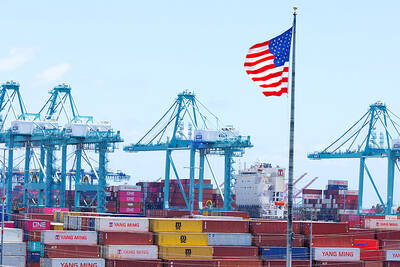
NOT IMMEDIATE: Taiwan has a chance to appeal the proposed 10 percent tariff before it starts, while other countries face a 12.5 percent tariff from the trade office Taiwan is among 60 economies determined by the US to have failed to impose or enforce a ban on the importation of goods produced with forced labor, according to a notice released on Tuesday by the Office of the US Trade Representative (USTR), which proposed imposing an additional 10 percent or more tariff on them. The USTR in a statement said that following an investigation, it had determined under Section 301 of the Trade Act of 1974 that the failure of the 60 economies to impose and effectively enforce a prohibition on the importation of goods produced with forced labor is
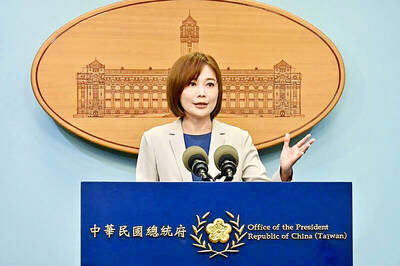
TIT-FOR-TAT: The US allegedly revoked the visa of a Chinese national working at Xinhua News Agency in the US in response to Beijing’s expulsion of Vivian Wang The Presidential Office yesterday condemned China for expelling a New York Times correspondent from Beijing following the newspaper’s interview with President William Lai (賴清德), saying the move highlighted Beijing’s suppression of press freedom and its threat to international news media. Taiwan has noted a series of recent incidents in which Beijing used similar tactics to “threaten and pressure international media outlets and journalists,” Presidential Office spokeswoman Karen Kuo (郭雅慧) said in a statement. “This concerns not only press freedom and freedom of expression, but also the safety of journalists, and Taiwan and relevant partners are paying close attention to the situation,” she


 RSS
RSS