


Cuba's parliament named Raul Castro president to replace his brother Fidel, prompting a guarded response yesterday from countries looking for signs of reform.
After years in Fidel's charismatic shadow as Cuba's No. 2 and defense minister, Raul Castro faces massive challenges, including preparing the transition of power to a newer generation and reforming the economy.
"Fidel is irreplaceable; the people will continue his work when he is no longer with us physically, though his ideas always will be here," Raul Castro, 76, told lawmakers in his acceptance speech late on Sunday.
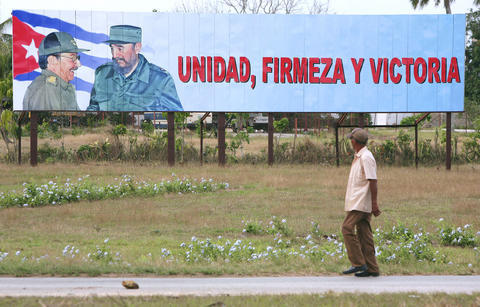
PHOTO: AP
In the 19 months since he took over as temporary leader, Raul Castro has made some minor adjustments in the economy, while promising bigger changes.
But he has made it clear that everything will take place "within socialism" and that solutions to the country's problems will come "little by little."
People in the street voiced hopes that the new president would usher in long-sought economic reforms to improve their daily lives.
"This is the best that could have happened to Cuba," Carlos Muguercia, a 78-year-old craftsman said. "Raul already knows the situation. He knows how to solve problems, in any case the most serious ones."
Others were less enthusiastic at the dynastic succession.
"Raul is Fidel without a beard," argued one young man enjoying a beer at a bar in Havana.
In a sign that change may take time, Raul Castro said he would consult with his brother on major issues. And he vowed to be on guard against the US.
"We have taken note of the offensive and openly-meddling declarations by the Empire [as Cuba refers to Washington] and some of its closest allies," he said.
In defiance of US-led calls for democratic reform, Fidel Castro had ruled out any betrayal of the Cuban revolution ahead of Sunday's vote.
In Washington, the top US diplomat for Latin America, Tom Shannon, stressed the "possibility and potential" for change in Cuba, but said it had to come internally.
Shannon also ruled out a lifting of the US embargo imposed on Cuba in 1962 until there was a transition to democracy.
In Brussels, The EU said it was willing to engage in a "constructive political dialogue" with Raul Castro.
Shortly after being named president, Raul Castro named General Julio Casas Regueiro, 72, to replace him as head of the armed forces.
The 614-member assembly also chose the country's first vice president, five other vice presidents, a party secretary and the 23 members of the Council of State.
And in a sign the older generation remained in control, Jose Ramon Machado, another "old guard" Cuban leader, was selected for Cuba's No. 2 spot.
Also see: Raul Castro's lack of magnetism may not be an issue
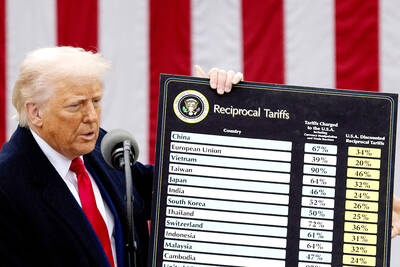
WAITING GAME: The US has so far only offered a ‘best rate tariff,’ which officials assume is about 15 percent, the same as Japan, a person familiar with the matter said Taiwan and the US have completed “technical consultations” regarding tariffs and a finalized rate is expected to be released soon, Executive Yuan spokeswoman Michelle Lee (李慧芝) told a news conference yesterday, as a 90-day pause on US President Donald Trump’s “reciprocal” tariffs is set to expire today. The two countries have reached a “certain degree of consensus” on issues such as tariffs, nontariff trade barriers, trade facilitation, supply chain resilience and economic security, Lee said. They also discussed opportunities for cooperation, investment and procurement, she said. A joint statement is still being negotiated and would be released once the US government has made
Authorities have detained three former Taiwan Semiconductor Manufacturing Co (TMSC, 台積電) employees on suspicion of compromising classified technology used in making 2-nanometer chips, the Taiwan High Prosecutors’ Office said yesterday. Prosecutors are holding a former TSMC engineer surnamed Chen (陳) and two recently sacked TSMC engineers, including one person surnamed Wu (吳) in detention with restricted communication, following an investigation launched on July 25, a statement said. The announcement came a day after Nikkei Asia reported on the technology theft in an exclusive story, saying TSMC had fired two workers for contravening data rules on advanced chipmaking technology. Two-nanometer wafers are the most
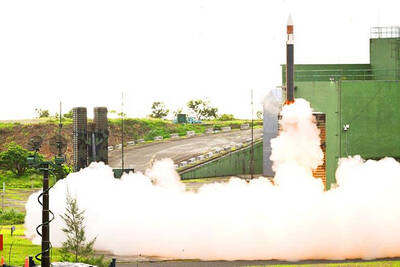
NEW GEAR: On top of the new Tien Kung IV air defense missiles, the military is expected to place orders for a new combat vehicle next year for delivery in 2028 Mass production of Tien Kung IV (Sky Bow IV) missiles is expected to start next year, with plans to order 122 pods, the Ministry of National Defense’s (MND) latest list of regulated military material showed. The document said that the armed forces would obtain 46 pods of the air defense missiles next year and 76 pods the year after that. The Tien Kung IV is designed to intercept cruise missiles and ballistic missiles to an altitude of 70km, compared with the 60km maximum altitude achieved by the Missile Segment Enhancement variant of PAC-3 systems. A defense source said yesterday that the number of
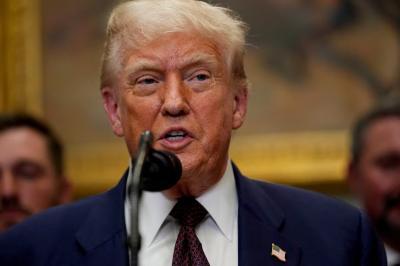
Taiwanese exports to the US are to be subject to a 20 percent tariff starting on Thursday next week, according to an executive order signed by US President Donald Trump yesterday. The 20 percent levy was the same as the tariffs imposed on Vietnam, Sri Lanka and Bangladesh by Trump. It was higher than the tariffs imposed on Japan, South Korea and the EU (15 percent), as well as those on the Philippines (19 percent). A Taiwan official with knowledge of the matter said it is a "phased" tariff rate, and negotiations would continue. "Once negotiations conclude, Taiwan will obtain a better


 RSS
RSS