


The Taiwan High Court Prosecutors' Office yesterday said that President Chen Shui-bian (
Chang Wen-cheng (張文政), spokesman for the Taiwan High Court Prosecutors' Office, confirmed yesterday that the president was interrogated on Aug. 7 at the Presidential Office and Wu was questioned on Aug. 20 at the official Yushan Residence (玉山官邸) .
"[Chen and Wu] were not accompanied by their lawyers, although we clearly told them they had the right to do so," Chang said at a press conference yesterday morning.
Prosecutors also informed the couple that the case under investigation "will very likely become one in which suspects could be charged with forgery or graft," and asked the two if they would like to have their lawyers with them. However, both parties replied that they saw "no need" to call their lawyers, he said.
Chang stressed that both the president and the first lady remain "legal parties" in the case and have not been enlisted as defendants, and that the prosecutors were obligated, in compliance with Article 95 of the Code of Criminal Procedures (刑事訴訟法), to tell any individual being questioned that he or she has the right to call a lawyer if there is a chance that the person might become a defendant in the case.
Chang said he could not confirm whether prosecutors would summon the president and the first lady again in the near future because of a gag order.
Both Chen and Wu clearly answered every question posed by the prosecutors, Chang said, adding that the president also provided some evidence in his defense.
Prosecutors will review and investigate the evidence provided by the president, Chang said.
The Presidential Office also confirmed that the president and his wife were questioned by prosecutors but dismissed the allegation that they refused to cooperate.
"We have submitted to prosecutors all the original receipts of the president's special allowance fund dating back to May 2000," Presidential Office spokesman David Lee (李南陽) said.
Lee said the president had made it clear on July 31 that he would be happy to personally explain his special allowance fund to prosecutors and investigators in a bid to help establish the truth.
When asked why they did not disclose the couple's meetings with prosecutors earlier, Lee said they were not in a position to offer details of a legal case and that the media should ask prosecutors for comment on the matter.
The Presidential Office issued a statement at 12:13am yesterday, telling the media that Chen did explain the matter to prosecutors at the Presidential Office on Aug. 7.
"The president stressed that he never pocketed the funds and that he respects the judicial investigation and will offer his full cooperation," the statement said.
The statement was made in response to a report published in Tuesday's edition of the Chinese-language China Times claiming that the investigation into the allowance fund hit a snag as the Presidential Office refused to provide receipts and documents.
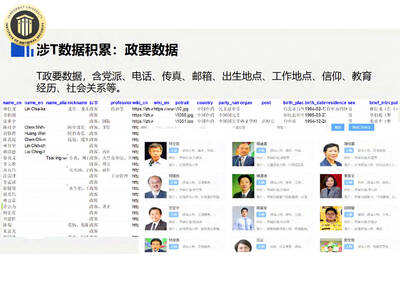
NETWORK-MAPPING PROJECT: The database contains 170 detailed files of Taiwanese politicians and about 23 million records of household registration data in Taiwan China has developed a network-mapping project targeting political figures and parties in Taiwan to monitor public opinion during elections and to craft tailored influence campaigns aimed at dividing Taiwanese society, according to documents leaked by Chinese technology firm GoLaxy (中科天璣). The documents, collected by Taipei-based Doublethink Lab, showed a database was specifically created to gather detailed information on Taiwanese political figures, including their political affiliations, job histories, birthplaces, residences, education, religion and a brief biography about them. Several notable Taiwanese politicians are in the database, including President William Lai (賴清德), former president Tsai Ing-wen (蔡英文), Minister of Foreign Affairs Lin Chia-lung (林佳龍),
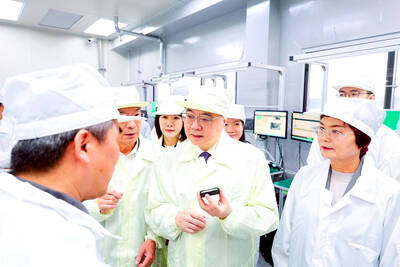
KEY INDUSTRY: The vice premier discussed a plan to create a non-red drone supply chain by next year, which has been allocated a budget of more than NT$7.2 billion The government has budgeted NT$44.2 billion (US$1.38 billion) to cultivate Taiwan’s uncrewed aerial vehicle (UAV) industry over the next five years, which would make the nation a major player in the industry’s democratic supply chain in the Asia-Pacific region, Premier Cho Jung-tai (卓榮泰) said yesterday. Cho made the remarks during a visit to the facilities of Cub Elecparts Inc (為升電裝). Democratic Progressive Party (DPP) Legislator Chen Su-yueh (陳素月) and Chinese Nationalist Party (KMT) Legislator Hsieh Yi-fong (謝依鳳) also participated in the trip. Cub Elecparts has transitioned from the automotive industry to the defense industry, which is the top priority among the nation’s
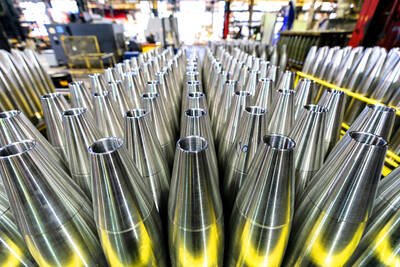
UPGRADED MISSILE: The Chungshan Institute of Science and Technology is reportedly to conduct a live-fire test of the Hsiung Feng III anti-ship missile on Thursday next week The US Army is planning to build new facilities to boost explosives production and strengthen its supply chain, a move aimed at addressing munitions shortages and supporting obligations to partners including Taiwan, Ukraine and Israel, Defense News reported. The army has issued a sources sought notice for a proposed Center of Excellence at the Blue Grass Army Depot in Kentucky, the report said. The facility would serve as a hub within the US industrial base for the production of key military explosives, including research department explosives (RDX) and high melting explosives (HMX), while also supporting research and development of next-generation materials. The proposed
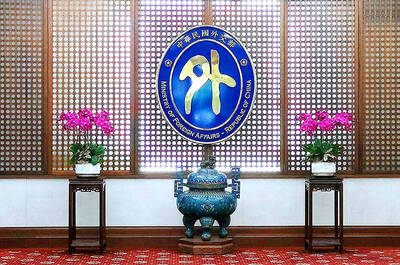
SOUTH KOREA DISPUTE: If Seoul continues to ignore its request, Taiwan would change South Korea’s designation on its arrival cards, the foreign ministry said If South Korea does not reply appropriately to a request to correct Taiwan’s name on its e-Arrival card system before March 31, the government would take corresponding measures to change how South Korea is labeled on the online Taiwan Arrival Card system, the Ministry of Foreign Affairs said yesterday. South Korea’s e-Arrival card system lists Taiwan as “China (Taiwan)” in the “point of departure” and “next destination” fields. Taipei has asked Seoul to change the wording. Since March 1, South Koreans who hold government-issued Alien Resident Certificates (ARC) have been identified as from “South Korea” rather than the “Republic of Korea,” the


 RSS
RSS