


The campaign to oust the president has had repercussions beyond the pan-green camp, as opposition party diehards began attacking their own chairman over the issue.
Chinese Nationalist Party (KMT) Chairman Ma Ying-jeou (馬英九) came under fire yesterday from party members who accused him of keeping the upcoming protests aimed at removing President Chen Shui-bian (陳水扁) at arm's length to benefit his own agenda.
"Ma's weak attitude toward the [anti-Chen] campaign will surely hurt pan-blue supporters and make them angry," KMT Legislator Lin Yu-fang (林郁方) said yesterday, referring to Ma's refusal, in his role as Taipei mayor, to approve a permit for a round-the-clock sit-in.
Lin's remarks came after former Democratic Progressive Party chairman Shih Ming-teh (
"On one hand, Ma let everyone know that he donated NT$100 to the campaign, but, on the other hand, he refuse to allow the application for a round-the-clock sit-in," Shih said.
Shih said that Ma was actually not in favor of Chen's resignation.
If Chen retains his position, which Shih said was against the public's wish, Ma's campaign for the 2008 presidential election would benefit, he said.
Lin urged Ma not to try to avoid getting involved in controversy.
"Being `Teflon coated' on the issue of corruption in the Chen government will only make pan-blue supporters feel disappointed in him," Lin said.
Lin said that Ma had let his supporters down once in 2004, when he asked protesters who had gathered in front of the Presidential Office after the presidential election to leave.
"If Ma believes he can continue being `Teflon coated' and win the 2008 presidential election, then he's got another thing coming," Lin said.
Meanwhile, KMT lawmakers Ko Chun-hsiung (柯俊雄) and Lo Ming-tsai (羅明才) visited Shih's office to express their support for the campaign.
"Although Ma said that KMT will not participate in the anti-Chen campaign in the name of the party, most of the party's members, including Ma, do stand with Shih," Ko said.
Ko said that Ma had shown his support for Shih by contributing his NT$100, noting that there should be no doubt about Ma's intention to oust Chen.
Dismissing criticism that he was being "weak" in his handling of the anti-Chen sit-in, Ma yesterday said that he had already taken a firm stance when the KMT initiated the presidential recall motion in June.
"We had already taken a firm stance in June. [KMT legislators] should understand that I have always stood firm on my position," Ma said yesterday morning at the Taipei City Hall.
While stressing his personal support for the sit-in protest by donating NT$100, Ma said it was the Taipei City Government's responsibility to ensure public safety during the demonstration and that applications for street demonstrations must be filed following strict legal procedures.
"The city government will keep a balance between maintaining order and protecting the assembly rights of the people. We will protect the right to peaceful protest, but will enforce a ban on any acts of violence," Ma said.
"It's so strange that we are under attack by following the law ? We oppose a president who abused the law, but is it right to depose him in an illegal way?" Ma said.
In other news, Minister of National Defense Lee Jye (
Additional reporting by Shih Hsiu-chuan
also see stories:
Shih claims DPP worse than CCP
Pro-Chen legislator denies report of romantic liaison
Editorial: Ma's enemies take their chance
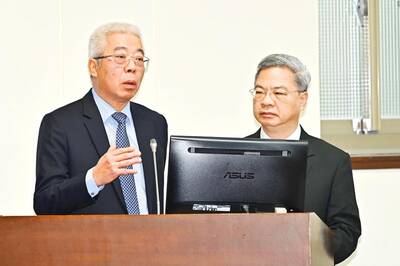
Taiwan has arranged for about 8 million barrels of crude oil, or about one-third of its monthly needs, to be shipped from the Red Sea this month to bypass the Strait of Hormuz and ease domestic supply pressures, CPC Corp, Taiwan (CPC, 台灣中油) said yesterday. The state-run oil company has worked with Middle Eastern suppliers to secure routes other than the Strait of Hormuz, through which about 20 percent of the world’s oil and liquefied natural gas typically passes, CPC chairman Fang Jeng-zen (方振仁) said at a meeting of the legislature’s Economics Committee in Taipei. Suppliers in Saudi Arabia have indicated they
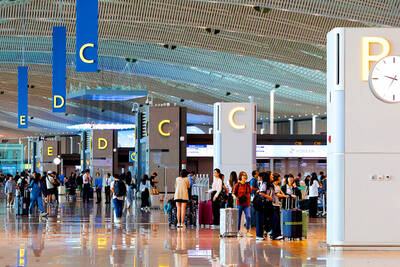
South Korea has adjusted its electronic arrival card system to no longer list Taiwan as a part of China, a move that the Ministry of Foreign Affairs said would help facilitate exchanges between the two sides. South Korea previously listed “Taiwan” as “Taiwan (China)” in the drop-down menus of its online arrival card system, where people had to fill out where they came from and their next destination. The ministry had requested South Korea make a revision and said it would change South Korea’s name on Taiwan’s online immigration system from “Republic of Korea” to “Korea (South),” should the issue not be

CCP ‘PAWN’? Beijing could use the KMT chairwoman’s visit to signal to the world that many people in Taiwan support the ‘one China’ principle, an academic said Chinese Nationalist Party (KMT) Chairwoman Cheng Li-wun (鄭麗文) yesterday arrived in China for a “peace” mission and potential meeting with Chinese President Xi Jinping (習近平), while a Taiwanese minister detailed the number of Chinese warships currently deployed around the nation. Cheng is visiting at a time of increased Chinese military pressure on Taiwan, as the opposition-dominated Legislative Yuan stalls a government plan for US$40 billion in extra defense spending. Speaking to reporters before going to the airport, Cheng said she was going on a “historic journey for peace,” but added that some people felt uneasy about her trip. “If you truly love Taiwan,

Tainan, Taipei and New Taipei City recorded the highest fines nationwide for illegal accommodations in the first quarter of this year, with fines issued in the three cities each exceeding NT$7 million (US$220,639), Tourism Administration data showed. Among them, Taipei had the highest number of illegal short-term rental units, with 410. There were 3,280 legally registered hotels nationwide in the first quarter, down by 14 properties, or 0.43 percent, from a year earlier, likely indicating operators exiting the market, the agency said. However, the number of unregistered properties rose to 1,174, including 314 illegal hotels and 860 illegal short-term rental


 RSS
RSS