


China has agreed to allow a fact-finding mission by a top UN official mandated with investigating allegations of torture, the UN human rights agency said.
Manfred Nowak, the UN Human Rights Commission's special investigator on torture and other cruel, inhuman or degrading treatment or punishment, will visit China from Nov. 21 to Dec. 2 to meet with government officials and get a firsthand look at Chinese detention centers.
"There are all kinds of allegations ranging from Falun Gong people to dissidents about the treatment in re-education through labor camps," Nowak said in a telephone interview on Tuesday. "But these are only allegations, and I want to verify or falsify them as much as possible."
Nowak said he was pleased China had for the first time "finally accepted a visit, after years of negotiations," and said Beijing had not stipulated any conditions for his trip.
"I am very happy that the government actually fully accepted my terms of reference, which means that I'm able when I'm there to visit any place of detention and to visit any detainee in private," Nowak said.
Nowak said he also would examine "in general, the way people are treated in prisons after they are convicted and in particular, those sentenced to death."
Nowak will include his findings in a report to be submitted at next year's meeting of the commission, the UN's top rights watchdog. Nowak, a Vienna law professor, is one of several experts appointed by the 53-nation body.
While China outlawed torture in 1996, activists and lawyers say it is widely practiced in the country. But China's parliament has recently enacted new rules limiting police interrogations to 12 hours in a new effort to limit abuses after a series of highly publicized complaints.
The change came amid an unusual discussion by China's state media of the widespread use of torture and coercion by police, who are under pressure to crack cases with little professional training, after a false murder conviction was overturned in April. She Xianglin (佘祥林), who was released after 11 years in prison, said he was tortured into confessing.

PROVOCATIVE: Chinese Deputy Ambassador to the UN Sun Lei accused Japan of sending military vessels to deliberately provoke tensions in the Taiwan Strait China denounced remarks by Japan and the EU about the South China Sea at a UN Security Council meeting on Monday, and accused Tokyo of provocative behavior in the Taiwan Strait and planning military expansion. Ayano Kunimitsu, a Japanese vice foreign minister, told the Council meeting on maritime security that Tokyo was seriously concerned about the situation in the East China and South China seas, and reiterated Japan’s opposition to any attempt to change the “status quo” by force, and obstruction of freedom of navigation and overflight. Stavros Lambrinidis, head of the EU delegation to the UN, also highlighted South China Sea

SILENCING CRITICS: In addition to blocking Taiwan, China aimed to prevent rights activists from speaking out against authoritarian states, a Cabinet department said The Ministry of Foreign Affairs (MOFA) yesterday condemned transnational repression by Beijing after RightsCon, a major digital human rights conference scheduled to be held in Zambia this week, was abruptly canceled due to Chinese pressure over Taiwanese participation. This year’s RightsCon, the world’s largest conference discussing issues “at the intersection of human rights and technology,” was scheduled to take place from tomorrow to Friday in Lusaka, and expected to draw 2,600 in-person attendees from 150 countries, along with 1,100 online participants. However, organizers were forced to cancel the event due to behind-the-scenes pressure from China, the ministry said, expressing its “strongest condemnation”
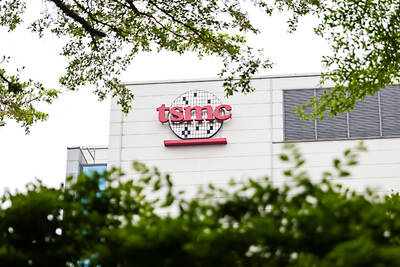
Taiwan Semiconductor Manufacturing Co (TSMC, 台積電), the world’s largest contract chipmaker, said it expects its 2-nanometer (2nm) chip capacity to grow at a compound annual rate of 70 percent from this year to 2028. The projection comes as five fabs begin volume production of 2-nanometer chips this year — two in Hsinchu and three in Kaohsiung — TSMC senior vice president and deputy cochief operating officer Cliff Hou (侯永清) said at the company’s annual technology symposium in Silicon Valley, California, last week. Output in the first year of 2-nanometer production, which began in the fourth quarter of last year, is expected to
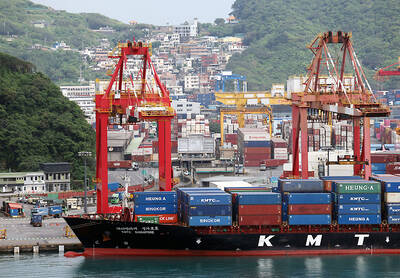
Taiwan’s economy grew far faster than expected in the first quarter, as booming demand for artificial intelligence (AI) applications drove a surge in exports, spilling over into investment and consumption, the Directorate-General of Budget, Accounting and Statistics (DGBAS) said yesterday. GDP growth was 13.69 percent year-on-year during the January-to-March period, beating the DGBAS’ February forecast by 2.23 percentage points and marking the most robust growth in nearly four decades, DGBAS senior official Chiang Hsin-yi (江心怡) told a news conference in Taipei. The result was powered by exports, which remain the backbone of Taiwan’s economy, Chiang said. Outbound shipments jumped 51.12 percent year-on-year to


 RSS
RSS