


A suicide car bomber sped toward US soldiers as they gave candy to children and detonated his vehicle yesterday, killing up to 27 other people, US and Iraqi officials said. One US soldier and about a dozen children were among the dead.
At least 70 others, including three US soldiers, were injured in the attack, Iraqi and US officials said. It was the second major suicide bombing in Baghdad this week. A suicide bomber killed 25 people on Sunday at an army recruiting center.
The fireball from yesterday's blast also set a nearby house on fire, the US military said. The attack stunned the impoverished east Baghdad neighborhood of mostly Shiite Muslims and Christians. An elderly woman dressed in traditional black beat her chest in front of her house in grief.
The vehicle used in the attack was a brown Toyota Land Cruiser with a license plate from the southern city of Basra, police said.
Hospitals and police said between 11 and 13 children were killed. Authorities scrambled to compile an accurate count of the dead and injured.
"The explosion was mainly on the children," resident Abbas Ali Jassim said.
Following the attack, charred remains of an engine block wrapped in barbed wire lay in the street. A child's bicycle was crumpled beside the street, which was splattered with pools of blood.
At Kindi hospital, where many of the dead and injured were taken, one distraught woman swathed in black sat cross-legged outside the operating room.
"May God curse the mujahedeen and their leader," she cried as she pounded her own head in grief.
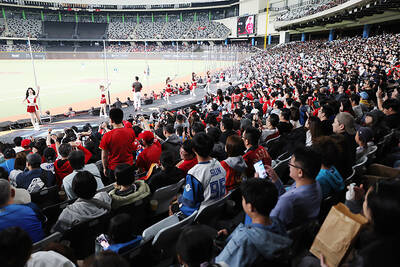
The Legislative Yuan’s Finance Committee yesterday approved proposed amendments to the Amusement Tax Act (娛樂稅法) that would abolish taxes on films, cultural activities and competitive sporting events, retaining the fee only for dance halls and golf courses. The proposed changes would set the maximum tax rate for dance halls and golf courses at 50 and 20 percent respectively, with local governments authorized to suspend the levies. Article 2 of the act says that “amusement tax shall be levied on tickets sold or fees charged by amusement places, facilities or activities” in six categories: “Cinema; professional singing, story-telling, dancing, circus, magic show, acrobatics

Tainan, Taipei and New Taipei City recorded the highest fines nationwide for illegal accommodations in the first quarter of this year, with fines issued in the three cities each exceeding NT$7 million (US$220,639), Tourism Administration data showed. Among them, Taipei had the highest number of illegal short-term rental units, with 410. There were 3,280 legally registered hotels nationwide in the first quarter, down by 14 properties, or 0.43 percent, from a year earlier, likely indicating operators exiting the market, the agency said. However, the number of unregistered properties rose to 1,174, including 314 illegal hotels and 860 illegal short-term rental
INFLATION UP? The IMF said CPI would increase to 1.5 percent this year, while the DGBAS projected it would rise to 1.68 percent, with GDP per capita of US$44,181 The IMF projected Taiwan’s real GDP would grow 5.2 percent this year, up from its 2.1 percent outlook in January, despite fears of global economic disruptions sparked by the US-Iran conflict. Taiwan’s consumer price index (CPI) is projected to increase to 1.5 percent, while unemployment would be 3.4 percent, roughly in line with estimates for Asia as a whole, the international body wrote in its Global Economic Outlook Report published in the US on Monday. The figures are comparatively better than the IMF outlook for the rest of the world, which pegged real GDP growth at 3.1 percent, down from 3.3 percent
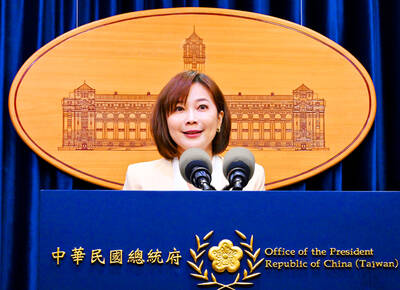
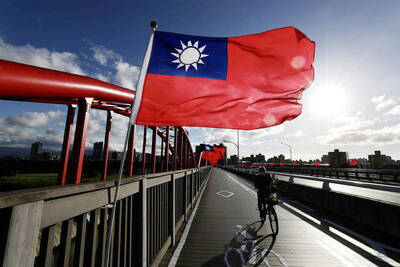
ECONOMIC COERCION: Such actions are often inconsistently applied, sometimes resumed, and sometimes just halted, the Presidential Office spokeswoman said The government backs healthy and orderly cross-strait exchanges, but such arrangements should not be made with political conditions attached and never be used as leverage for political maneuvering or partisan agendas, Presidential Office spokeswoman Karen Kuo (郭雅慧) said yesterday. Kuo made the remarks after China earlier in the day announced 10 new “incentive measures” for Taiwan, following a landmark meeting between Chinese President Xi Jinping (習近平) and Chinese Nationalist Party (KMT) Chairwoman Cheng Li-wun (鄭麗文) in Beijing on Friday. The measures, unveiled by China’s Xinhua news agency, include plans to resume individual travel by residents of Shanghai and China’s Fujian


 RSS
RSS