


For the sake of his 6 million fellow Tibetans, spiritual leader Dalai Lama said on Thursday that his plans to visit Taiwan had to be reconsidered to secure negotiations with the Chinese government.
At a crowded Schiller Theater in Berlin, the Dalai Lama presented the Light of Truth award to former Czech president Vaclav Havel, former German minister of economic affairs Otto Graf Lamdsdorff and Irmtraut Waeger, Chairperson of Deutschen Tibethilfe e.V., a German charity giving aid to Tibetans.
The annual award to prominent, long-time supporters of the Tibetan people has been presented since 1995.
During the ceremony, the Dalai Lama stressed that people should help each other to fight for freedom.
"So far, Tibetans have not found the way to freedom. We do appreciate the assistance and support from all over the world," he said.
At a press conference after the ceremony, the Dalai Lama said that his government-in-exile had been negotiating with the Chinese government for three years, but the latest talks last year had made progress.
It was this progress that had resulted in the canceling of plans to visit Taiwan last year.
Not Forgotten
"I'm eager to visit Taiwan. The cancellation did not mean that I've forgotten Taiwan. I have to seriously consider what the real meaning of the Taiwan issue could be while taking the interests of 6 million Tibetans into account," he said.
The Dalai Lama stressed that in his visits to Taiwan in 1997 and 2001, he had been impressed by the development of economic development, freedom and democracy, all of which deserved to be protected.
Taiwan's representative to Germany, Shieh Jhy-wey (
"Human-rights issues should not be discussed in terms of borders, ethnicity or gender. Taiwanese people have fought for democracy not only for themselves but also for people in the rest of the world," Shieh told the Taipei Times.
At a party prior to the ceremony, Shieh passed on President Chen Shui-bian's (
In 1990, the Dalai Lama was invited to the former Czechoslovakia by Havel.
The Dalai Lama has lived in exile in India since a failed Tibetan uprising against the Chinese government in 1959.
Preservation
At the party, Volker Schloendorff, director of the German film The Tin Drum, told Taiwanese reporters that supporting Tibet was in the interests of cultural preservation.
When asked about Taiwan, Schloendorff said that he had thought about the matter for a long time.
"If Taiwan was attacked, I would petition, definitely," he said.
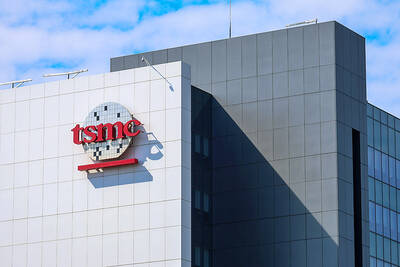
Taiwan Semiconductor Manufacturing Co (TSMC, 台積電), the world’s largest foundry service provider, yesterday said that global semiconductor revenue is projected to hit US$1.5 trillion in 2030, after the figure exceeds US$1 trillion this year, as artificial intelligence (AI) demand boosts consumption of token and compute power. “We are still at the beginning of the AI revolution, but we already see a significant impact across the whole semiconductor ecosystem,” TSMC deputy cochief operating officer Kevin Zhang (張曉強) said at the company’s annual technology symposium in Hsinchu City. “It is fair to say that in the past decade, smartphones and other mobile devices were
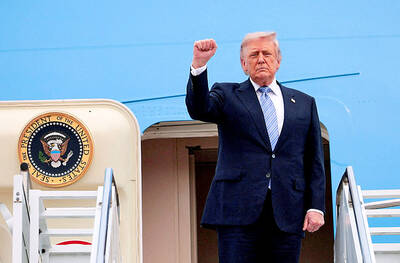
US-CHINA SUMMIT: MOFA welcomed US reassurance of no change in its Taiwan policy; Trump said he did not comment when Xi talked of opposing independence US President Donald Trump yesterday said he has not made a decision on whether to move forward with a major arms package for Taiwan after hearing concerns about it from Chinese President Xi Jinping (習近平). Trump’s comments on Taiwan came as he flew back to Washington after wrapping up critical talks in which both leaders said important progress was made in stabilizing US-China relations even as deep differences persist between the world’s two biggest powers on Iran and Taiwan. “I will make a determination,” Trump said, adding: “I’ll be making decisions. But, you know, I think the last thing we need right

TAIWAN ISSUE: US treasury secretary Scott Bessent said on the first day of meetings that ‘it wouldn’t be a US-China summit without the Taiwan issue coming up’ There were no surprises on the first day of the summit between US President Donald Trump and Chinese President Xi Jinping (習近平), the Mainland Affairs Council (MAC) said yesterday, as the government reiterated that cross-strait stability is crucial to the Asia-Pacific region, as well as the world. As the two presidents met for a highly anticipated summit yesterday, Chinese state media reported that Xi warned Trump that missteps regarding Taiwan could push their two countries into “conflict.” Trump arrived in China with accolades for his host, calling Xi a “great leader” and “friend,” and extending an invitation to visit the White House
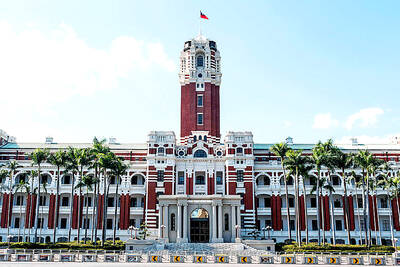
SECURITY: Taipei presses the US for arms supplies, saying the arms sales are not only a reflection of the US security commitment to Taiwan but also serve as a mutual deterrent against regional threats Taiwan is committed to preserving the cross-strait “status quo” and contributing to regional peace and stability, the Presidential Office said yesterday. “It is an undeniable fact that the Republic of China is a sovereign and independent democratic nation,” Presidential Office spokeswoman Karen Kuo (郭雅慧) reiterated, adding that Beijing has no right to claim sovereignty over Taiwan. The statements came after US President Donald Trump warned against Taiwanese independence. Trump wrapped up a state visit to Beijing on Friday, during which Chinese President Xi Jinping (習近平) had pressed him not to support Taiwan. Taiwan depends heavily on US security backing to deter China from carrying


 RSS
RSS