


The Executive Yuan yesterday called on Taipei City Mayor Ma Ying-jeou (
The court is scheduled to make public its ruling on a lawsuit filed by the Chinese Nationalist Party (KMT) and People First Party (PFP) to nullify the result of the March 20 presidential election at 4pm.
In addition to calling on Ma to shoulder his legal responsibility, Cabinet Spokesman Chen Chi-mai (陳其邁) called on Ma, who doubles as a vice chairman of the KMT, to use his personal and political influence to persuade the party not to stage or support any illegal congregations or marches today.
"While society is gradually resuming stability, opposition parties should come out of the March 20 shadow and learn to trust and respect the judicial system as well as stop inciting political and ethnic confrontations," he said.
Citing the Assembly and Parade Law (集會遊行法), Chen said that it is illegal to stage protests outside certain government agencies, including courtrooms.
"While some pan-blue parties have threatened to mobilize their supporters to surround the Taiwan High Court when the court delivers its verdict [today], we'd like them to know that it's illegal to stage such protests and so far we have not yet received any application to do so," he said.
According to the law, congregations or marches are banned 300m around the Presidential Office, Executive Yuan, Judicial Yuan, Examination Yuan, courtrooms, official residences of the president and vice president, as well as military compounds, embassies and foreign representative offices.
Meanwhile, during yesterday's Cabinet meeting, Ma criticized the Cabinet's Council for Economic Planning and Development (經建會) for failing to help Taipei and other metropolitan cities raise their international profile by providing information to international institutions such as the World Economic Forum (WEF) to add them in its global competitiveness report.
"While the WEF placed Taiwan No. 4 among 104 countries in its Global Competitiveness Report 2004-2005, the council has no idea that Taipei City ranks 11th in competitiveness among the world's 53 countries," Chen quoted Ma as saying.
Ma proposed that the council take the initiative to provide the WEF with the city's information as well as that of other big cities such as Kaohsiung and Taichung so they would be added to the institution's ranking list.
In the city competitiveness rankings, Ma said that Singapore is first and Hong Kong is No. 2, while Shanghai is 25th and Beijing 35th.
Thomas Yeh (
Also See Story:
Murder Chen if he wins election suit, Lien says
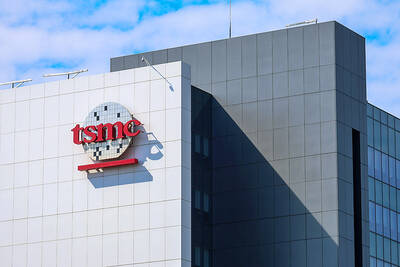
Taiwan Semiconductor Manufacturing Co (TSMC, 台積電), the world’s largest foundry service provider, yesterday said that global semiconductor revenue is projected to hit US$1.5 trillion in 2030, after the figure exceeds US$1 trillion this year, as artificial intelligence (AI) demand boosts consumption of token and compute power. “We are still at the beginning of the AI revolution, but we already see a significant impact across the whole semiconductor ecosystem,” TSMC deputy cochief operating officer Kevin Zhang (張曉強) said at the company’s annual technology symposium in Hsinchu City. “It is fair to say that in the past decade, smartphones and other mobile devices were
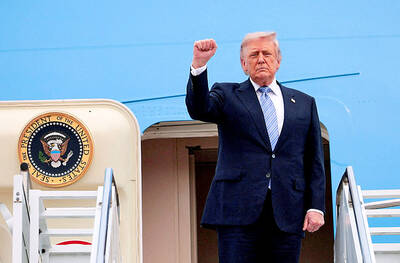
US-CHINA SUMMIT: MOFA welcomed US reassurance of no change in its Taiwan policy; Trump said he did not comment when Xi talked of opposing independence US President Donald Trump yesterday said he has not made a decision on whether to move forward with a major arms package for Taiwan after hearing concerns about it from Chinese President Xi Jinping (習近平). Trump’s comments on Taiwan came as he flew back to Washington after wrapping up critical talks in which both leaders said important progress was made in stabilizing US-China relations even as deep differences persist between the world’s two biggest powers on Iran and Taiwan. “I will make a determination,” Trump said, adding: “I’ll be making decisions. But, you know, I think the last thing we need right
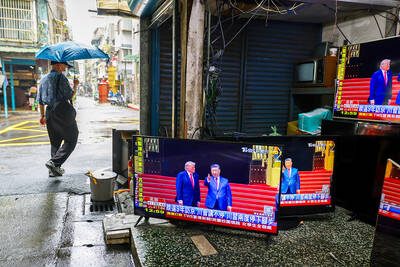
TAIWAN ISSUE: US treasury secretary Scott Bessent said on the first day of meetings that ‘it wouldn’t be a US-China summit without the Taiwan issue coming up’ There were no surprises on the first day of the summit between US President Donald Trump and Chinese President Xi Jinping (習近平), the Mainland Affairs Council (MAC) said yesterday, as the government reiterated that cross-strait stability is crucial to the Asia-Pacific region, as well as the world. As the two presidents met for a highly anticipated summit yesterday, Chinese state media reported that Xi warned Trump that missteps regarding Taiwan could push their two countries into “conflict.” Trump arrived in China with accolades for his host, calling Xi a “great leader” and “friend,” and extending an invitation to visit the White House
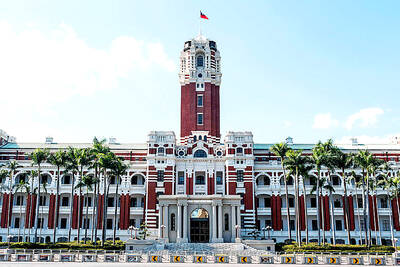
SECURITY: Taipei presses the US for arms supplies, saying the arms sales are not only a reflection of the US security commitment to Taiwan but also serve as a mutual deterrent against regional threats Taiwan is committed to preserving the cross-strait “status quo” and contributing to regional peace and stability, the Presidential Office said yesterday. “It is an undeniable fact that the Republic of China is a sovereign and independent democratic nation,” Presidential Office spokeswoman Karen Kuo (郭雅慧) reiterated, adding that Beijing has no right to claim sovereignty over Taiwan. The statements came after US President Donald Trump warned against Taiwanese independence. Trump wrapped up a state visit to Beijing on Friday, during which Chinese President Xi Jinping (習近平) had pressed him not to support Taiwan. Taiwan depends heavily on US security backing to deter China from carrying


 RSS
RSS