


Movie buffs are snapping up cheap DVDs and VCDs of classic Hollywood movies released before 1965, because as of tomorrow, the sale of reproductions of unauthorized versions of overseas films will be banned, in accordance with WTO rules.
Taiwan's first Copyright Law (
Many companies have continued to reproduce these films and distribute them, without having to obtain the permission of the copyright holders.
However, WTO regulations require member countries to retroactively apply copyright protection for such media, including movies, music discs and comic books within two years of joining the world trade body.
REVISIONS
The government revised the Copyright Law to comply with the WTO's rules, and announced the amendment on July 10 last year, giving a one year grace period before the law would take effect.
Violators of the amendment will be sentenced to three years in prison, or fines of up to NT$750,000.
To take advantage of this last-minute opportunity, movie lovers have been snatching up low-priced duplicates of the films, making the products the hottest item in the market, said a cashier of Chien Le Record in Taipei's Kuanghwa Market (
The record shop charges NT$39 apiece for DVDs, including such films as Psycho, The Bridge On The River Kwai, Gone with the Wind, Casablanca and other Oscar-winning hits.
"Half of our stocks are gone, and I believe the shelf will be emptied by Saturday," said the cashier.
"People don't want to spend 20 times the amount the money to buy the same products," the cashier said.
WIDE EFFECT
Ann Chien, a director at DVD manufacturer AV Book Corp, which sells 100 classic DVDs for NT$7,700, said the company usually receives about 100 orders on a normal day, but is now getting triple that amount of business as the deadline approaches.
The same shopping rush also hit online shopping sites. Online bookseller books.com.tw's "Oscar classics" film collections, which contain 10 DVDs each for NT$349 per set, have been sold out.
Meanwhile, PC Home Online's shopping site sells 100 DVDs for NT$2,999, and it has also seen huge orders these days, said Joyce Tzeng (曾淑華), a public relations associate manager for the company.
However, the owner of Hsing Chu, another store in Kuanghwa Market, said the shopping spree is unnecessary, as authorized products will not be as pricey as most people expect, as many legal DVDs only cost from NT$99 to NT$199.
"I would rather spend a bit more on quality products ... I get really pissed off when the picture of these poor-quality DVDs gets stuck every time," he said.

PROVOCATIVE: Chinese Deputy Ambassador to the UN Sun Lei accused Japan of sending military vessels to deliberately provoke tensions in the Taiwan Strait China denounced remarks by Japan and the EU about the South China Sea at a UN Security Council meeting on Monday, and accused Tokyo of provocative behavior in the Taiwan Strait and planning military expansion. Ayano Kunimitsu, a Japanese vice foreign minister, told the Council meeting on maritime security that Tokyo was seriously concerned about the situation in the East China and South China seas, and reiterated Japan’s opposition to any attempt to change the “status quo” by force, and obstruction of freedom of navigation and overflight. Stavros Lambrinidis, head of the EU delegation to the UN, also highlighted South China Sea

SILENCING CRITICS: In addition to blocking Taiwan, China aimed to prevent rights activists from speaking out against authoritarian states, a Cabinet department said The Ministry of Foreign Affairs (MOFA) yesterday condemned transnational repression by Beijing after RightsCon, a major digital human rights conference scheduled to be held in Zambia this week, was abruptly canceled due to Chinese pressure over Taiwanese participation. This year’s RightsCon, the world’s largest conference discussing issues “at the intersection of human rights and technology,” was scheduled to take place from tomorrow to Friday in Lusaka, and expected to draw 2,600 in-person attendees from 150 countries, along with 1,100 online participants. However, organizers were forced to cancel the event due to behind-the-scenes pressure from China, the ministry said, expressing its “strongest condemnation”
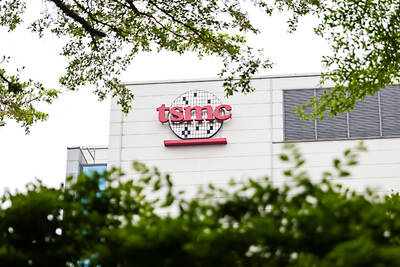
Taiwan Semiconductor Manufacturing Co (TSMC, 台積電), the world’s largest contract chipmaker, said it expects its 2-nanometer (2nm) chip capacity to grow at a compound annual rate of 70 percent from this year to 2028. The projection comes as five fabs begin volume production of 2-nanometer chips this year — two in Hsinchu and three in Kaohsiung — TSMC senior vice president and deputy cochief operating officer Cliff Hou (侯永清) said at the company’s annual technology symposium in Silicon Valley, California, last week. Output in the first year of 2-nanometer production, which began in the fourth quarter of last year, is expected to
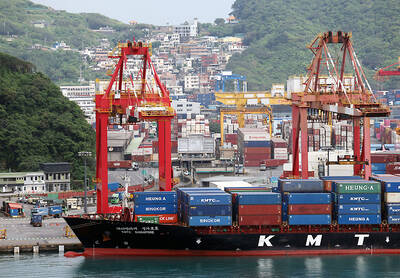
Taiwan’s economy grew far faster than expected in the first quarter, as booming demand for artificial intelligence (AI) applications drove a surge in exports, spilling over into investment and consumption, the Directorate-General of Budget, Accounting and Statistics (DGBAS) said yesterday. GDP growth was 13.69 percent year-on-year during the January-to-March period, beating the DGBAS’ February forecast by 2.23 percentage points and marking the most robust growth in nearly four decades, DGBAS senior official Chiang Hsin-yi (江心怡) told a news conference in Taipei. The result was powered by exports, which remain the backbone of Taiwan’s economy, Chiang said. Outbound shipments jumped 51.12 percent year-on-year to


 RSS
RSS