


International organizations continued their exodus from Iraq, with the UN announcing it was withdrawing staff from Baghdad following this week's string of car bombings in the capital and attacks against coalition troops.
Insurgents kept up their attacks against US and other targets, blasting a freight train carrying military supplies near Fallujah west of Baghdad. An improvised bomb caused no casualties but set four containers ablaze and sparked a frenzy of looting by residents who carried off computers, tents, bottled water and other supplies.
A soldier from the 2nd Brigade of the 101st Airborne Division was slightly injured early yesterday when a bomb exploded near a US convoy in the northern city of Mosul, the military said.
The exodus of humanitarian workers came despite assurances by top US administration officials, including US President George W. Bush, that the security situation in Iraq was steadily improving. It also followed a personal appeal by Secretary of State Colin Powell to the international Red Cross to remain in Baghdad because "if they are driven out, then the terrorists win."
The UN decision to pull its remaining international staff out of Baghdad was announced on Wednesday, two days after a deadly suicide car bombing at the Baghdad headquarters of the Red Cross.
"We have asked our staff in Baghdad to come out temporarily for consultations with a team from headquarters on the future of our operations, in particular security arrangements that we would need to take to operate in Iraq," UN spokeswoman Marie Okabe said.
She said it was not an "evacuation" and staff in the north would remain.
Okabe declined to give more details but about 60 UN staff members were believed to be in Iraq, including some 20 in Baghdad, after Secretary-General Kofi Annan ordered most others out in late September.
The UN scaled down its staff following the Aug. 19 truck bombing at its Baghdad headquarters that killed 23 people, including the top UN envoy to Iraq, Sergio Vieira de Mello, and a smaller blast near the UN offices last month.
Also Wednesday, the International Committee of the Red Cross (ICRC) and the humanitarian group Medecins Sans Frontieres, or Doctors Without Borders, said they too were pulling their workers out of Baghdad despite pleas from the US administration to stay.
The Red Cross said it would remain in Iraq but would scale back the number of international staff -- now numbering about 30 -- and increase security for those who stay. The agency has 600 Iraqi employees.
Asked yesterday about US pleas for the ICRC to stay put, the organization's Baghdad spokeswoman Nada Doumani said: "The ICRC will take its decision independently as it always had."
US forces are now suffering an average of 33 attacks a day -- up from about 12 daily attacks in July. A total of 117 American soldiers have been killed in combat since May 1 -- when Bush declared an end to major fighting -- or slightly more than the 114 soldiers who died in the invasion that began March 20.

Taiwan Semiconductor Manufacturing Co (TSMC, 台積電), the world’s largest foundry service provider, yesterday said that global semiconductor revenue is projected to hit US$1.5 trillion in 2030, after the figure exceeds US$1 trillion this year, as artificial intelligence (AI) demand boosts consumption of token and compute power. “We are still at the beginning of the AI revolution, but we already see a significant impact across the whole semiconductor ecosystem,” TSMC deputy cochief operating officer Kevin Zhang (張曉強) said at the company’s annual technology symposium in Hsinchu City. “It is fair to say that in the past decade, smartphones and other mobile devices were
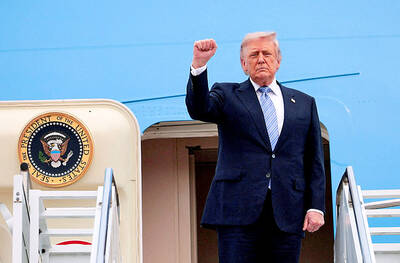
US-CHINA SUMMIT: MOFA welcomed US reassurance of no change in its Taiwan policy; Trump said he did not comment when Xi talked of opposing independence US President Donald Trump yesterday said he has not made a decision on whether to move forward with a major arms package for Taiwan after hearing concerns about it from Chinese President Xi Jinping (習近平). Trump’s comments on Taiwan came as he flew back to Washington after wrapping up critical talks in which both leaders said important progress was made in stabilizing US-China relations even as deep differences persist between the world’s two biggest powers on Iran and Taiwan. “I will make a determination,” Trump said, adding: “I’ll be making decisions. But, you know, I think the last thing we need right

TAIWAN ISSUE: US treasury secretary Scott Bessent said on the first day of meetings that ‘it wouldn’t be a US-China summit without the Taiwan issue coming up’ There were no surprises on the first day of the summit between US President Donald Trump and Chinese President Xi Jinping (習近平), the Mainland Affairs Council (MAC) said yesterday, as the government reiterated that cross-strait stability is crucial to the Asia-Pacific region, as well as the world. As the two presidents met for a highly anticipated summit yesterday, Chinese state media reported that Xi warned Trump that missteps regarding Taiwan could push their two countries into “conflict.” Trump arrived in China with accolades for his host, calling Xi a “great leader” and “friend,” and extending an invitation to visit the White House
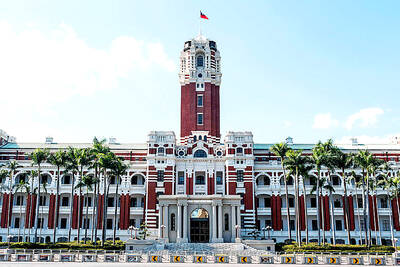
SECURITY: Taipei presses the US for arms supplies, saying the arms sales are not only a reflection of the US security commitment to Taiwan but also serve as a mutual deterrent against regional threats Taiwan is committed to preserving the cross-strait “status quo” and contributing to regional peace and stability, the Presidential Office said yesterday. “It is an undeniable fact that the Republic of China is a sovereign and independent democratic nation,” Presidential Office spokeswoman Karen Kuo (郭雅慧) reiterated, adding that Beijing has no right to claim sovereignty over Taiwan. The statements came after US President Donald Trump warned against Taiwanese independence. Trump wrapped up a state visit to Beijing on Friday, during which Chinese President Xi Jinping (習近平) had pressed him not to support Taiwan. Taiwan depends heavily on US security backing to deter China from carrying


 RSS
RSS