


People who enjoy smoking and chatting at cafes and restaurants may want to think twice about their pastime because it could cost them between NT$20,000 and NT$100,000 in fines.
The Executive Yuan yesterday approved draft amendments to the Tobacco Hazards Prevention Act (煙害防治法) that would prevent smoking in public places such as schools, museums and cafes.
It would also forbid proprietors and staffers of such public places from offering cigarettes to those under the age of 18 and free cigarettes to consumers.
The proposal will proceed to the legislature for further review and final approval.
Addressing a press conference held after the weekly closed-door Cabinet affairs meeting yesterday morning, Cabinet Spokesman Chuang Suo-hang (莊碩漢) said that it is necessary to amend the law, which went into effect in September 1997.
"Although the law was last amended in January 2000, we found that some articles are either incomplete or difficult to implement," Chuang said.
According to the proposal, people would be banned from smoking at schools, libraries, swimming pools and other public places.
Smoking would be allowed, however, in smoking areas set aside in certain public places. The size of those areas would not be allowed to exceed that of the venue's non-smoking area.
The smoking area would also have to be separate from the non-smoking area and have a separate air conditioning and ventilation system.
With the approval of the authorities, tobacco companies would be allowed to post advertisements in magazines that do not target readers under 18.
The total number of advertisements run by one tobacco company, however, however, will not be permitted to exceed 120 per year. Violators would face a fine of between NT$200,000 and NT$1 million.
The amendments would also require cigarette packages to carry consumer warnings on their labels and terms such as "low tar" would be banned.
Violators of those rules would face fines between NT$100,000 and NT$500,000.
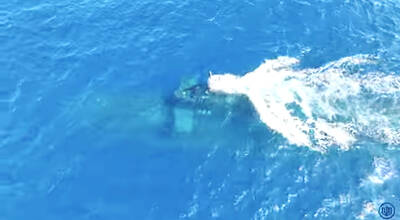
CSBC Corp, Taiwan (台灣國際造船) yesterday released the first video documenting the submerged sea trials of Taiwan’s indigenous defense submarine prototype, the Hai Kun (海鯤), or Narwhal, showing underwater navigation and the launch of countermeasures. The footage shows the vessel’s first dive, steering and control system tests, and the raising and lowering of the periscope and antenna masts. It offered a rare look at the progress in the submarine’s sea acceptance tests. The Hai Kun carried out its first shallow-water diving trial late last month and has since completed four submerged tests, CSBC said. The newly released video compiles images recorded from Jan. 29 to
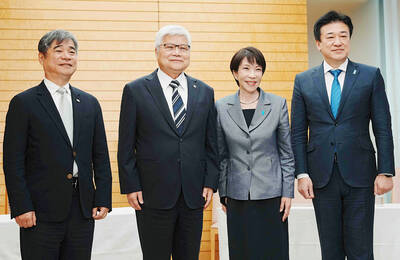
Taiwan Semiconductor Manufacturing Co (TSMC, 台積電) plans to make advanced 3-nanometer chips in Japan, stepping up its semiconductor manufacturing roadmap in the country in a triumph for Japanese Prime Minister Sanae Takaichi’s technology ambitions. TSMC is to adopt cutting-edge technology for its second wafer fab in Kumamoto, company chairman C.C. Wei (魏哲家) said yesterday. That is an upgrade from an original blueprint to produce 7-nanometer chips by late next year, people familiar with the matter said. TSMC began mass production at its first plant in Japan’s Kumamoto in late 2024. Its second fab, which is still under construction, was originally focused on
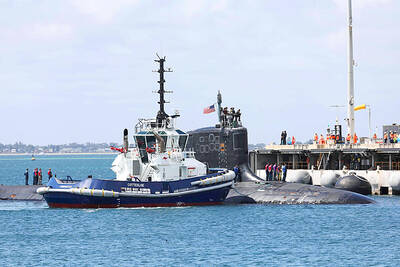
DETERRENCE EFFORTS: Washington and partners hope demonstrations of force would convince Beijing that military action against Taiwan would carry high costs The US is considering using HMAS Stirling in Western Australia as a forward base to strengthen its naval posture in a potential conflict with China, particularly over Taiwan, the Wall Street Journal reported on Saturday. As part of its Indo-Pacific strategy, Washington plans to deploy up to four nuclear-powered submarines at Stirling starting in 2027, providing a base near potential hot spots such as Taiwan and the South China Sea. The move also aims to enhance military integration with Pacific allies under the Australia-UK-US trilateral security partnership, the report said. Currently, US submarines operate from Guam, but the island could
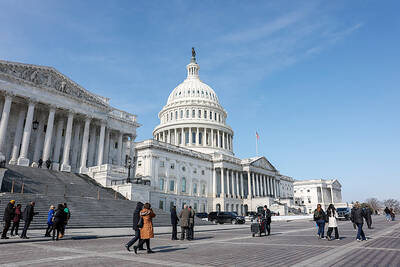
The partisan standoff over President William Lai’s (賴清德) proposed defense budget has raised questions about the nation’s ability to adequately fund its own defense, the US Congressional Research Service (CRS) said in a report released on Tuesday. The report, titled Taiwan: Defense and Military Issues, said the government has increased its defense budget at an average annual rate of 5 percent from 2019 to 2023, with about 2.5 percent of its GDP spent on defense in 2024. Lai in November last year proposed a special budget of about US$40 billion over eight years, and said he intends to increase defense spending to


 RSS
RSS