


It is viewed as a fitting end for a banana skin or a handful of spent coffee grounds. But now people are being urged to consider human composting and other environmentally friendly “deathcare” options.
Speaking before a talk at the American Association for the Advancement of Science conference in Seattle on Sunday, Lynne Carpenter-Boggs, a professor of soil science and sustainable agriculture at Washington State University, said: “Death certainly isn’t the biggest environmental impact we have in our life process. But we can still look for new alternatives.”
Washington recently became the first US state to legalize human composting and UK funeral directors are reporting a surge in requests for green burials and other more sustainable alternatives to burial and cremation.

Photo: AFP
Carpenter-Boggs, who also acts as scientific adviser to Recompose, a Seattle-based company that plans to open the world’s first human composting facility next year, presented data from a pilot project in which six bodies were composted to test the safety and effectiveness of the approach.
The process, known as natural organic reduction, turns a corpse into two wheelbarrows’ worth of soil in four to six weeks. The body is placed in a reusable hexagonal steel container along with wood chips, alfalfa and straw. By carefully controlling the humidity and ratio of carbon dioxide, nitrogen and oxygen, the system creates the perfect conditions for a class of heat-loving (thermophilic) microbes that dramatically accelerate the normal rate of decomposition.
“It’s a bit of a surprise that when the microbial activity starts up and there’s enough feedstock, a whole different class of organisms, called thermophilic organisms, become active,” said Carpenter-Boggs.
The pilot found that everything, including bones and teeth, is reliably transformed into compost (non-organic materials such as pacemakers and artificial hips are screened for and recycled). The soil was also found to contain low levels of coliform bacteria, an indicator of biological safety, meaning that relatives could safely scatter their loved ones’ remains like ashes, or use them to plant a rose bush or fertilise a vegetable patch.
The process reportedly uses an eighth of the energy of cremation.
According to Carpenter-Bogg, cremation in the US produces as much CO2 as burning 800,000 barrels of oil — for an individual, that is equivalent to taking a flight from London to Rome.
Burial can also be problematic: embalming fluids can leech into groundwater and coffins use up natural resources such as wood and metal.
Deborah Smith, of the UK’s National Association of Funeral Directors, said: “To date, human composting has not been undertaken in the UK, but there are ongoing attempts to introduce another alternative form of disposal, alkaline hydrolysis, referred to as water cremation, which is already permitted in some US states. For those seeking a burial in the UK that is as natural as possible, there are increasing numbers of privately owned burial grounds at which it is possible to be buried in a woodland setting, in a biodegradable shroud, with a tree or simple plaque marking the location.”
Sandy Sullivan, the founder of the Leeds-based company Resomation, which sells its liquid cremation machines to the US and is hoping to begin sales in the UK, said: “It’s low running cost, much more environmentally friendly.”
The process involves placing the body in a pressurised tank of water mixed with potassium hydroxide , which is heated to a temperature around 150 degrees Celsius. After four hours just the bones are left, which are pulverised into a white powder. “I think it’s a more gentle process than burning,” said Sullivan. “Families are choosing it mostly because they see it as gentler.”
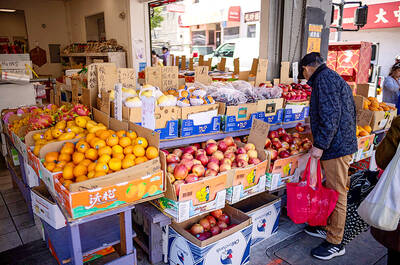
Ajay Verma, a consultant gastroenterologist at Kettering general hospital in Northamptonshire, says our gut is a “complex machine.” “It is constantly providing us with the nutrition we need, initially to grow and develop, and then for us to survive, thrive and repair from injury and illness.” How can we keep it functioning well? Put simply: “Make sure what you put into it is balanced, and that you clear out its waste products adequately,” Verma says. “In a general gastroenterology clinic, the most common conditions we see are irritable bowel syndrome (IBS), gastroesophageal reflux disease, inflammatory bowel disease and constipation,” says Nisha

And so, in the wake of US President Donald Trump’s trip to the People’s Republic of China (PRC), all the experts on the Strait of Hormuz suddenly became experts on US-China-Taiwan relations. The Internet has certainly expanded human knowledge. Lots of these sudden experts made noise this week about Trump’s words after the meeting with PRC dictator Xi Jin-ping (習近平). Trump is going to sell out Taiwan! Longtime Taiwan commentator J. Michael Cole summed the situation up neatly in the Guardian: “We need to keep in mind that he has a tendency to say many things — sometimes contradicting himself within

Last week US President Donald Trump was asked by a reporter whether he would speak on the phone to the President of Taiwan. “l’ll speak to him. I speak to everybody. We have that situation very well in hand,” Trump said. This marked the second time in a couple of weeks he had said he would talk to the President of Taiwan. In 2016 he famously took a call from then-president Tsai Ing-wen (蔡英文), when he was president-elect. Despite warnings that the apocalypse was nigh because of a phone call, the world quickly forgot about the conversation between two democratically-elected presidents.
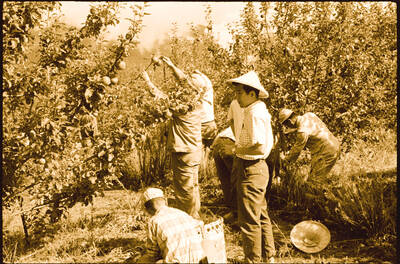
May 25 to May 31 Few believed that apples could be cultivated on a commercial scale in Taiwan’s high mountains. When horticulturalist Cheng Chao-hsiung (程兆熊) first proposed the idea in 1955, both American and Taiwanese colleagues dismissed it as implausible, arguing that temperate fruit could not be reliably grown on a subtropical island, especially on rugged terrain. However, it was this terrain in the Central Mountain Range where many Chinese Civil War veterans were resettled in the late 1950s. With limited job prospects and no family in Taiwan, they were placed on cooperative farms aimed toward self-sufficiency. Some say the conditions


 RSS
RSS