


Nov. 11 to Nov. 17
Eight months after her failed armed resistance against the Chinese Nationalist Party (KMT), Hsieh Hsueh-hung (謝雪紅) notified authorities that she wasn’t giving up.
The communist revolutionary had fled to China after her 27 Brigade disbanded in the aftermath of the 228 Incident, an anti-government uprising in 1947 that was brutally suppressed. From Hong Kong, she issued a statement on Nov. 1, 1947, blasting the KMT’s misrule of Taiwan, concluding with a call for Taiwanese to rally and join the united front with China to “oppose the KMT’s treasonous infighting and authoritarianism, and fight for an independent, peaceful and democratic new China!”
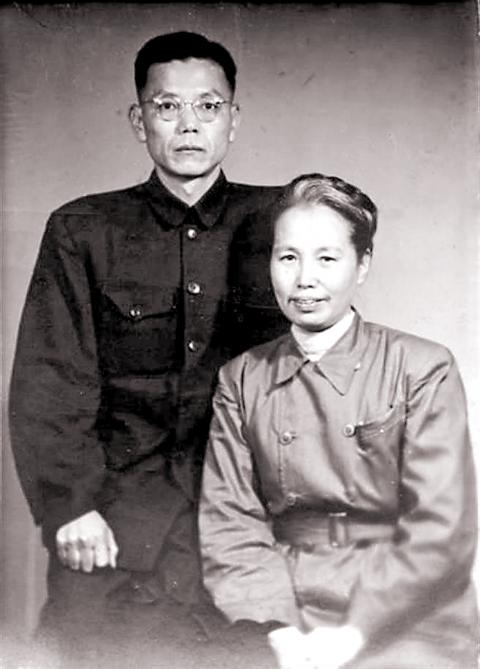
Photo courtesy of Wikimedia Commons
On Nov. 12, Hsieh, along with her long-time lover and comrade Yang Ke-huang (楊克煌) and former rival Su Hsin (蘇新) announced the formation of the Taiwan Democratic Self Governing League (台灣民主自治同盟, Taimeng). This party relocated to Beijing in 1949 and still exists today as one of the eight legally-recognized political parties in China.
According to a publication released by the party on its 70th anniversary, Taimeng “consists of people from Taiwan Province who reside in the motherland and are patriotic supporters of socialism. It is an active political party devoted to socialism with Chinese characteristics. In 70 years, Taimeng has never wavered in its support of the leadership of the Chinese Communist Party (CCP), and has actively participated in the revolution, development and reform of China.”
Since 1987, the party’s official mission has been to oppose Taiwanese independence and facilitate unification. But back when it was founded, its goal was to “liberate” Taiwan from the oppressive rule of KMT leader Chiang Kai-shek (蔣介石) and his imperialist American allies who sought to claim Taiwan as their own.
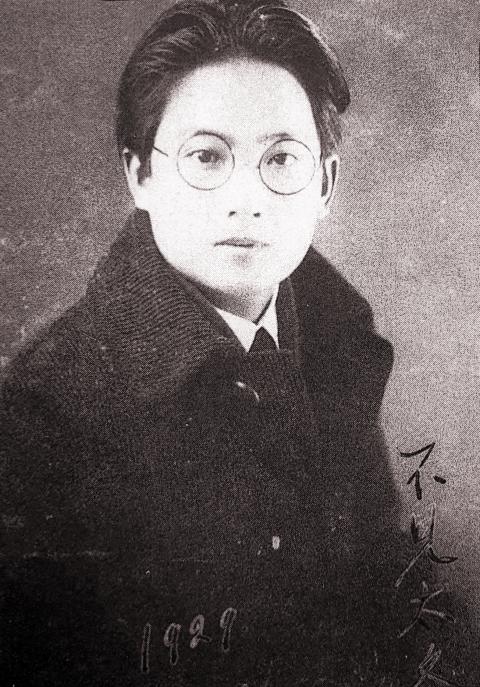
Photo courtesy of National Central Library
A number of White Terror cases in Taiwan were tied to this party, but further analysis shows that Taimeng was focused on China and had little clout in Taiwan. The KMT used the name as an excuse to arrest suspected communists, while other organizations operated under the name as a cover.
OPPOSE THE KMT
Hsieh met Yang when he joined the Taiwanese Communist Party in Japanese-ruled Taiwan in the late 1920s and 1930s, both spending significant time in prison for their activities. Su, who once opposed Hsieh as party leader, was also jailed around the same time.
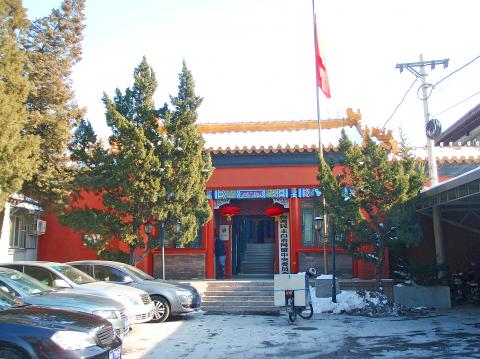
Photo courtesy of Wikimedia Commons
When Hsieh learned that the KMT was coming to take over Taiwan after Japan’s defeat, she issued a “Message to the Youth of Taiwan,” noting that if the new government didn’t give Taiwan democracy, they would continue to fight.
Hsieh founded the leftist Taiwan People’s Association (台灣人民協會) in September 1945, but the KMT forcefully disbanded it in January 1946. They kept their activities underground until the 228 Incident broke out. They made contact with the CCP after arriving in China and were soon dispatched to Hong Kong.
During the 228 Incident, Su ran a newspaper that criticized Taiwanese who sought to compromise with the government. He fled to China after escaping the large-scale newspaper purge in March 1947, reuniting with Hsieh and Yang in Hong Kong, and setting aside their past differences.
“Although we engaged in an intense factional struggle 20 years ago, I felt very happy that we were able to fight for the revolution together,” Su writes in his autobiography.
Since Hsieh and Yang’s autobiographies only detail their time in Taiwan, much information on Taimeng’s early days is gleaned from Su’s autobiography. He writes that their mission was to “inform Taiwanese of the domestic and international situation, especially regarding the revolution in China; to expose to the world “bandit Chiang’s” oppression and exploitation of Taiwanese; to use Hong Kong’s newspapers to openly oppose trusteeship and to prevent the imperialist Americans from invading Taiwan, and to unite Taiwanese in China and abroad.”
What’s ironic is that Su and Hsieh were both persecuted during the Cultural Revolution. Hsieh died in 1970, and wasn’t rehabilitated by the CCP until 1986. Su was rehabilitated in 1978, and rejoined the Taimeng in 1979. His writings continued to blast the KMT’s “extreme, brutal and barbaric political persecution” of Taiwanese, contending that the Taiwanese have been yearning to be liberated by the CCP for 30 years, even though he acknowledged that problems with the CCP have prevented that from happening.
Taimeng’s current chairwoman is Su Hui (蘇輝), daughter of former chairman Tsai Hsiao (蔡嘯), a Tainan native who joined the Chinese Red Army in 1937.
TAIMENG OR NOT TAIMENG?
In “Study of Taiwan Democratic Self-Governing League Incidents” (台灣民主自治同盟案件研究), Tseng Pei-chiang (曾培強) found 58 White Terror cases involving 417 people, the bulk of them taking place between 1950 and 1954, with the criminal details containing Taimeng’s full name instead of the abbreviation. Nearly half of the defendants were sentenced to more than 10 years in prison, while 91 of them received the death penalty.
However, many dispute the influence Taimeng had in Taiwan. Further research by Tseng shows that many of the so-called Taimeng cases were actually related to the Taiwan Provincial Work Committee (台灣省工作委員會), an underground CCP organization who often used Taimeng’s name as a cover for their activities.
Tseng concludes that only two of the cases were directly related to Taimeng: The 1949 Kuo Ming-che (郭明哲) case and the 1951 Ku Jui-ming (古瑞明) case. The study, “Investigation on leftist political cases during the 1950s” (1950年代左翼政治案件之探討) by Lin Cheng-hui (林正慧) reaches the same conclusion.
According to case documents, Kuo was a former Taiwan People’s Association member who joined Taimeng in 1947, while Tsai Po-chung (蔡伯仲) participated in Taimeng training in Hong Kong in 1948, returning to Taiwan that same year to “spread the poison of communism,” states his court documents.
Ku was a member of Hsieh’s 27 Brigade who returned to Taiwan after fleeing to Hong Kong and allegedly joining Taimeng. He was accused of plotting an armed rebellion in Taiwan, and 16 people were arrested for either participating in or failing to report Ku’s activities. Ku was executed, while fellow 27 Brigade member Huang Chin-tao (黃金島) was sentenced to life in prison.
Ku’s elder brother, Ku Jui-yun (古瑞雲) was also a founding member of Taimeng. He remained in China and suffered the same fate as Hsieh and Su.
Taiwan in Time, a column about Taiwan’s history that is published every Sunday, spotlights important or interesting events around the nation that have anniversaries this week.

Ajay Verma, a consultant gastroenterologist at Kettering general hospital in Northamptonshire, says our gut is a “complex machine.” “It is constantly providing us with the nutrition we need, initially to grow and develop, and then for us to survive, thrive and repair from injury and illness.” How can we keep it functioning well? Put simply: “Make sure what you put into it is balanced, and that you clear out its waste products adequately,” Verma says. “In a general gastroenterology clinic, the most common conditions we see are irritable bowel syndrome (IBS), gastroesophageal reflux disease, inflammatory bowel disease and constipation,” says Nisha

And so, in the wake of US President Donald Trump’s trip to the People’s Republic of China (PRC), all the experts on the Strait of Hormuz suddenly became experts on US-China-Taiwan relations. The Internet has certainly expanded human knowledge. Lots of these sudden experts made noise this week about Trump’s words after the meeting with PRC dictator Xi Jin-ping (習近平). Trump is going to sell out Taiwan! Longtime Taiwan commentator J. Michael Cole summed the situation up neatly in the Guardian: “We need to keep in mind that he has a tendency to say many things — sometimes contradicting himself within

Last week US President Donald Trump was asked by a reporter whether he would speak on the phone to the President of Taiwan. “l’ll speak to him. I speak to everybody. We have that situation very well in hand,” Trump said. This marked the second time in a couple of weeks he had said he would talk to the President of Taiwan. In 2016 he famously took a call from then-president Tsai Ing-wen (蔡英文), when he was president-elect. Despite warnings that the apocalypse was nigh because of a phone call, the world quickly forgot about the conversation between two democratically-elected presidents.
May 25 to May 31 Few believed that apples could be cultivated on a commercial scale in Taiwan’s high mountains. When horticulturalist Cheng Chao-hsiung (程兆熊) first proposed the idea in 1955, both American and Taiwanese colleagues dismissed it as implausible, arguing that temperate fruit could not be reliably grown on a subtropical island, especially on rugged terrain. However, it was this terrain in the Central Mountain Range where many Chinese Civil War veterans were resettled in the late 1950s. With limited job prospects and no family in Taiwan, they were placed on cooperative farms aimed toward self-sufficiency. Some say the conditions


 RSS
RSS