


Dance students, professionals and fans will have an interesting array of workshops and performances in the program that choreographer Ku Ming-shen (古名伸) and her team have put together for this year’s·i.dance Taipei (IDT).
However, while the focus is on movement, especially dance improvisation — hence the “i” — the festival is also about musicians working with sound and collaboration.
Improvisational dance is not about doing whatever you feel like in the moment, but about being interconnected, watching and listening.

Photo courtesy of Ku and Dancers
“I-dance Taipei” features a dozen workshops, a roundtable discussion, an open jam and five nights of performances under the banner “Spectrum of Dance Improvisation.”
The guest artists and performances come from Taiwan, Hong Kong, the UK, the US and Germany.
They include German choreographer/dancer Henrietta Horn; Chris Aiken and Angie Hauser, who both teach and choreograph at Smith College in Massachusetts; Taiwanese dancer/choreographer Kao Peiling (高沛齡), who teaches at the University of Hawaii and her movement and sound improvisation collective electroViolet (紫色電流); Victor Ma (馬才和) and Mandy Yim (嚴明然), cofounders of Y-SPACE (多空間) in Hong Kong; UK-based artist and researcher Thomas Kampe; San Francisco-based sound artist Jorge Bachman; German composer Thomas Neuhaus, and musicians Nelson Hiu (邱立信) and Edmund Leung (梁卓?).
The workshops will be held at Art Space 71, 71 Kaiming St, Beitou District, Taipei City (台北市北投區開明街71號), the converted elementary school in Beitou that is home to Ku & Dancers (古舞團) and several other dance and theater companies, while the performances will be at Songshan Cultural and Creative Park’s Song Yan Creative LAB in East Building 2F (松山文創園區 — 東向製菸工廠2樓).
The five shows will feature a changing line-up of performers; tickets are NT$800 per show; the “all you can watch personal pass” is sold out.
The workshops cost NT$1,200 per class and advance registration is required, which can be made online (docs.google.com/forms/d/e/1FAIpQLSenmS9iADVtBpDd8DHV5QXgxaE_vaMCWHwVwJCi9KPFKw9yyQ/viewform).
A full rundown of events and links to registration and tickets is available on the festival Web site in Chinese and English (idancetaipei.tw).
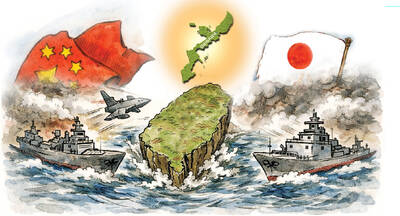
Beijing’s ironic, abusive tantrums aimed at Japan since Japanese Prime Minister Sanae Takaichi publicly stated that a Taiwan contingency would be an existential crisis for Japan, have revealed for all the world to see that the People’s Republic of China (PRC) lusts after Okinawa. We all owe Takaichi a debt of thanks for getting the PRC to make that public. The PRC and its netizens, taking their cue from the Chinese Communist Party (CCP), are presenting Okinawa by mirroring the claims about Taiwan. Official PRC propaganda organs began to wax lyrical about Okinawa’s “unsettled status” beginning last month. A Global
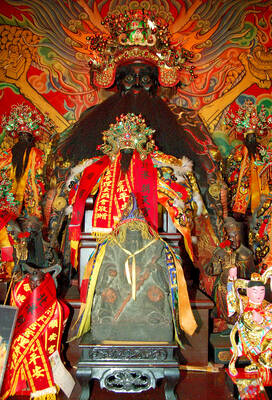
Dec. 22 to Dec. 28 About 200 years ago, a Taoist statue drifted down the Guizikeng River (貴子坑) and was retrieved by a resident of the Indigenous settlement of Kipatauw. Decades later, in the late 1800s, it’s said that a descendant of the original caretaker suddenly entered into a trance and identified the statue as a Wangye (Royal Lord) deity surnamed Chi (池府王爺). Lord Chi is widely revered across Taiwan for his healing powers, and following this revelation, some members of the Pan (潘) family began worshipping the deity. The century that followed was marked by repeated forced displacement and marginalization of

Music played in a wedding hall in western Japan as Yurina Noguchi, wearing a white gown and tiara, dabbed away tears, taking in the words of her husband-to-be: an AI-generated persona gazing out from a smartphone screen. “At first, Klaus was just someone to talk with, but we gradually became closer,” said the 32-year-old call center operator, referring to the artificial intelligence persona. “I started to have feelings for Klaus. We started dating and after a while he proposed to me. I accepted, and now we’re a couple.” Many in Japan, the birthplace of anime, have shown extreme devotion to fictional characters and
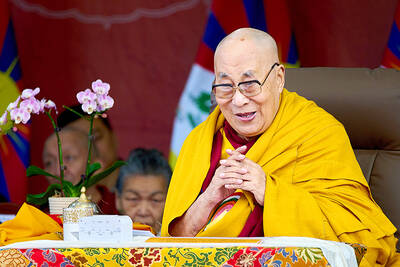
Youngdoung Tenzin is living history of modern Tibet. The Chinese government on Dec. 22 last year sanctioned him along with 19 other Canadians who were associated with the Canada Tibet Committee and the Uighur Rights Advocacy Project. A former political chair of the Canadian Tibetan Association of Ontario and community outreach manager for the Canada Tibet Committee, he is now a lecturer and researcher in Environmental Chemistry at the University of Toronto. “I was born into a nomadic Tibetan family in Tibet,” he says. “I came to India in 1999, when I was 11. I even met [His Holiness] the 14th the Dalai


 RSS
RSS