


There has been no press on Immortal Life (不滅之光) except for a few Chinese-language Christian publications, which is still surprising despite the main subject, Lee Chun-sheng (李春生), having been a devout Christian for his adult life. Lee financed the construction of several Presbyterian churches in Taipei and mandated that all his descendants follow the religion through his 45-article “family constitution,” but his significance to Taiwan reaches way beyond his faith.
Born in Xiamen in 1838 and arriving in Taiwan at the age of 30, Lee learned English by attending church and became a key player in developing Taiwan’s tea industry in the Dadaocheng (大稻埕) area. He imported 3,000 tea plants from China, branded it Formosa Oolong Tea and was among the first to export the product to the West. Combined with his kerosene business, Lee became one of the richest men in Taiwan.
Lee was also a prolific writer and philosopher who often explored the relationship between Chinese and Western thought, especially relating to religion. It’s encouraging that more Taiwanese history productions are appearing in recent years, despite mass audiences still preferring mainstream and Western productions.
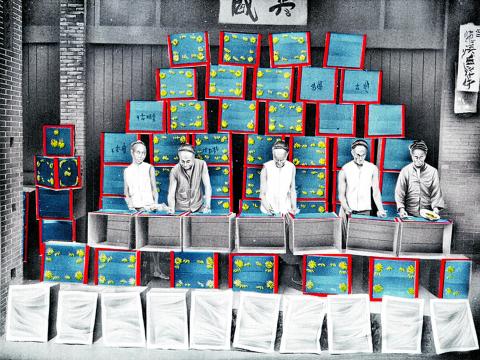
Photo courtesy of atmovies.com.tw
Immortal Life is only showing in one theater in Taipei, presumably for churchgoing audiences, but as a history enthusiast I wanted to see if there’s anything for the general viewer. It does get slightly preachy near the end and the soundtrack of uplifting orchestral music and piano hymns can get annoying — especially when it’s louder than the person speaking — but in general it provides a fairly nuanced picture of Lee’s career and ideals.
Christianity defined much of Lee’s life ever since he was baptized as a teenager, so that’s an integral part of the film, and while it’s a fine balance between preaching and presenting, the narration doesn’t come off as too overbearing.
This documentary is a production by Spring Film (春暉映像), which some may recognize as the 32-year-old distributor that brought to Taiwan now-legendary Hollywood flicks such as When Harry Met Sally, The Shawshank Redemption and The Fifth Element. For the past decade, it has invested in several local productions and also created original content, mostly documentaries. It’s unreasonable to compare a local history documentary to an American blockbuster, but Immortal Life could have taken a cue from Hollywood’s ability to entertain.
The problem is that there really isn’t a coherent narrative, while the style and formatting follows more of an educational video or television history special than a feature documentary. For starters, the film is divided into dry textbook-like chapters titled “Lee Chun-sheng’s early life,” “Lee Chun-sheng’s writings and philosophy,” and so on, and while there are some live scenes of the crew visiting Lee’s birthplace and tea farms in China with his descendants, most of it relies on old photos and talking heads.
Original animation and old photos liven things up, and while they aren’t particularly stunning, the film could have benefited from more of them.
There are plenty of angles the director could have pursued to tell a more compelling story. For example, Lee’s descendants are featured in the film, and an interesting take would have been to focus on a few of them following their ancestors’ footsteps, while having them demonstrate how Lee lives on, five or six generations later, through the “family constitution” that continues to influence their lives and spirituality. That is what truly makes Lee immortal as the film title suggests. Instead, this constitution is printed in its entirety — all 45 articles — in a mind-numbing sequence that lasted far too long.
A recurring problem with these lower-budget local documentaries is that more often than not, there are no English subtitles. While this keeps costs down, it also limits audience reach. It cannot be said enough that Taiwan needs all the exposure it can get — and surely foreign Christians would be drawn to this documentary even if they have no prior interest in Taiwanese culture and history.

Ajay Verma, a consultant gastroenterologist at Kettering general hospital in Northamptonshire, says our gut is a “complex machine.” “It is constantly providing us with the nutrition we need, initially to grow and develop, and then for us to survive, thrive and repair from injury and illness.” How can we keep it functioning well? Put simply: “Make sure what you put into it is balanced, and that you clear out its waste products adequately,” Verma says. “In a general gastroenterology clinic, the most common conditions we see are irritable bowel syndrome (IBS), gastroesophageal reflux disease, inflammatory bowel disease and constipation,” says Nisha
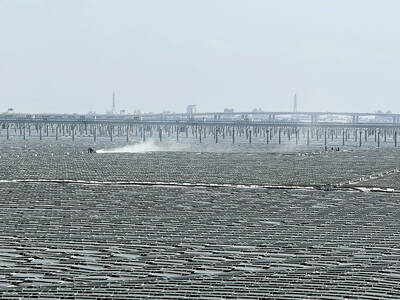
The arithmetic is straightforward and uncomfortable. By the end of 2025, Taiwan had committed itself to a 50-30-20 electricity mix — half natural gas, 30 per cent coal, 20 per cent renewables. The Ministry of Economic Affairs’s (MOEA) own monthly energy reports tell a different story. Natural gas reached 47.8 per cent of generation last year. Coal stood at 35.4 per cent, comfortably above its target ceiling. Renewables came in at 13.1 per cent, well short of the 20 per cent Taipei had pledged a decade earlier. Installed renewable capacity reached roughly half of the 12 gigawatts (GW) the government

Last week US President Donald Trump was asked by a reporter whether he would speak on the phone to the President of Taiwan. “l’ll speak to him. I speak to everybody. We have that situation very well in hand,” Trump said. This marked the second time in a couple of weeks he had said he would talk to the President of Taiwan. In 2016 he famously took a call from then-president Tsai Ing-wen (蔡英文), when he was president-elect. Despite warnings that the apocalypse was nigh because of a phone call, the world quickly forgot about the conversation between two democratically-elected presidents.
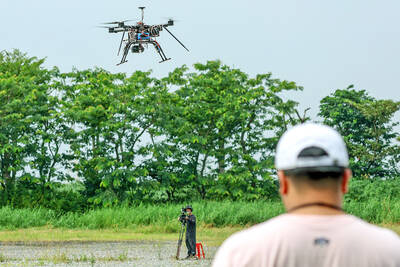
Taiwan’s drone exports are taking off, fuelled by the war in Ukraine, as Taiwanese companies seek a stake in the fast-growing global market for unmanned aerial vehicles (UAV). Low-cost drones used for reconnaissance and strikes are in high demand as governments around the world boost defense spending in the face of intensifying conflicts. A relative new player in the increasingly competitive industry, Taiwan’s pitch is to be an “Asian hub” for the production of UAVs and components free of Chinese materials, or “non-red.” That means its UAVs can be up to three times more expensive than their Chinese competitors, like the world’s biggest


 RSS
RSS