


Sometimes, particularly when looking at the weekend newspapers, it can seem that our obsession with food and health has reached a pitch of pure hysteria. “Eat!” screams one headline. “Diet!” shouts another.
Cut out carbohydrates, suggests one report. Carbs are good for you, says a different one. Lower your fat intake. No, fat’s healthy, sugar’s the problem. Coffee raises the risk of heart disease. But it lowers the risk of diabetes. And so on, until you just want to ditch the papers and watch The Great British Bake Off or MasterChef.
Food, how to cook it, what it does to you and what growing or rearing it does to the planet are issues that crowd the media. And yet, as the clamor grows, clarity recedes. An estimated 820 million people went hungry last year, according to the UN Food and Agriculture Organization. A third of all people were vitamin-deficient. Two billion were classified as overweight and 600 million as obese. It’s also estimated that one billion tonnes of food are wasted every year — a third of the total produced. A plethora of academic reports concerning food consumption and production have been published in recent years. The latest and arguably the most far-reaching is Food in the Anthropocene: the Eat- Lancet Commission on healthy diets from sustainable food systems, which was conducted over three years by 37 senior scientists from around the world and published earlier this year.

Photo: AFP
COMBATING FOOD DEMAND
To combat the world’s growing demand for food — there will be 10 billion people to feed by 2050 — we need to cut meat almost entirely out of our diet, say the authors of the report. The argument they put forward is that eating more plant-based foods will lower the incidences of heart disease, diabetes and cancer, enable more environmentally helpful use of land and reduce carbon emissions.
The report provides a “planetary health diet” based on eating vegetables, grains, pulses and nuts, which limits red meat to one serving a week and other animal protein to greatly reduced amounts, as little as an ounce a day of fish or chicken. This, say the authors, is what we should all be eating if we’re concerned about our health and that of the planet.
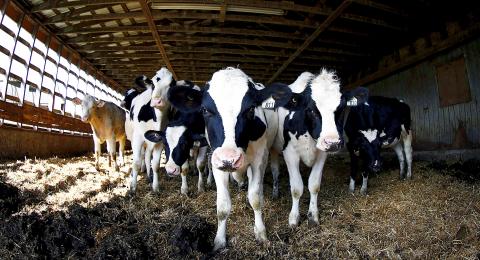
Photo: Reuters
The response has been mixed. In mainstream food science, the reaction has been overwhelmingly supportive, with leading figures noting the report’s findings are in broad agreement with nearly all previous large-scale studies. There has also been enthusiastic reception from interest groups such as, for example, the Soil Association.
However, there have been critics, who have used traditional and social media to air a variety of grievances. Their first target was the Norwegian couple Petter and Gunhild Stordalen whose foundation is one of the partners in Eat, the nonprofit organization dedicated to food-system reform, which collaborated with the Lancet to produce the report. The Daily Mail was one of the newspapers that focused on the couple’s globetrotting lifestyle , while the influential campaigning food writer Joanna Blythman described the report as “a top-down attempt by a small, unrepresentative dogmatic global elite to mold public agriculture policy.”
In fact, the report was wholly financed by the Wellcome Trust, which is also a participant in Eat, which supplied staff, but they were paid for by Wellcome Trust.
Another criticism Blythman raised was the prospect of “cranky diets and nutritional deficiencies in affluent countries and acute protein shortages in the poorer ones.” She’s not alone, with many bloggers weighing in to question Eat-Lancet’s findings.
LOCAL DIFFERENCE
One critic was Zoe Harcombe, who has a PhD in public health nutrition and has previously questioned dietary fat guidelines. Harcombe said that the Eat- Lancet diet was “nutritionally deficient” in vitamins B12, D, sodium, potassium and iron.
The National Farmers’ Union argued that the Eat-Lancet Commission report was a global report that neglected local differences.
“For example,” it said, “65 percent of UK farmland is highly suitable for grass production over other crops, so the UK is well placed to produce food from sustainable livestock grazing systems. Also, grassland is a very good store of carbon, helping to mitigate the effects of climate change.”
Then the official-sounding European Food Agency protested that the report would “result in an anti-livestock narrative.”
The EFA is, in fact, an independent agricultural news agency located in Italy. But a piece it ran by Frederic Leroy, professor of food science and biotechnology at the University of Brussels, and Martin Cohen, a research fellow in philosophy, gained a lot of attention on social media.
“Isn’t it remarkable,” wrote Leroy and Cohen, “how meat, symbolizing health and vitality since millennia, is now often depicted as detrimental to our bodies, the animals and the planet? Why exactly is the minoritarian discourse of vegetarianism and veganism currently all over the media?”
They spoke of “Big Ag” and a corporate conspiracy to push a vegan agenda for profit. They also claimed, as others have, that most of the research on which the report was based consists of epidemiological studies that can identify correlations but not prove causation. In other words, though there may be strong links between red meat eaters and the incidence of, say, bowel cancer, this could be attributable to other factors. Is it possible that a combination of well-meaning philanthropists and large agricultural concerns have united to exploit health fears for financial gain, while neglecting the nutritional shortcomings in their recommendations?
“Oh come on,” says Tim Lang, professor of food policy at City, University of London and a contributor to the Eat-Lancet Commission.
“That’s people scrabbling who don’t understand science. The point of exercises like the Eat-Lancet is to draw upon the best knowledge available. The people who criticize it usually haven’t got any knowledge at all.”
Lang says there is a scientific consensus on both the prognosis and diagnosis in terms of the world’s food systems, which he describes as “driving us towards massive ecosystems damage, massive diet-related ill-health at unbearable cost to poor and developing countries.” He mentions the three-year InterAcademy Partnership report, which came out in November last year. It, too, argued that the global food system was responsible for a third of greenhouse gas emissions and that meat consumption would have to be drastically reduced.
CULTURE WARS
But how do lay people make sense of the arguments? Is this like climate change, where a majority of scientists agree on the problem and a vociferous minority maintain that it’s been overstated? Or is this just another battlefield in the culture wars — the diet wars — in which politics determine perspective?
The way we see food will determine the way we are seen. Tara Garnett is principal investigator at the Oxford Martin Programme on the Future of Food. She was also one of the contributors to the Eat-Lancet Commission report.
“There is no way we all agree on everything that was written in that report,” she says. “I certainly have reservations about aspects of it. But it was a useful piece of work. There’s nothing new in there really. But it puts it all in one place. The fundamental message is that we’re not going to address our environmental problems unless we address the problems caused by the food system and we’re not going to address the problems caused by the food system unless we shift the way we eat collectively and globally.”
The problem with these kinds of stark warnings is that there is a tendency to switch off unless danger is imminent. In the west, our sense of urgency is dulled by the sheer abundance of food, even if it’s often not healthily consumed.
“Let’s put it this way,” says Giles Yeo, University of Cambridge geneticist and author of the anti-diet book Gene Eating, “if everyone in the world was able to eat like us in Europe, the world would collapse immediately. Which means if we’re going to get the other people in the world to eat like us, our diets are going to have to change.”
From a health perspective, Yeo is sceptical about one-size-fits-all diets. People respond differently to different foods, he says, depending on their genetic makeup. “The problem is the representation of risk. If I eat a steak, is that going to give me cancer? Probably not. For some people the risk of getting cancer from eating meat will be zero. And obesity doesn’t cause cancer. It’s a risk factor in cancer.”
But having raised these caveats, Yeo also believes that a flexitarian approach, what he calls “vegan with a small v,” is the most sensible way of reconciling all the issues presented by personal and environmental health.
At the moment, we still look at food largely from a gastronomic perspective. But as global population continues to rise and, along with it, concerns about environmental damage, climate change and the spiraling health costs of an obese and diabetic population, it is increasingly becoming a moral issue. The way we see food will determine the way we are seen.
If “you are what you eat” is a statement that refers to personal identity, then “you are what you don’t eat” may well govern individual morality in the years ahead. It isn’t difficult to imagine that meat eaters could soon be seen as akin to smokers.
Christiana Figueres, former executive secretary of the UN Framework Convention on Climate Change, recently said that meat eaters should be treated like smokers and be made to sit outside restaurants, because meat is “bad for the planet and our health.”
It’s an attitude that raises the spectacle of meat-shaming and using social guilt as a means of altering behavior.
“I’m not sure guilt is helpful,” Garnett says. “I think it leads to an attitude of ‘might as well be hanged for a sheep as a lamb.’ And it places undue emphasis on the individual, when the problems are systemic — as are the actions needed.”
For all the Eat-Lancet report’s detailed prescriptions, it makes more sense to see it as a general advisory statement designed to raise global awareness. After all, it’s not a text that customers are going to be studying while waiting for their Big Macs to be served.
“At last count there were 8.5 million food-insecure people in this country,” says Yeo. “So who are we to judge Mrs Smith going to Iceland to buy pizzas to feed the kids? Can we make the healthier choice the cheaper choice? It’s surely not beyond the wit of man. If you do that, people in the lower social class will choose the cheaper choice because it’s cheaper.”
Not beyond the wit of man, perhaps, but not yet within the interests of governments or food producers.

What was the population of Taiwan when the first Negritos arrived? In 500BC? The 1st century? The 18th? These questions are important, because they can contextualize the number of babies born last month, 6,523, to all the people on Taiwan, indigenous and colonial alike. That figure represents a year on year drop of 3,884 babies, prefiguring total births under 90,000 for the year. It also represents the 26th straight month of deaths exceeding births. Why isn’t this a bigger crisis? Because we don’t experience it. Instead, what we experience is a growing and more diverse population. POPULATION What is Taiwan’s actual population?

For the past five years, Sammy Jou (周祥敏) has climbed Kinmen’s highest peak, Taiwu Mountain (太武山) at 6am before heading to work. In the winter, it’s dark when he sets out but even at this hour, other climbers are already coming down the mountain. All of this is a big change from Jou’s childhood during the Martial Law period, when the military requisitioned the mountain for strategic purposes and most of it was off-limits. Back then, only two mountain trails were open, and they were open only during special occasions, such as for prayers to one’s ancestors during Lunar New Year.
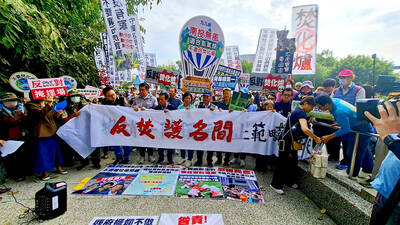
A key feature of Taiwan’s environmental impact assessments (EIA) is that they seldom stop projects, especially once the project has passed its second stage EIA review (the original Suhua Highway proposal, killed after passing the second stage review, seems to be the lone exception). Mingjian Township (名間鄉) in Nantou County has been the site of rising public anger over the proposed construction of a waste incinerator in an important agricultural area. The township is a key producer of tea (over 40 percent of the island’s production), ginger and turmeric. The incinerator project is currently in its second stage EIA. The incinerator

It sounded innocuous enough. On the morning of March 12, a group of Taichung political powerbrokers held a press conference in support of Deputy Legislative Speaker Johnny Chiang’s (江啟臣) bid to win the Chinese Nationalist Party (KMT) primary in the Taichung mayoral race. Big deal, right? It was a big deal, one with national impact and likely sent shivers down the spine of KMT Chairwoman Cheng Li-wun (鄭麗文). Who attended, who did not, the timing and the messaging were all very carefully calibrated for maximum impact — a masterclass in political messaging. In October last year, the Democratic Progressive Party (DPP)


 RSS
RSS