


Last Friday’s release of the dance video for Jolin Tsai’s (蔡依林) Womxnly (玫瑰少年) — the latest single off her fourteenth album Ugly Beauty (怪美的) — cracked open the song’s significance for a singer long regarded as a gay icon and ally.
The single’s Chinese title, which literally means “Rose Boy,” was the term of endearment for Yeh Yung-chih (葉永鋕), whose death in Apr. 20, 2000 at the age of 15 received national attention.
Prior to his death, Yeh was bullied at school for his perceived effeminate behavior. To avoid harassment, he would use the toilet just before breaktimes, when other students were still in class. When Yeh was found lying in a pool of blood in the toilet of his junior high school in Pingtung County, authorities concluded that a medical condition had caused him to slip and hit his head.

Photo: CNA
Yeh’s mother was critical of the outcome of the investigation and became an LGBTQ advocate. With growing clamor over the circumstances that led to Yeh being alone in the toilet in the first place, the government recalibrated its efforts to understand gender nonconformity and eliminate school bullying.
In December 2000, the Ministry of Education renamed its Gender Equity Education Committee (性別平等教育委員會), reflecting a substantive shift away from a gender binary framework to a more holistic understanding of gender. In June 2004, the Gender Equity Education Act (性別平等教育法) came into force.
The impact of Yeh’s life and death has had years to permeate through Tsai’s artistry, going back to her decision to screen a five-minute documentary featuring Yeh’s mother during her 2015 concert series. It is telling that Womxnly is the only track on Ugly Beauty where Tsai is credited as lead writer. Her lyrics are equal part earnest comfort (“Boy or girl, you can be whichever you want”) and sass (“A life in rosy hues shall be / The cold dish of revenge we serve the haters”) arranged over a very danceable electronic beat.
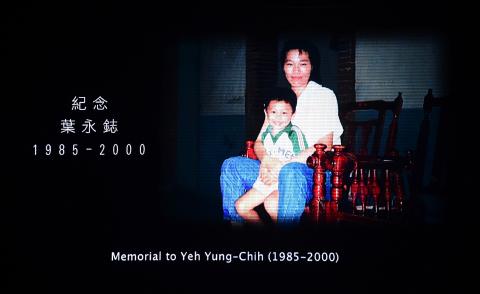
Photo: Pan Shao-tang, Liberty Times
New Zealand choreographer Kiel Tutin leads Tsai and her dancers through clever costume changes and contrasting facial expressions to embody an individual breaking out of society’s constraints into self-acceptance.
“The song says that regardless of gender, there is no established framework for gender identity,” Tutin wrote on Instagram.
Tsai has never relegated her support for the LGBTQ community to subtext. Most controversially, she and actress Ruby Lin (林心如) played a same-sex couple in the video for her 2014 single We’re All Different, Yet the Same (不一樣又怎樣). In less trustworthy hands, casting two apparently heterosexual women in that role would be criticized as lesbian-baiting. But Tsai only endeared herself to the LGBTQ community with the video’s storyline, which humanized the struggles faced by same-sex partners whose unions are not legally recognized.
It is rare, even in countries with robust civic discourse on human rights and identity politics, for mainstream interpretations of LGBTQ rights to be done well and with respect. Tsai is proving to be a virtuoso, down to the very progressive spelling of Womxnly, a term designed to include marginalized and intersectional groups such as trans women.
Ajay Verma, a consultant gastroenterologist at Kettering general hospital in Northamptonshire, says our gut is a “complex machine.” “It is constantly providing us with the nutrition we need, initially to grow and develop, and then for us to survive, thrive and repair from injury and illness.” How can we keep it functioning well? Put simply: “Make sure what you put into it is balanced, and that you clear out its waste products adequately,” Verma says. “In a general gastroenterology clinic, the most common conditions we see are irritable bowel syndrome (IBS), gastroesophageal reflux disease, inflammatory bowel disease and constipation,” says Nisha

And so, in the wake of US President Donald Trump’s trip to the People’s Republic of China (PRC), all the experts on the Strait of Hormuz suddenly became experts on US-China-Taiwan relations. The Internet has certainly expanded human knowledge. Lots of these sudden experts made noise this week about Trump’s words after the meeting with PRC dictator Xi Jin-ping (習近平). Trump is going to sell out Taiwan! Longtime Taiwan commentator J. Michael Cole summed the situation up neatly in the Guardian: “We need to keep in mind that he has a tendency to say many things — sometimes contradicting himself within

Last week US President Donald Trump was asked by a reporter whether he would speak on the phone to the President of Taiwan. “l’ll speak to him. I speak to everybody. We have that situation very well in hand,” Trump said. This marked the second time in a couple of weeks he had said he would talk to the President of Taiwan. In 2016 he famously took a call from then-president Tsai Ing-wen (蔡英文), when he was president-elect. Despite warnings that the apocalypse was nigh because of a phone call, the world quickly forgot about the conversation between two democratically-elected presidents.
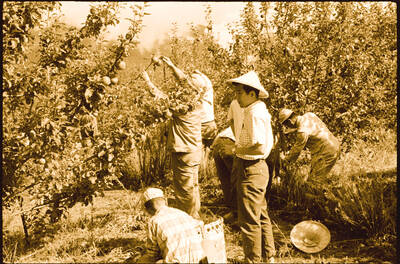
May 25 to May 31 Few believed that apples could be cultivated on a commercial scale in Taiwan’s high mountains. When horticulturalist Cheng Chao-hsiung (程兆熊) first proposed the idea in 1955, both American and Taiwanese colleagues dismissed it as implausible, arguing that temperate fruit could not be reliably grown on a subtropical island, especially on rugged terrain. However, it was this terrain in the Central Mountain Range where many Chinese Civil War veterans were resettled in the late 1950s. With limited job prospects and no family in Taiwan, they were placed on cooperative farms aimed toward self-sufficiency. Some say the conditions


 RSS
RSS