


In Little Forest, a young woman moves back to her childhood farming village in the countryside to escape the hardships and disappointments of city life. Even though it doesn’t offer any surprises, this slice-of-life drama by South Korean director Yim Soon-rye is an endearing and understated celebration of nature, food, friendship and family.
The film’s protagonist is Hye-won (Kim Tae-ri), a 20-something-year-old who aspires to be a teacher. She has just failed her teaching certification exam in Seoul, works a deadbeat part-time job at a convenience store and is on rocky terms with her boyfriend. Disenchanted and exhausted, she decides to return to her farming roots in the countryside, inhabiting her old, empty house which her mother (Moon So-ri) left behind after mysteriously vanishing years ago. Besides having a pet dog named Ogu for company, Hye-won reconnects with two childhood friends, fruits and vegetables farmer Jae-ha (Ryu Jun-yeol) and Eun-sook (Jin Ki-joo), who work in a nearby town as a bank teller.
Little Forest plays out in a slow, unhurried pace that beckons audiences to focus on the journey instead of the destination. It falls right into the mould of your typical, feel-good cinematic fare, but the film proves that a threadbare plot can still be effective with stellar execution. While the narrative mostly revolves around Hye-won re-adjusting to the country life, this is a small film with a very big heart, thanks to Yim’s meticulous direction and attention paid to the finest details.
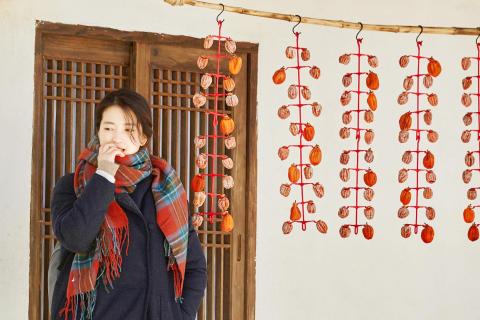
Photo courtesy of Far East Film
Not only does the film’s four-act structure chronicle the changing of the seasons with vivid aesthetics, the climate transitions and growth of crops symbolically parallel Hye-won’s own year-long emotional renewal. In the opening scenes she begins rebuilding her life with uncertainty in a sparse, cold wintry environment; only in summer does she begin to reap the fruits of her labor with a plentiful harvest.
Audiences should be warned not to watch the film on an empty stomach — much of Little Forest is dedicated to attractive cooking scenes which demonstrate the redemptive power of homecooked comfort food. “I came back because I’m hungry,” quips Hye-won, lamenting how the instant convenience store meals in the city never filled her up.
Yim films these foodie scenes with tender, loving care: extended close-ups — including some Instagram-worthy flat lays — intricately detail the step-by-step process in preparing a spread of cuisines. Hye-won uses fresh ingredients from the natural environment to create Korean dishes such as kimchi sujebi (hand torn noodle soup) and makgeolli (rice wine), as well as edible plant items like fried acacia flower fritters.
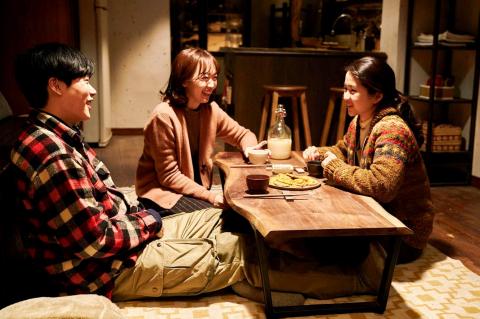
Photo courtesy of Far East
It’s an assault of the senses all around: there’s something strangely therapeutic about watching (and listening to) Hye-won knead chewy dough, squelch rice grains in a bowl and delicately assemble layers of coloured flour to create a red bean steamed rice cake.
But far from being an indulgent display of food porn, cooking also serves as a conduit for our protagonist to revisit her past shared memories with her enigmatic mother, who passed down her boundless recipes and love for cooking to her. Veteran actress Moon as the absent matriarch appears in recurring flashbacks that offer glimpses of their sweet, bickering mother-daughter relationship, which also ultimately forms the emotional core of Little Forest.
Kim Tae-ri, who was last seen in political thriller 1987: When the Day Comes, is an absolute delight as the hardy, stubborn Hye-won determined to overcome the trials and tribulations in her life. Having a young actress carry an entire film is no mean feat, but Kim does it easily with her naturally likeable screen presence, managing to remain engaging onscreen even when she’s just shovelling snow off a driveway.
Popular actor Ryu Jun-yeol and newcomer Jin Ki-joo also deliver as her best friends, with the trio exuding winning chemistry as they squabble over jugs of milky-white makgeolli and candlelit bentos by the river.
“When things are hard, remember the scent of the sun, wind and rain,” muses Hye-won’s mother in a handwritten letter. With plenty of escapist appeal, Little Forest no doubt romanticizes the countryside as a rich, rural idyll where problems are easily solved, conveniently bypassing the share of difficulties faced by the farming community too.
Still, there’s something to be learned from the film’s humble appreciation of the simpler, tiny pleasures in life, be it staring out of a window listening to the sound of raindrops, fishing in the river bank in the dead of the night, or relishing the taste of dried persimmons in winter. It’s a much-needed reminder for all of us to stop and smell the roses every once in a while.
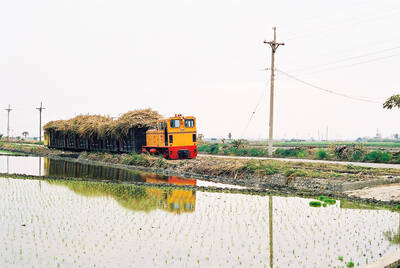
Jan. 5 to Jan. 11 Of the more than 3,000km of sugar railway that once criss-crossed central and southern Taiwan, just 16.1km remain in operation today. By the time Dafydd Fell began photographing the network in earnest in 1994, it was already well past its heyday. The system had been significantly cut back, leaving behind abandoned stations, rusting rolling stock and crumbling facilities. This reduction continued during the five years of his documentation, adding urgency to his task. As passenger services had already ceased by then, Fell had to wait for the sugarcane harvest season each year, which typically ran from

It’s a good thing that 2025 is over. Yes, I fully expect we will look back on the year with nostalgia, once we have experienced this year and 2027. Traditionally at New Years much discourse is devoted to discussing what happened the previous year. Let’s have a look at what didn’t happen. Many bad things did not happen. The People’s Republic of China (PRC) did not attack Taiwan. We didn’t have a massive, destructive earthquake or drought. We didn’t have a major human pandemic. No widespread unemployment or other destructive social events. Nothing serious was done about Taiwan’s swelling birth rate catastrophe.

Words of the Year are not just interesting, they are telling. They are language and attitude barometers that measure what a country sees as important. The trending vocabulary around AI last year reveals a stark divergence in what each society notices and responds to the technological shift. For the Anglosphere it’s fatigue. For China it’s ambition. For Taiwan, it’s pragmatic vigilance. In Taiwan’s annual “representative character” vote, “recall” (罷) took the top spot with over 15,000 votes, followed closely by “scam” (詐). While “recall” speaks to the island’s partisan deadlock — a year defined by legislative recall campaigns and a public exhausted

In the 2010s, the Communist Party of China (CCP) began cracking down on Christian churches. Media reports said at the time that various versions of Protestant Christianity were likely the fastest growing religions in the People’s Republic of China (PRC). The crackdown was part of a campaign that in turn was part of a larger movement to bring religion under party control. For the Protestant churches, “the government’s aim has been to force all churches into the state-controlled organization,” according to a 2023 article in Christianity Today. That piece was centered on Wang Yi (王怡), the fiery, charismatic pastor of the


 RSS
RSS