


Against the background of renewed interest in Taiwan’s history, I surveyed 1054 high school and college students in Tainan from January to March this year and asked them their views on the periods of Dutch rule (1624-1662) and Cheng Cheng-kung (鄭成功, also known as Koxinga) family rule (1662-1683). In order to have a measure of comparison, the students were also asked to give their opinion on the Qing Dynasty rule (1683-1895) and Japanese colonial rule (1895-1945).
STUDENT AWARENESS
Overall, the percentage of those who didn’t know enough about a particular period of history to say whether it had or had not been good for Taiwan varied around 25 percent for the Dutch, Koxinga and Qing Dynasty periods, and dropped to 15.5 percent for the Japanese period.
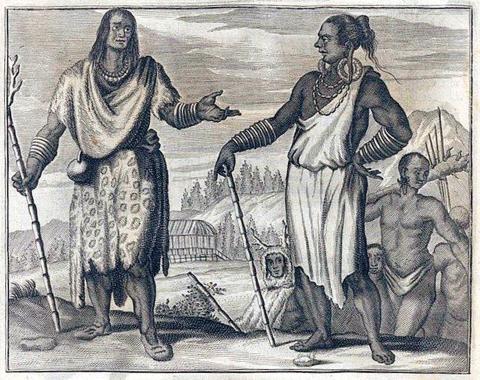
photo courtesy of wikimedia commons
These numbers (25 percent “don’t know”) still indicate a significant lack of knowledge about the earlier periods. This is probably due to the still minimal amount of time spent on these periods in the current history curriculum. Several students complained about the lack of sufficient time spent on history as compared to Chinese history and classical Chinese texts which have little relevance to present-day Taiwan.
ABORIGINES, TAIWANESE AND OTHERS
One of the key characteristics of the survey is the relatively high percentage of students who consider themselves Aboriginal (177 out of 1054, or 16.8 percent). This enables us to compare the views of Aboriginal and non-Aboriginal students.
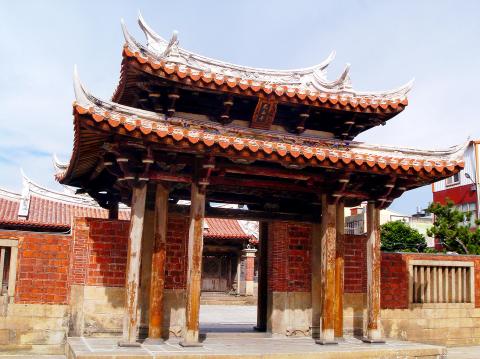
photo: Courtesy of wikimedia commons
For the period of Dutch rule (1624-1662) both the Aboriginal respondents and those who identified themselves as “Ethnic Taiwanese” consider it to have been good for Taiwan, 54.2 percent and 56.4 percent respectively.
For the “Others” category — (those who identified themselves as Hakka, Mainlander and others) — it drops to slightly below 50 percent, but this is probably due to the fact that this group included a number of foreign students who had had no exposure to Taiwan’s history, and responded “I don’t know.” For all three groups, the respondents who had a negative perception of the Dutch period hovered around 22 percent.
For the period of Koxinga family rule (1662-1683) we see a very different picture. Among Aboriginal respondents, his rule is disliked by 43.4 percent while 32.6 percent agreed that his rule was good for Taiwan. Twenty-four percent say they don’t know. However, 67.6 percent of Ethnic Taiwanese had a positive view of him, with 9.6 percent disagreeing. Among the Others category, the positions are somewhere in between: a slight majority (53.0 percent) is positive while 12.5 percent is negative, with a relatively high percentage (34.5 percent) saying they don’t know.
photo: Courtesy of wikimedia commons
The period of Qing Dynasty rule is worst off. Aboriginal respondents are overwhelmingly (58.5 percent) critical, with 18.8 percent having a positive image of the period. For Ethnic Taiwanese respondents the picture is slightly better, with 42.9 percent positive and 33.9 percent negative. For the Others category of respondents, the pictures is quite similar: 38.3 percent positive and 27.3 percent negative.
The period of Japanese rule (1895-1945) is generally considered most positive by all three groups of respondents, but again the Aboriginal students are most critical with 44.6 percent positive and 39.0 percent negative. The Ethnic Taiwanese group is overwhelmingly positive, with 70.5 percent agreeing it was good for Taiwan, and only 16.8 percent disagreeing. The Others category again come down somewhere in between, with 54.9 percent agreeing it was good for Taiwan, and 23.9 percent disagreeing.
DIFFERENT PERIODS, DIFFERENT TAKES
Why are the different periods of Taiwan’s history valued so differently? In their responses to “Give a reason why,” the students wrote in a large number of opinions.
On the Dutch period, the positive comments included “improving the lives of the Aboriginal people,” “bringing in new agricultural products,” and “introducing water buffaloes to improve agriculture.” Others stated that the Dutch “brought Taiwan into the world trading system,” and also provided schooling and developed a written language for the Siraya Aborigines in an area northeast of present-day Tainan. On the negative side, respondents criticized the Dutch for their colonial exploitation, and for trade practices that led to the extinction of the Formosan sika deer.
The period of Koxinga family rule was seen positively by those who felt that he had brought new immigrants from Fukien province to Taiwan to develop agriculture, laid the foundation of a new Han Chinese society and for introducing a preliminary schooling system at the site of the Confucius Temple in Tainan. Those who viewed the Cheng period negatively emphasized that Koxinga and his family had killed many Aborigines. They also felt he exploited them, destroyed their culture and stole their women and land. A number also criticized Koxinga for using Taiwan as a base to regain control of China.
The period of Qing Dynasty rule was seen negatively by Aboriginal respondents because they oppressed Aboriginal people, taking away their land and forcing them to accept Han culture. Other students stated that the Qing marginalized Taiwan by restricting development and impairing contacts between Taiwan and the outside world. Many respondents also mentioned widespread corruption among Qing government officials, starting with Shih Lang (施琅) — the first official to rule Taiwan on behalf of the Qing. The only positive comments about Qing Dynasty rule related to the efforts of governor Liu Ming-chuan (劉銘傳) in the late 1880s, who started to develop railways and a telegraph system.
The period of Japanese rule was overwhelmingly considered positive because they initiated a major expansion of modern infrastructure, such as roads, railroads and other public works. The Japanese were also credited for starting a public health system, an education system up to university level, irrigation systems and tap water. A number of people also mentioned that the Japanese introduced the Western system of keeping time, and “taught Taiwan to be law-abiding and punctual with time.”
The detractors of the Japanese period mentioned racial discrimination against both Taiwanese and Aborigines, and a number also mentioned the killings that took place during the “pacification campaigns” in the early years of the era.
SIGNIFICANCE FOR TODAY
These early events in Taiwan’s history laid the foundation of present-day Taiwan: a multi-cultural society with many different historic roots.
The fact that the social origins are clearly rooted in the Aboriginal population is finding increasing recognition, as seen in President Tsai Ing-wen’s (蔡英文) inauguration ceremony and apology to Aborigines last year.
But this new multi-cultural Taiwanese identity also cherishes the Hoklo-speaking part of the population (70 percent), the Hakka-speaking population (15 percent) and the descendents of the Chinese mainlanders, who came over to Taiwan with Chiang Kai-shek (蔣介石) after 1945.
One point of broad agreement among all these groups is that they would like to see an end to the political and diplomatic isolation into which Taiwan has been pushed by its recent history, and broadly support Taiwan playing a more prominent role internationally.
The fact that at several points in its long history Taiwan was already connected to the world, both to the Pacific Islanders through cultural links as long as 3,500 years ago as well as to Japan and Southeast Asia through the Dutch trading system in the 17th century is supportive of the broader narrative that Taiwan has long been an “Ocean nation” that survived and thrived.
Thus, as Taiwan prepares to play a fuller and more integral role in the international community and be a part of globalization in the 21st century, it can look back at — and make use of — a long history with strong connections to the outside world.
Gerrit van der Wees is a former Dutch diplomat who also served as editor of ‘Taiwan Communique,’ a publication in Washington DC. He currently teaches history of Taiwan at George Mason University.

It starts out as a heartwarming clip. A young girl, clearly delighted to be in Tokyo, beams as she makes a peace sign to the camera. Seconds later, she is shoved to the ground from behind by a woman wearing a surgical mask. The assailant doesn’t skip a beat, striding out of shot of the clip filmed by the girl’s mother. This was no accidental clash of shoulders in a crowded place, but one of the most visible examples of a spate of butsukari otoko — “bumping man” — shoving incidents in Japan that experts attribute to a combination of gender

The race for New Taipei City mayor is being keenly watched, and now with the nomination of former deputy mayor of Taipei Hammer Lee (李四川) as the Chinese Nationalist Party’s (KMT) candidate, the battle lines are drawn. All polling data on the tight race mentioned in this column is from the March 12 Formosa poll. On Christmas Day 2010, Taipei County merged into one mega-metropolis of four million people, making it the nation’s largest city. The same day, the winner of the mayoral race, Eric Chu (朱立倫) of the Chinese Nationalist Party (KMT), took office and insisted on the current

Last week the government announced that by year’s end Taiwan will have the highest density of anti-ship missiles in the world. Its inventory could exceed 1,400, or enough for the opening two hours of an invasion from the People’s Republic of China (PRC). Snark aside, it sounds impressive. But an important piece is missing. Lost in all the “dialogues” and “debates” and “discussions” whose sole purpose is simply to dawdle and delay is what the Chinese Nationalist Party (KMT) alternative special defense budget proposal means for the defense of Taiwan. It is a betrayal of both Taiwan and the US. IT’S
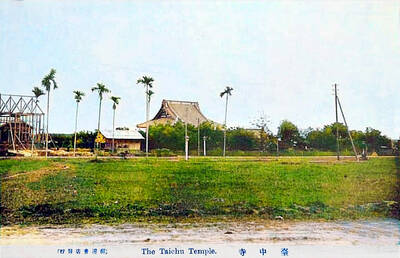
March 16 to March 22 Hidden for decades behind junk-filled metal shacks, trees and overgrowth, a small domed structure bearing a Buddhist swastika resurfaced last June in a Taichung alley. It was soon identified as a remnant of the 122-year-old Gokokuzan Taichuu-ji (Taichung Temple, 護國山台中寺), which was thought to have been demolished in the 1980s. In addition, a stone stele dedicated to monk Hoshu Ono, who served as abbot from 1914 to 1930, was discovered in the detritus. The temple was established in 1903 as the local center for the Soto school


 RSS
RSS