


On the morning of July 13, 1949, hundreds of secondary school students from China’s Shandong Province were rounded up by the Nationalist military at the drilling grounds of the military base on Penghu Island.
These refugees of the Chinese Civil War had just arrived with their schools’ educators, reportedly being promised to be able to continue their education while also undergoing military training. But the military commanders in Penghu had other ideas.
There are many versions of what transpired next, which would years later be known as the 713 Penghu Incident (七一三澎湖事件). The accounts mentioned below were taken from students who were present at the time.
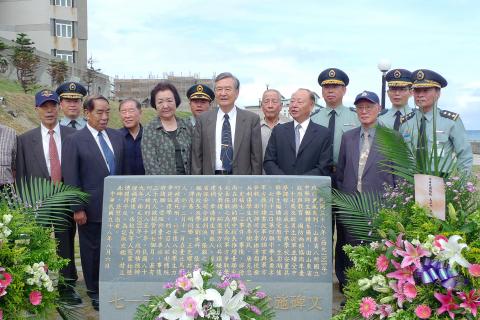
Photo: Luo Tien-pin, Taipei Times
Tang Ke-chung (唐克忠) says in an oral history interview with Academia Sinica that he already had a bad feeling upon arrival as the male students were isolated in a military compound and forbidden from leaving. The teachers and female students were nowhere to be seen.
Huang Tuan-li (黃端禮) says when they asked where the teachers were, the officer told him, “You are all soldiers now. Studying will not help you fight the Communists.”
“They even confiscated our textbooks,” he adds.
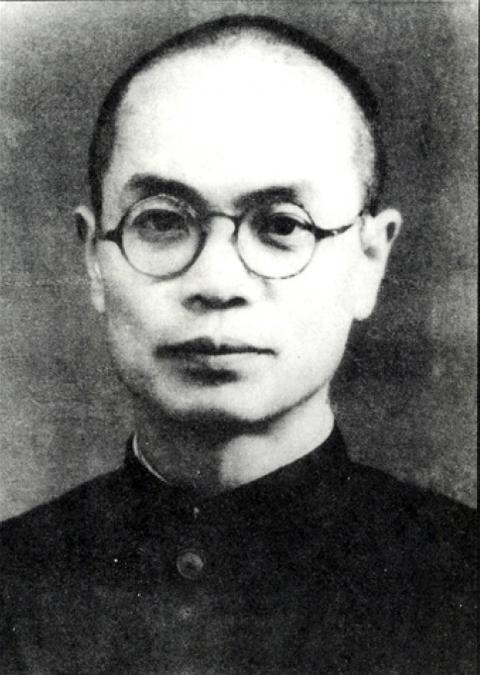
Photo courtesy of Wikimedia Commons
Once at the drilling grounds, the military started their forced conscription of the students into army units, reportedly to bolster their thin ranks. Surrounded by armed troops and machine guns on the rooftops, Tang says nobody resisted at first — until the they started targeting those who were underage.
“That did not sit well with us,” Tang says. “We started telling them that we came here to study, or at least half-study and half-train. And it all started from there.”
Tang and another student stepped up onto the flag-raising platform and led the crowd, chanting slogans in protest. Several soldiers rushed toward them with bayonets, stabbing Tang in the buttocks and the thigh and the other student in the arm. Huang confirms these events.
“They tied us up and took us away, and we do not know what happened afterward,” Tang says. He heard that many students were arrested later and more were put into sacks and thrown into the ocean, but he cannot confirm it since he was locked up for the next three months.
Huang says once they saw all the blood from the protest leaders’ wounds, they were scared into submission with no further incident. There has been recent controversy about whether the military actually opened fire on the students — some historians state that they did — but all seven direct witness accounts examined only mention the stabbings.
FICTIONAL CONFESSIONS
The real aftermath came later, as school principals Chang Min-chih (張敏之) and Tsou Chien (鄒鑑) attempted to report the incident to the authorities and save the students.
Unhappy with the principals’ resistance, the military arrested more than 100 students — now soldiers — around the end of July, “forcing” confessions of being Communist spies out of them, leading to the arrest of Chang and Tsou.
Taiwan was already under martial law back then, and any suspicion of being a Communist could lead to automatic execution. The saying was, “Rather kill 100 people wrongfully than let one person get away.”
Sun Hsu-chen (孫序振) was one of the students arrested without warning. He notes that when he was brought to the ocean, he was afraid that he would be put into a sack and tossed into the sea — the same practice that was mentioned by Tang.
Sun says that he was repeatedly tortured — with beatings, electrocution and even “fake” executions where the bullets would miss intentionally — while the military told him exactly what to say to implicate Chang and Tsou.
“Otherwise, how would we at such a young age know anything about the organization of the Communists?” Sun says.
Ho Chen-yu (賀振宇) says that since none of their confessions matched, the military made up a unified fictional Communist spy organization and even assigned specific positions and roles to all the arrested students.
When Sun finally gave in, he found that even his confession was already written for him. Fortunately, he and about 60 other students were released and re-organized into an army unit. About 40 others were brought to Taipei to stand trial. When they landed, spectators pelted them with garbage and called them traitors.
Chu Fu-shan (初福山), only 16 years old, was one of them. He recalls crying in court and refusing to admit to being a spy. Surprisingly he and another student were spared. Others were not so lucky.
On Dec. 12, an article with the harrowing title, You Cannot Escape, Seven Communist Spies Executed Yesterday (你們逃不掉的, 昨續槍決匪諜七名) appeared on page four of the Central Daily News (中央日報), accusing Chang, Tsou, and five students of planning to incite military rebellion in Penghu.
“Citizens glared at the accused angrily, and as the bullets rang and the bandits fell, everyone in the audience expressed their gratification,” the article stated.
“We hereby warn all Communist spies that Taiwan is a steel fortress, and your military subversion tricks will not work here,” another article concluded.
Taiwan in Time, a column about Taiwan’s history that is published every Sunday, spotlights important or interesting events around the nation that have anniversaries this week.
It starts out as a heartwarming clip. A young girl, clearly delighted to be in Tokyo, beams as she makes a peace sign to the camera. Seconds later, she is shoved to the ground from behind by a woman wearing a surgical mask. The assailant doesn’t skip a beat, striding out of shot of the clip filmed by the girl’s mother. This was no accidental clash of shoulders in a crowded place, but one of the most visible examples of a spate of butsukari otoko — “bumping man” — shoving incidents in Japan that experts attribute to a combination of gender

The race for New Taipei City mayor is being keenly watched, and now with the nomination of former deputy mayor of Taipei Hammer Lee (李四川) as the Chinese Nationalist Party’s (KMT) candidate, the battle lines are drawn. All polling data on the tight race mentioned in this column is from the March 12 Formosa poll. On Christmas Day 2010, Taipei County merged into one mega-metropolis of four million people, making it the nation’s largest city. The same day, the winner of the mayoral race, Eric Chu (朱立倫) of the Chinese Nationalist Party (KMT), took office and insisted on the current
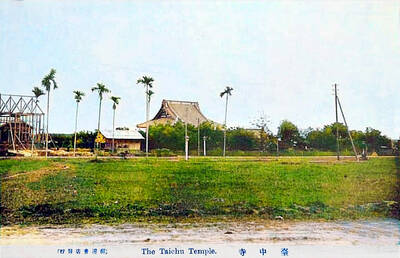
March 16 to March 22 Hidden for decades behind junk-filled metal shacks, trees and overgrowth, a small domed structure bearing a Buddhist swastika resurfaced last June in a Taichung alley. It was soon identified as a remnant of the 122-year-old Gokokuzan Taichuu-ji (Taichung Temple, 護國山台中寺), which was thought to have been demolished in the 1980s. In addition, a stone stele dedicated to monk Hoshu Ono, who served as abbot from 1914 to 1930, was discovered in the detritus. The temple was established in 1903 as the local center for the Soto school
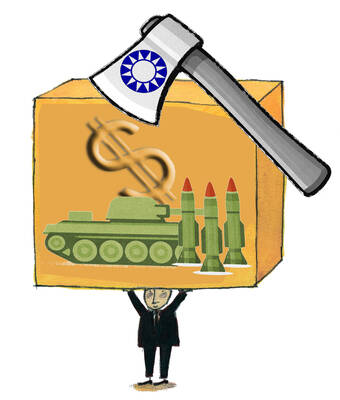
Last week the government announced that by year’s end Taiwan will have the highest density of anti-ship missiles in the world. Its inventory could exceed 1,400, or enough for the opening two hours of an invasion from the People’s Republic of China (PRC). Snark aside, it sounds impressive. But an important piece is missing. Lost in all the “dialogues” and “debates” and “discussions” whose sole purpose is simply to dawdle and delay is what the Chinese Nationalist Party (KMT) alternative special defense budget proposal means for the defense of Taiwan. It is a betrayal of both Taiwan and the US. IT’S


 RSS
RSS