


Lin & Lin Gallery’s latest exhibition, Intermedium (媒介), features artists from around the world whose work combines multiple artistic mediums. Lu Hsien-ming’s (陸先銘) paintings on stainless steel critique the effects of the manufacturing industry on Taiwan’s environment. Lu documents the rapid change in Taipei’s cityscape from bamboo structures of earlier years to the tall, dreary buildings and overhead passes that we see today. Also in the lineup is Spanish artist Jose Maria Cano’s paraffin wax portraits of people pulled from pages of the Wall Street Journal, including Barack Obama and Alan Greenspan.
■ Lin & Lin Gallery (大未來林舍畫廊), 16, Dongfeng St, Taipei City (台北市東豐街16號), tel: (02) 2700-6866. Open Tuesdays to Sundays from 11am to 7pm
■ Opens tomorrow. Until March 27
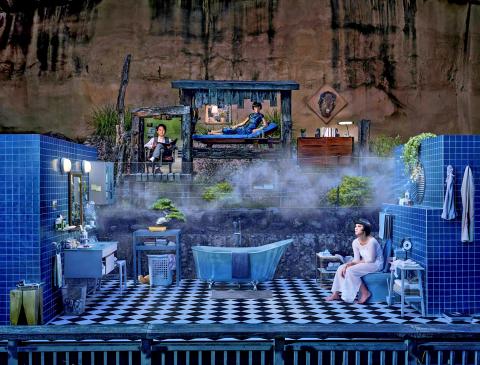
Photo courtesy of Chini Gallery
The Hsinchu-born Tseng Lin-yuan (曾麟媛) may seem too young to be reflecting on her childhood and painting whimsical memories of it (she’s in her mid-20s), but this skilled artist manages to do so in a way that is detached and introspective. Tseng achieves this through colors, movement and painting indistinct objects rather than drawing people. Her latest exhibition, One of Those Days (拾掇那些日子), which opens at Taipei’s Aki Gallery next week, is named after Shi Shu-ching’s (施叔青) novel of the same name. While the tone in Shi’s novel is forlorn, Tseng uses bright colors to depict balloons, merry go-rounds and paper airplanes. On the surface, her work seems happy and nostalgic, but there’s also a certain sadness to it. In fact, the blurred images appear to be a deliberate attempt to conceal one’s feelings or emotions.
■ Aki Gallery (也趣藝廊), 141 Minzu W Rd, Taipei City (台北市民族西路141號), tel: (02) 2599-1171. Open Tuesdays to Sundays from noon to 6:30pm
■ Opens tomorrow. Until March 27
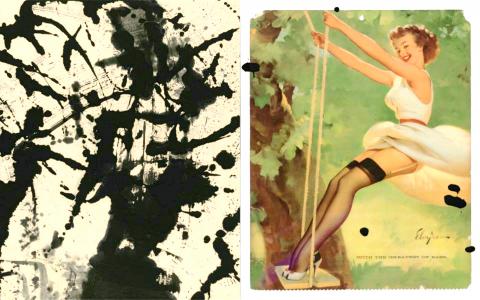
Photo courtesy of Galleria
Photo-journalist Chou Ching-hui’s (周慶輝) decades-long career has come a long way from his early black-and-white portraits of rural schoolchildren and factory workers to bizarre, dystopian images of inanimate-looking people arranged in zoo-like exhibits for his latest series of photographs, Animal Farm. A selection of Chou’s work over the last two decades are currently on display at Taipei’s Chini Gallery, in the exhibition In the Name of Documenting (以人之名). The title is fitting as Chou takes an anthropological approach to photography. It grows stronger in his later work, and especially in the Animal Farm series where Chou spent five years studying the arrangement of different zoos throughout Taiwan and photographed people in such a way that it seems like they are being examined under a microscope — much in the same way that we gawk at animals at the zoo.
■ Chini Gallery (采泥藝術), 48, Lane 128 Jingye 1st Rd, Taipei City (台北市敬業一路128巷48號), tel: (02) 7729-5809. Open Tuesdays to Sundays from 10:30am to 7pm
■ Until April 3
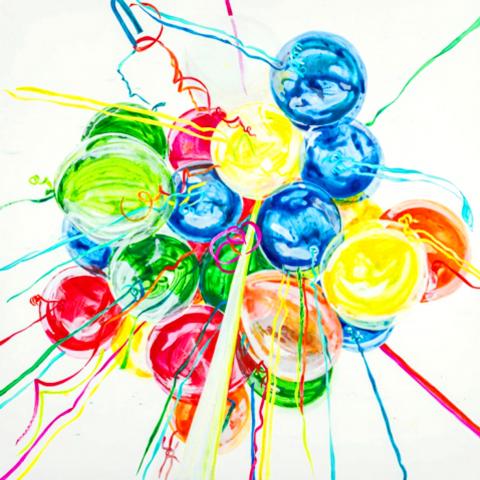
Photo courtesy of Aki Gallery
It’s clear that Keng Hao-kang (耿?剛) knows how to enjoy the finer things in life. He studied painting and installation in Italy and worked at Hugo Boss for several years upon returning home to Taiwan. His eye for fashion certainly plays out in his latest solo exhibition, Pin-up·March (三月。小甜心), which opens at Taipei’s Galleria H tomorrow. The exhibition’s content is self-explanatory — images of pin-up girls in calendars for the month of March. Though what’s interesting is the way that Keng uses Chinese ink on rice paper and morphs them with images of American pin-up girls from the 1950s. The result is as humorous as it is awkward. It also shows that the fascination with pin-up girls transcends cultures and time.
■ Galleria H (恆畫廊), 12-1, Ln 58, Xinsheng S Rd, Taipei City (台北市新生南路一段58巷12-1號), tel: (02) 3322-2553. Open Tuesdays to Sundays from 1pm to 7pm
■ Opens tomorrow. Until April 3
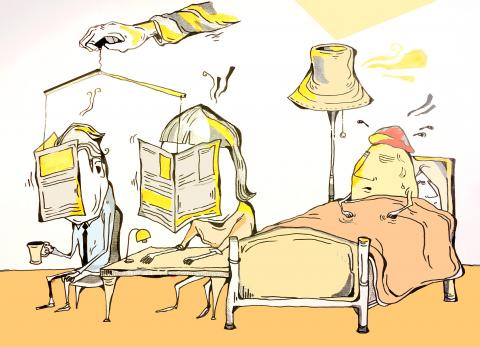
Photo courtesy of Liang Gallery
You might recognize Candy Bird’s colorful graffiti murals of big-headed creatures that cover entire walls of dilapidated buildings around Taipei. The street artist, who got his start by painting on walls along his delivery route while working as a delivery man, has come a long way — he has a solo exhibition opening at Liang Gallery tomorrow. Entitled Bedtime Stories (床邊故事), the artworks displayed revolve around, well, bedtime stories. Don’t expect warm, fuzzy imagery though, as Candy Bird’s big-headed creatures — this time, it is a rather kooky-looking mother-son duo — are the protagonists. Candy Bird likes to teach his viewers that it is okay to conform to norms, and he does so in a way that’s playful and silly.
Sticking to the theme of sleep (or in this case, the lack of it), Do You Dream of Electric Sheep? (你夢見電子羊了嗎?) by Chen I-chun (陳依純) also opens at Liang Gallery tomorrow. Chen takes on a more pessimistic view. In the past, Chen’s paintings, sculptures and installations have explored the dangerous conditions of Taiwan’s factory workers and this exhibition addresses similar subjects. The “electric sheep” in this case are blue collar workers who perform the same redundant jobs — so much so that their thinking and movements have become mechanized. Her artwork depicting machinery and robot-like people possesses both a lulling quality as well as a sense of restlessness.
■ Liang Gallery (尊彩藝術中心), 366, Ruiguang Rd, Taipei City (台北市瑞光路366號), (02) 2797-1100, open Tuesdays to Sundays from 11am to 6pm
■ Both exhibitions open tomorrow and run until April 3
Architecture buffs will be happy to know that the famed London-based Heatherwick Studio, founded by Thomas Heatherwick in 1994 and known for their sleek, futuristic designs, will be featuring a couple of their sketches and models at the Taipei Fine Arts Museum (TFAM) starting tomorrow. The touring exhibition, entitled New British Inventors: Inside Heatherwick Studio (新世代英倫創造:走進海澤維克工作室), will provide an up-close view of the architectural process, from initial concept to final product. Heatherwick Studio is known for their award-winning UK Pavilion at the 2010 Shanghai Expo, the cauldron for the London 2012 Olympic Games and, most recently, their spirally, eight-story teaching facility at Singapore’s Nanyang Technology University, which also includes ample balconies, gardens and open-air corridors. The exhibition at TFAM will be accompanied by films, talks and workshops.
■ Taipei Fine Arts Museum (台北市立美術館 TFAM), 181, Zhongshan N Rd Sec 3, Taipei (台北市中山北路三段181號), tel: (02) 2595-7656. Open Tuesdays to Sundays from 9:30am to 5:30pm and until 8:30pm on Saturdays
■ Opens tomorrow. Until May 15
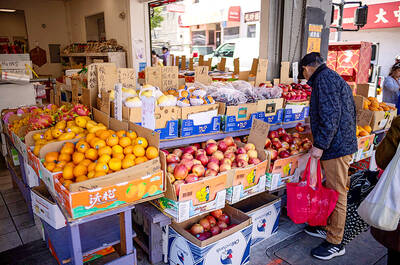
Ajay Verma, a consultant gastroenterologist at Kettering general hospital in Northamptonshire, says our gut is a “complex machine.” “It is constantly providing us with the nutrition we need, initially to grow and develop, and then for us to survive, thrive and repair from injury and illness.” How can we keep it functioning well? Put simply: “Make sure what you put into it is balanced, and that you clear out its waste products adequately,” Verma says. “In a general gastroenterology clinic, the most common conditions we see are irritable bowel syndrome (IBS), gastroesophageal reflux disease, inflammatory bowel disease and constipation,” says Nisha
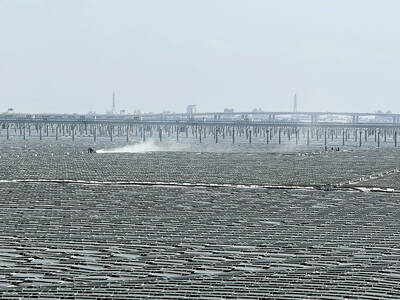
The arithmetic is straightforward and uncomfortable. By the end of 2025, Taiwan had committed itself to a 50-30-20 electricity mix — half natural gas, 30 per cent coal, 20 per cent renewables. The Ministry of Economic Affairs’s (MOEA) own monthly energy reports tell a different story. Natural gas reached 47.8 per cent of generation last year. Coal stood at 35.4 per cent, comfortably above its target ceiling. Renewables came in at 13.1 per cent, well short of the 20 per cent Taipei had pledged a decade earlier. Installed renewable capacity reached roughly half of the 12 gigawatts (GW) the government
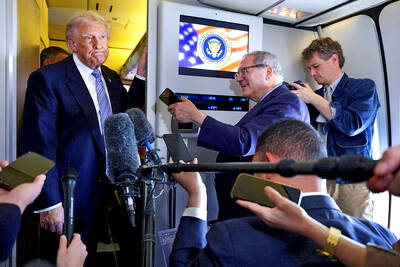
Last week US President Donald Trump was asked by a reporter whether he would speak on the phone to the President of Taiwan. “l’ll speak to him. I speak to everybody. We have that situation very well in hand,” Trump said. This marked the second time in a couple of weeks he had said he would talk to the President of Taiwan. In 2016 he famously took a call from then-president Tsai Ing-wen (蔡英文), when he was president-elect. Despite warnings that the apocalypse was nigh because of a phone call, the world quickly forgot about the conversation between two democratically-elected presidents.
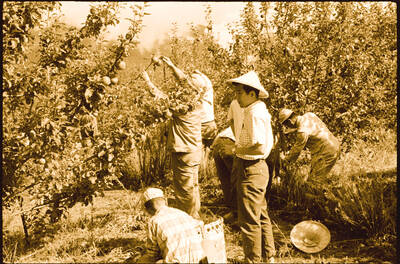
May 25 to May 31 Few believed that apples could be cultivated on a commercial scale in Taiwan’s high mountains. When horticulturalist Cheng Chao-hsiung (程兆熊) first proposed the idea in 1955, both American and Taiwanese colleagues dismissed it as implausible, arguing that temperate fruit could not be reliably grown on a subtropical island, especially on rugged terrain. However, it was this terrain in the Central Mountain Range where many Chinese Civil War veterans were resettled in the late 1950s. With limited job prospects and no family in Taiwan, they were placed on cooperative farms aimed toward self-sufficiency. Some say the conditions


 RSS
RSS