


Ricky Peters was a little taken back the first time he met Ang Lee (李安). “He said, ‘Hey, Ricky. Nice to meet you. Can you take off your shirt please?’” Peters said.
The Oscar-winning director wasn’t being fresh. Instead, it was to see if Peters was cut out to be a body double for the movie Life of Pi.
At 181 cm tall and weighing 58 kg, Peters was told to stand next to Suraj Sharma, the actor who played Pi. Lee instructed Peters to lose some weight, enlisting the South African to film scenes on a beach in Kenting and in an old airport hangar in Greater Taichung.
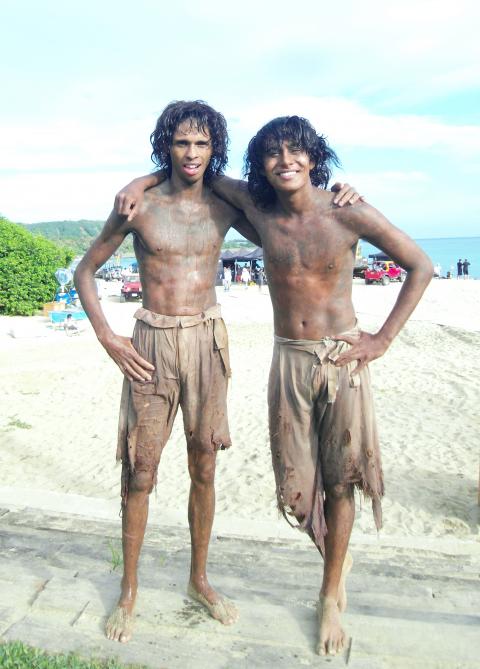
Photo Courtesy of Ricky Peters
“I’m basically an emaciated Pi. [Suraj Sharma] has more baby fat than I do,” the Taichung resident said recently as he recalled his stint two years ago acting in the acclaimed fantasy adventure movie.
Moonlighting from his job teaching high school English to work on Life of Pi, Peters was flown to Sydney, Australia where he underwent a body scan to prepare for filming using the movie’s 3D imagery.
What started off as simple stand-in work — standing in place of an actor on the set to make sure lighting and camera angles are correct — soon turned to actual acting.
“It was really overwhelming,” said Peters, 30, who is married with two children. “I went from being a stand-in to being a body double and meeting all these VIPs.”
Peters said he saw Lee’s directorial skill firsthand while shooting the movie’s emotional ending. Instead of Sharma, it was Peters whose job it was to lie facedown in the sand after landing the adrift lifeboat on the shores of Mexico.
“He said I wasn’t supposed to shake, but it was so cold,” Peters said of shooting the scene in springtime on a beach in Kenting.
Given emotional cues on how to act, Peters was instructed to imagine how it must feel to see his oceanic companion, the tiger Richard Parker, walking away without looking back. To aid the novice actor in the scene, a chihuahua was used during rehearsal. Peters was then told to follow the little dog with his eye as it scurried across the sand.
Peters said he was asked to do the scene because he is thinner than Sharma and a better representation of what someone would look like after being lost at sea. To make the scene complete, computer-generated special effects put Sharma’s head on Peters’ body.
“My friends say, ‘We didn’t see you,’ ” Peters said. “That’s the point.”
A self-described jittery public speaker, Peters said he was surprisingly calm surrounded by well-known actors and actresses. And he credits Lee with creating that calmness on the set.
Calling the director a “down-to-earth guy,” Peters recalled a conversation he had with Lee — Lee calling Peters “Ricky” and Peters calling Lee “Mr. Lee.”
“He was so humble, he didn’t want to say he had to go,” Peters said. “He just stood there with his thumbs in his pockets.”
Looking back on his experience, Peters is quick to point to the seemingly mundane moments that were so memorable. Sitting in the makeup chair for three hours, for instance, and then at the end of a long day running into the ocean to wash it all off. Memories of surfing with the cast and crew also draw a smile from Peters.
Now, nearly two years after having had a taste of success in a blockbuster movie, Peters can’t help but imagine if Hollywood might call again.
“If something comes my way and they need a skinny brown guy in the future,” he said, “but right now my family is my priority.”

The small platform at Duoliang Train Station in Taitung County’s Taimali Township (太麻里) served villagers from 1992 to 2006, but was eventually shut down due to lack of use. Just 10 years later, the abandoned train station had become widely known as the most beautiful station in Taiwan, and visitors were so frequent that the village had to start restricting traffic. Nowadays, Duoliang Village (多良) is known as a bit of a tourist trap, with a mandatory, albeit modest, admission fee of NT$10 giving access to a crowded lane of vendors with a mediocre view of the ocean and the trains
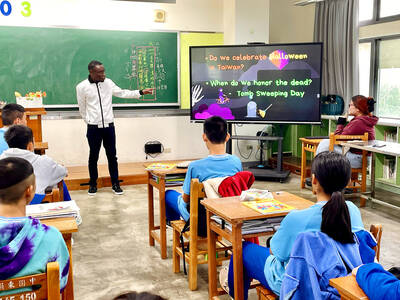
For many people, Bilingual Nation 2030 begins and ends in the classroom. Since the policy was launched in 2018, the debate has centered on students, teachers and the pressure placed on schools. Yet the policy was never solely about English education. The government’s official plan also calls for bilingualization in Taiwan’s government services, laws and regulations, and living environment. The goal is to make Taiwan more inclusive and accessible to international enterprises and talent and better prepared for global economic and trade conditions. After eight years, that grand vision is due for a pulse check. RULES THAT CAN BE READ For Harper Chen (陳虹宇), an adviser

Traditionally, indigenous people in Taiwan’s mountains practice swidden cultivation, or “slash and burn” agriculture, a practice common in human history. According to a 2016 research article in the International Journal of Environmental Sustainability, among the Atayal people, this began with a search for suitable forested slopeland. The trees are burnt for fertilizer and the land cleared of stones. The stones and wood are then piled up to make fences, while both dead and standing trees are retained on the plot. The fences are used to grow climbing crops like squash and beans. The plot itself supports farming for three years.
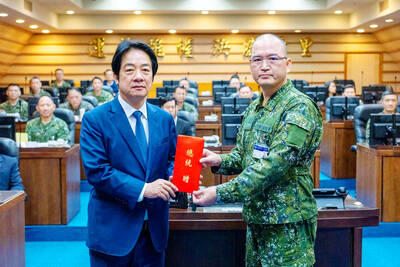
President William Lai (賴清德) on Nov. 25 last year announced in a Washington Post op-ed that “my government will introduce a historic US$40 billion supplementary defense budget, an investment that underscores our commitment to defending Taiwan’s democracy.” Lai promised “significant new arms acquisitions from the United States” and to “invest in cutting-edge technologies and expand Taiwan’s defense industrial base,” to “bolster deterrence by inserting greater costs and uncertainties into Beijing’s decision-making on the use of force.” Announcing it in the Washington Post was a strategic gamble, both geopolitically and domestically, with Taiwan’s international credibility at stake. But Lai’s message was exactly


 RSS
RSS