


Taco Bar, a Mexican-style restaurant that opened six months ago in Shida night market (師大夜市), operates at a tempo different from most small eateries in the area. I attempted to check out the place on a few occasions after reading blogs that raved about its inexpensive menu and delicious food.
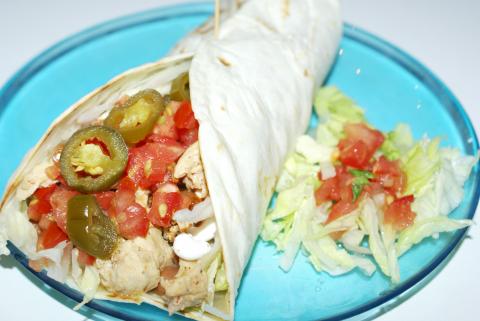
But when I showed up, the place was closed. Either that, or it opened one or two hours after the time listed on its Facebook page. Phone calls to the restaurant went unanswered. Despite the annoyance, it’s easy to swallow Taco Bar’s laid-back style after a bite of its chicken burrito (NT$95), or beef taco (NT$125).
The restaurant’s size is more night market stall than sit-down restaurant. One table out front and two tables inside means reservations are mandatory on weekends. (Takeout is also available.)
Photos: Noah Buchan, Taipei Times
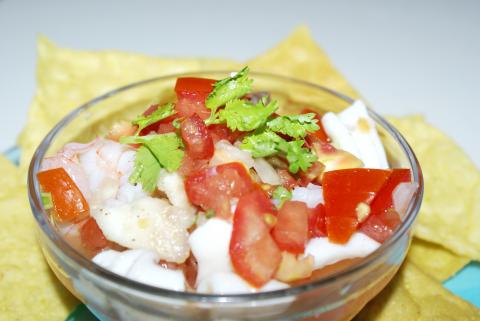
I’d preordered the ceviche (NT$150), a lime-infused seafood salad served with tortilla chips. Preordering assures the freshness of the main ingredients of shrimp, cuttlefish and whitefish, which were bought at market that afternoon. Then comes the marinade: fresh-cut salsa, lime, Tabasco, and a pinch of salt. Simple, succulent and satisfying, the small portion left me craving more.
The beef tacos, on the other hand, were filling. Each serving comes with two crescent-shaped corn tortilla shells stuffed with generous slices of beef, veggies and topped with cheese, jalapenos and sour cream. Again, simple, but the flavor was robust and the meat tender.
Taco Bar intentionally limits its range of spiciness to suit local tastes, so be sure to specify if you like your food fiery hot, as I did with the burrito. Juicy pieces of chicken came wrapped in a flour tortilla with just the right amount of refried beans and veggies as well as generous portions of jalapenos. Though it was tasty, a side of guacamole would have made it exceptional.
Photos: Noah Buchan, Taipei Times
Taco Bar also has vegetarian options and a limited selection of beers and tequilas — everything you need for a small fiesta. Just be advised not to plan anything too big without contacting the restaurant first to make sure it’s open.

For many people, Bilingual Nation 2030 begins and ends in the classroom. Since the policy was launched in 2018, the debate has centered on students, teachers and the pressure placed on schools. Yet the policy was never solely about English education. The government’s official plan also calls for bilingualization in Taiwan’s government services, laws and regulations, and living environment. The goal is to make Taiwan more inclusive and accessible to international enterprises and talent and better prepared for global economic and trade conditions. After eight years, that grand vision is due for a pulse check. RULES THAT CAN BE READ For Harper Chen (陳虹宇), an adviser
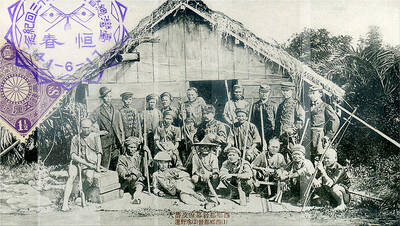
Traditionally, indigenous people in Taiwan’s mountains practice swidden cultivation, or “slash and burn” agriculture, a practice common in human history. According to a 2016 research article in the International Journal of Environmental Sustainability, among the Atayal people, this began with a search for suitable forested slopeland. The trees are burnt for fertilizer and the land cleared of stones. The stones and wood are then piled up to make fences, while both dead and standing trees are retained on the plot. The fences are used to grow climbing crops like squash and beans. The plot itself supports farming for three years.
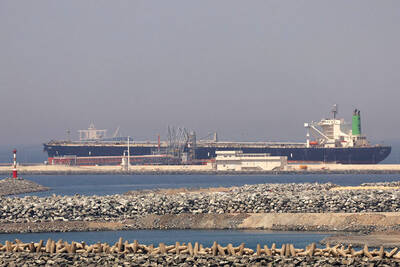
The breakwater stretches out to sea from the sprawling Kaohsiung port in southern Taiwan. Normally, it’s crowded with massive tankers ferrying liquefied natural gas from Qatar to be stored in the bulbous white tanks that dot the shoreline. These are not normal times, though, and not a single shipment from Qatar has docked at the Yongan terminal since early March after the Strait of Hormuz was shuttered. The suspension has provided a realistic preview of a potential Chinese blockade, a move that would throttle an economy anchored by the world’s most advanced and power-hungry semiconductor industry. It is a stark reminder of

The last couple of weeks spectators in Taiwan and abroad have been treated to a remarkable display of infighting in the Chinese Nationalist Party (KMT) over the supplementary defense budget. The party has split into two camps, one supporting an NT$800 billion special defense budget and one supporting an NT$380 billion budget with additional funding contingent on receiving letters of acceptance (LOA) from the US. Recent media reports have said that the Taiwan People’s Party (TPP) is leaning toward the latter position. President William Lai (賴清德) has proposed NT$1.25 trillion for purchases of US arms and for development of domestic weapons


 RSS
RSS