


Abigail Canaviri, 14, attends school by day in the Bolivian Andes. But when the sun sets she and other children tunnel deep into the world’s highest mine, following in their late fathers’ footsteps in a treacherous search for silver.
“Since age 12 I’ve worked here,” a frail Canaviri says about Cerro Rico, the spectacularly perched mountain-top pit in Potosi, a remote city popular with tourists, that is home to the widows and orphans of Bolivia’s mining world.
“They pay me 20 bolivianos (about US$3) per day to scavenge through 10 or 12 mine carts. I enter at 6pm and leave at 4 or 5 in the morning,” she said.

Photo: Bloomberg
Canaviri is one of several dozen children who work alongside 12,000 adults mining the mountain of money that is Cerro Rico, which for four centuries has veined the greatest silver deposit ever uncovered by the Spanish empire.
She and her young friends know the dangers, but have few options as they seek to end — or at least ease — the vicious cycle of poverty afflicting their families.
“My dad died of the mine illness,’” Canaviri said, referring to the respiratory disease silicosis, which worldwide is believed to have killed thousands of miners, whose lungs become infected with crystalline dust that is raised during drilling and inhaled by workers. “Now, I work to help the family.”
She pushes rickety mine carts along metal rails that wind toward the entrance, each bearing about a tonne of earth and rock that she hopes will yield a high payload of silver, tin or zinc.
Her face darkened when she recalled how she suffered an infection earlier this year that sent her to hospital and led to the removal of one of her kidneys — and yet she toils on.
“We lack things. My sister needs shoes, and to meet such needs I go down the mine,” Canaviri said.
Other young teens like Canaviri work in Cerro Rico, southern Bolivia’s historic symbol of wealth that has been operated continuously since the 14th century, first by the Incas, then the Spanish and their indigenous and African slaves, then the Bolivian government and now by private firms.
Fourteen-year-old Efrain Cartagena works alongside Canaviri. His father, too, died from silicosis, forcing the boy to become a breadwinner. He said that after working here for two years he earns about US$8 per day loading and unloading ore.
Before entering the mine, workers of all ages sit and chew coca leaves to ward off hunger and fatigue — a ritual begun centuries ago by native Indians and embraced by today’s miners.
In often vulgar language, they gossip and share their dreams and troubles. Then they hunch over and trundle into various low-ceilinged tunnels, the mud floor often slickened by an acidic liquid runoff containing dangerous chemicals and minerals that drips from the mine’s walls and ceilings.
The future is bleak for these so-called “child moles” who live with death on their backs, according to the Voix Libres Foundation, a Swiss humanitarian organization which runs an orphanage and school in Potosi.
For boys: the future holds work at the mine, with a life expectancy of “around 35 years” because of silicosis, the foundation says. For girls: mine work, multiple pregnancies and early widowhood, before winding up as a “recycler” or night guard at the mine.
According to Voix Libres, which has won an award from the Women’s Union of Potosi for its work with children in the Bolivian Altiplano, there are now between 50 and 60 teenagers who work at the mine — although that number rises along with the price of silver and tin.
In 2001, the International Labour Organization determined that 381 people aged under 18 worked at Cerro Rico, and that nationwide there were 10 times that many children in the industry, although the organization has said that in recent years thousands of underage workers have withdrawn from the mines.
A Potosi federation of cooperatives, formed by miners in some 50 private firms, said major employers shy away from the problem.
“Miners often lie about their age in order to work in the tunnels, avoiding state control and possible loss of their job,” a representative of the group said.
Mining employs thousands of people and generates billions of US dollars in revenue for mineral-rich Bolivia.
But regulations are considered lax, and when the state does make efforts to remove children from the mines, they brush up against a harsh reality.
Bolivian youths enter the mines because “they are poor and orphans from broken homes,” and can earn more there than in the other fields, the ombudsman for children in Potosi, Marcelino Chucucea, said.
He recognizes there are Bolivian rules on the books prohibiting child labor in unsafe conditions, but so long as there are riches to exploit, Cerro Rico will continue to demand cheap labor.
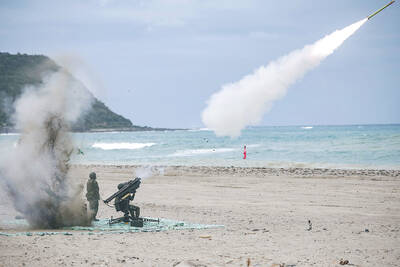
In late October of 1873 the government of Japan decided against sending a military expedition to Korea to force that nation to open trade relations. Across the government supporters of the expedition resigned immediately. The spectacle of revolt by disaffected samurai began to loom over Japanese politics. In January of 1874 disaffected samurai attacked a senior minister in Tokyo. A month later, a group of pro-Korea expedition and anti-foreign elements from Saga prefecture in Kyushu revolted, driven in part by high food prices stemming from poor harvests. Their leader, according to Edward Drea’s classic Japan’s Imperial Army, was a samurai

The following three paragraphs are just some of what the local Chinese-language press is reporting on breathlessly and following every twist and turn with the eagerness of a soap opera fan. For many English-language readers, it probably comes across as incomprehensibly opaque, so bear with me briefly dear reader: To the surprise of many, former pop singer and Democratic Progressive Party (DPP) ex-lawmaker Yu Tien (余天) of the Taiwan Normal Country Promotion Association (TNCPA) at the last minute dropped out of the running for committee chair of the DPP’s New Taipei City chapter, paving the way for DPP legislator Su
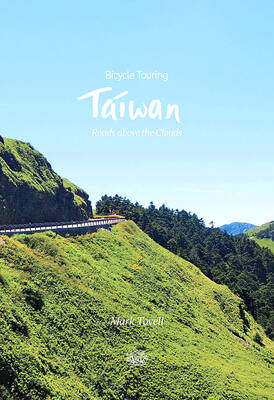
It’s hard to know where to begin with Mark Tovell’s Taiwan: Roads Above the Clouds. Having published a travelogue myself, as well as having contributed to several guidebooks, at first glance Tovell’s book appears to inhabit a middle ground — the kind of hard-to-sell nowheresville publishers detest. Leaf through the pages and you’ll find them suffuse with the purple prose best associated with travel literature: “When the sun is low on a warm, clear morning, and with the heat already rising, we stand at the riverside bike path leading south from Sanxia’s old cobble streets.” Hardly the stuff of your

Located down a sideroad in old Wanhua District (萬華區), Waley Art (水谷藝術) has an established reputation for curating some of the more provocative indie art exhibitions in Taipei. And this month is no exception. Beyond the innocuous facade of a shophouse, the full three stories of the gallery space (including the basement) have been taken over by photographs, installation videos and abstract images courtesy of two creatives who hail from the opposite ends of the earth, Taiwan’s Hsu Yi-ting (許懿婷) and Germany’s Benjamin Janzen. “In 2019, I had an art residency in Europe,” Hsu says. “I met Benjamin in the lobby


 RSS
RSS