


Drag Me to Hell
Sam Raimi may have made megabucks directing the overrated Spider-Man trilogy, but good-natured, in-your-face horror is where his heart lies, and Drag Me to Hell is a welcome return to his Evil Dead days of joyous moviemaking. Alison Lohman is in charge of bank loans but refuses to oblige an old woman who turns out to have infernal connections. It’s all (ahem) downhill from there. Justin Long plays Lohman’s boyfriend, and has about as much success withstanding Pure Evil as he did in Jeepers Creepers.
Hatchet
Shot three years ago, this amalgam of Southern Comfort and Friday the 13th is being rushed into theaters with little advertising, but that may not be a reason to avoid it; it is, after all, something that Sam Raimi might have made when he was a lot younger. A bunch of youngsters in New Orleans for Mardi Gras fall foul of a local psycho in this fanboy’s dream of a cast including Kane Hodder (Jason in the later Friday the 13th films) as the unwelcoming southerner Victor Crowley, Robert Englund (Freddy Kreuger), the wonderful Tony Todd (Candyman) as “Reverend Zombie” and special effects ace/director John Carl Beuchler. It’s not clear if the Taiwan release is the US R-rated or unrated version. Starts tomorrow.
Grace Is Gone
The American love of the road movie continues as John Cusack takes his daughters way, way out of town (Florida) to find a way to tell them that their mother, a soldier, was killed in Iraq. A brief diversion sees Cusack visit his anti-war brother, but apart from that all the drama is in the anticipation of a sad revelation for the children and Cusack coming to terms with his loss. Reviewers had problems with the production qualities of this movie, but plenty of nice things to say about the cast.
Jerichow
Intriguing film about a Turkish small businessman in the east German town of Jerichow who married a woman by paying off her debts and now must hire a driver/minder — a rather unsettling disgraced soldier — to help him make ends meet. The Postman Always Rings Twice is the frame as the wife and the minder, both Germans, get it on behind our wistful hero’s back, but for this movie lust takes a back seat to the worthlessness of money as a measure of self-worth.
All’s Well Ends Well 2009 (家有囍事2009)
The latest entry in this Hong Kong comedy series features returning producer-star Raymond Wong (黃百鳴) and Sandra Ng (吳君如), a slew of in-jokes and middling celebrities. Ng is a stubbornly single professional woman whose marital status is blocking other family members from tying the knot. Enter matchmaker Louis Koo (古天樂). The curious thing about this film is that it was a successful Lunar New Year release in Hong Kong but has taken almost six months to get here. Does it take this long for a film with the China market in mind to get dubbed into Mandarin?
Pleasure Factory
Set in Singapore’s Geylang red light district and starring Taiwan’s Yang Kui-mei (楊貴媚), this undernourished tale from 2007 of prostitutes and their clients mixes artiness and docudrama to superficial effect. Variety magazine was the most dismissive, blasting every aspect of production, direction and acting and concluding that Pleasure Factory “borders on the inept.” A shame, really, because the grim subject matter is full of opportunities. Starts tomorrow.
Cineplex 46th Anniversary Festival
Local distributor Cineplex thinks 46 is a number worth celebrating, and it certainly is for audiences that like a bit of eroticism and sex in their art house movie diet. The shame of it is that the films selected are very recent; what about a 40-year-old release? Still, there’s good stuff here: Claude Lelouch’s Chances or Coincidences, Eric Rohmer’s Le Rayon Vert, Girl With a Pearl Earring, Goya’s Ghosts, Salsa, The Whore and the Whale, Sex and Lucia, Summer Palace (頤和園) and a cut version of Michael Winterbottom’s 9 Songs. Screening at the Majestic theater in Ximending until July 17.
Killer Bees
A German TV movie gets a minor theatrical release in which errant scientists and experiments trigger a possible cataclysm, resulting in a hunt for the queen bee before everything is lost. That’s funny ... isn’t the disappearance of bees supposed to be a serious ecological problem? Nothing in the film can match the poster, which has a human hand enveloped by angry insects and seems to have been borrowed from a US production with similar content. Original title: Die Bienen: Toedliche Bedrohung.
Der Bibelcode
Another German TV movie, this time ripping off The Da Vinci Code, in which the pope is implicated in a conspiracy that has our heroes globe-hopping with killers in tow until the final confrontation (not with the Antichrist, sadly; this is not The Final Conflict). Some Taiwan sources list this release as Bible Code II, but it should not be confused with the US documentary of the same name. One final warning: the original version runs for three hours in two parts, so Heaven knows what kind of chopped-up version is screening here.

Feb. 9 to Feb.15 Growing up in the 1980s, Pan Wen-li (潘文立) was repeatedly told in elementary school that his family could not have originated in Taipei. At the time, there was a lack of understanding of Pingpu (plains Indigenous) peoples, who had mostly assimilated to Han-Taiwanese society and had no official recognition. Students were required to list their ancestral homes then, and when Pan wrote “Taipei,” his teacher rejected it as impossible. His father, an elder of the Ketagalan-founded Independence Presbyterian Church in Xinbeitou (自立長老會新北投教會), insisted that their family had always lived in the area. But under postwar

In 2012, the US Department of Justice (DOJ) heroically seized residences belonging to the family of former president Chen Shui-bian (陳水扁), “purchased with the proceeds of alleged bribes,” the DOJ announcement said. “Alleged” was enough. Strangely, the DOJ remains unmoved by the any of the extensive illegality of the two Leninist authoritarian parties that held power in the People’s Republic of China (PRC) and Taiwan. If only Chen had run a one-party state that imprisoned, tortured and murdered its opponents, his property would have been completely safe from DOJ action. I must also note two things in the interests of completeness.

Taiwan is especially vulnerable to climate change. The surrounding seas are rising at twice the global rate, extreme heat is becoming a serious problem in the country’s cities, and typhoons are growing less frequent (resulting in droughts) but more destructive. Yet young Taiwanese, according to interviewees who often discuss such issues with this demographic, seldom show signs of climate anxiety, despite their teachers being convinced that humanity has a great deal to worry about. Climate anxiety or eco-anxiety isn’t a psychological disorder recognized by diagnostic manuals, but that doesn’t make it any less real to those who have a chronic and
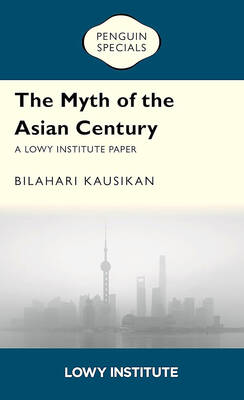
When Bilahari Kausikan defines Singapore as a small country “whose ability to influence events outside its borders is always limited but never completely non-existent,” we wish we could say the same about Taiwan. In a little book called The Myth of the Asian Century, he demolishes a number of preconceived ideas that shackle Taiwan’s self-confidence in its own agency. Kausikan worked for almost 40 years at Singapore’s Ministry of Foreign Affairs, reaching the position of permanent secretary: saying that he knows what he is talking about is an understatement. He was in charge of foreign affairs in a pivotal place in


 RSS
RSS