


There was a time when red meat was a luxury for ordinary Americans, or was at least something special: cooking a roast for Sunday dinner, ordering a steak at a restaurant. Not anymore. Meat consumption has more than doubled in the US in the last 50 years.
Now a new study of more than 500,000 Americans has provided the best evidence yet that our affinity for red meat has exacted a hefty price on our health and limited our longevity.
The study found that, other things being equal, the men and women who consumed the most red and processed meat were likely to die sooner, especially from one of our two leading killers, heart disease and cancer, than people who consumed much smaller amounts of these foods.
Results of the decade-long study were published in the March 23 issue of The Archives of Internal Medicine. The study, directed by Rashmi Sinha, a nutritional epidemiologist at the National Cancer Institute, involved 322,263 men and 223,390 women ages 50 to 71 who participated in the National Institutes of Health-AARP Diet and Health Study. Each participant completed detailed questionnaires about diet and other habits and characteristics, including smoking, exercise, alcohol consumption, education, use of supplements, weight and family history of cancer.
DETERMINING RISK
During the decade, 47,976 men and 23,276 women died, and the researchers kept track of the timing and reasons for each death. Red meat consumption ranged from a low of less than 28 a day, on average, to a high of 113g a day, and processed meat consumption ranged from at most once a week to an average of 42.5g a day.
The increase in mortality risk tied to the higher levels of meat consumption was described as “modest,” ranging from about 20 percent to nearly 40 percent. But the number of excess deaths that could be attributed to high meat consumption is quite large given the size of the American population.
Extrapolated to all Americans in the age group studied, the new findings suggest that over the course of a decade, the deaths of 1 million men and perhaps half a million women could be prevented just by eating less red and processed meats, according to estimates prepared by Barry Popkin, who wrote an editorial accompanying the report.
To prevent premature deaths related to red and processed meats, Popkin suggested in an interview that people should eat a hamburger only once or twice a week instead of every day, a small steak once a week instead of every other day, and a hot dog every month and a half instead of once a week.
In place of red meat, nonvegetarians might consider poultry and fish. In the study, the largest consumers of “white” meat from poultry and fish had a slight survival advantage. Likewise, those who ate the most fruits and vegetables also tended to live longer.
Anyone who worries about global well-being has yet another reason to consume less red meat. Popkin, an epidemiologist at the University of North Carolina, said that a reduced dependence on livestock for food could help to save the planet from the ravaging effects of environmental pollution, global warming and the depletion of potable water.
“In the US,” Popkin wrote, “livestock production accounts for 55 percent of the erosion process, 37 percent of pesticides applied, 50 percent of antibiotics consumed, and a third of total discharge of nitrogen and phosphorus to surface water.”
FINDING A CULPRIT
A question that arises from observational studies like this one is whether meat is in fact a hazard or whether other factors associated with meat-eating are the real culprits in raising death rates. The subjects in the study who ate the most red meat had other less-than-healthful habits. They were more likely to smoke, weigh more for their height, and consume more calories and more total fat and saturated fat. They also ate fewer fruits and vegetables and less fiber; took fewer vitamin supplements; and were less physically active.
But in analyzing mortality data in relation to meat consumption, the cancer institute researchers carefully controlled for all these and many other factors that could influence death rates. The study data have not yet been analyzed to determine what, if any, life-saving benefits might come from eating more protein from vegetable sources like beans or a completely vegetarian diet.
The results mirror those of several other studies in recent years that have linked a high-meat diet to life-threatening health problems. The earliest studies highlighted the connection between the saturated fats in red meats to higher blood levels of artery-damaging cholesterol and subsequent heart disease, which prompted many people to eat leaner meats and more skinless poultry and fish. Along with other dietary changes, like consuming less dairy fat, this resulted in a nationwide drop in average serum cholesterol levels and contributed to a reduction in coronary death rates.
Elevated blood pressure, another coronary risk factor, has also been shown to be associated with eating more red and processed meat, Sinha and colleagues reported.
Poultry and fish contain less saturated fat than red meat, and fish contains omega-3 fatty acids that have been linked in several large studies to heart benefits. For example, men who consume two servings of fatty fish a week were found to have a 50 percent lower risk of cardiac death, and in the Nurses’ Health Study of 84,688 women, those who ate fish and foods rich in omega-3 fatty acids at least once a week cut their coronary risk by more than 20 percent.
TIES TO CANCER
Choosing protein from sources other than meat has also been linked to lower rates of cancer. When meat is cooked, especially grilled or broiled at high temperatures, carcinogens can form on the surface of the meat. And processed meats like sausages, salami and bologna usually contain nitrosamines, although there are products now available that are free of these carcinogens.
Data from 1 million participants in the European Prospective Investigation Into Cancer and Nutrition found that those who ate the least fish had a 40 percent greater risk of developing colon cancer than those who ate more than 50g of fish a day. Likewise, while a diet high in red meat was linked to an increased risk of prostate cancer in the large Selenium and Vitamin E Cancer Prevention Trial, among the 35,534 men in the study, those who consumed at least three servings of fish a week had half the risk of advanced prostate cancer compared with men who rarely ate fish.
Another study, which randomly assigned more than 19,500 women to a low-fat diet, found after eight years a 40 percent reduced risk of ovarian cancer among them, when compared with 29,000 women who ate their regular diets.

In late October of 1873 the government of Japan decided against sending a military expedition to Korea to force that nation to open trade relations. Across the government supporters of the expedition resigned immediately. The spectacle of revolt by disaffected samurai began to loom over Japanese politics. In January of 1874 disaffected samurai attacked a senior minister in Tokyo. A month later, a group of pro-Korea expedition and anti-foreign elements from Saga prefecture in Kyushu revolted, driven in part by high food prices stemming from poor harvests. Their leader, according to Edward Drea’s classic Japan’s Imperial Army, was a samurai

The following three paragraphs are just some of what the local Chinese-language press is reporting on breathlessly and following every twist and turn with the eagerness of a soap opera fan. For many English-language readers, it probably comes across as incomprehensibly opaque, so bear with me briefly dear reader: To the surprise of many, former pop singer and Democratic Progressive Party (DPP) ex-lawmaker Yu Tien (余天) of the Taiwan Normal Country Promotion Association (TNCPA) at the last minute dropped out of the running for committee chair of the DPP’s New Taipei City chapter, paving the way for DPP legislator Su
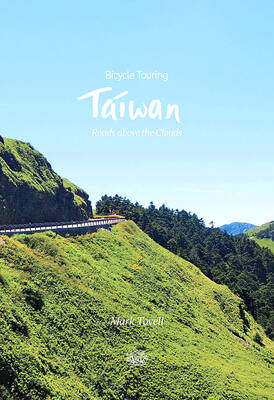
It’s hard to know where to begin with Mark Tovell’s Taiwan: Roads Above the Clouds. Having published a travelogue myself, as well as having contributed to several guidebooks, at first glance Tovell’s book appears to inhabit a middle ground — the kind of hard-to-sell nowheresville publishers detest. Leaf through the pages and you’ll find them suffuse with the purple prose best associated with travel literature: “When the sun is low on a warm, clear morning, and with the heat already rising, we stand at the riverside bike path leading south from Sanxia’s old cobble streets.” Hardly the stuff of your

Located down a sideroad in old Wanhua District (萬華區), Waley Art (水谷藝術) has an established reputation for curating some of the more provocative indie art exhibitions in Taipei. And this month is no exception. Beyond the innocuous facade of a shophouse, the full three stories of the gallery space (including the basement) have been taken over by photographs, installation videos and abstract images courtesy of two creatives who hail from the opposite ends of the earth, Taiwan’s Hsu Yi-ting (許懿婷) and Germany’s Benjamin Janzen. “In 2019, I had an art residency in Europe,” Hsu says. “I met Benjamin in the lobby


 RSS
RSS