

Few restaurants go for intentional humor, though many a howler can be found on the Chinglish menus and fusion dishes of the city’s East-meets-West establishments. L’Idiot, however, amuses with its satirical take on trendy dining.
Named after the uber-exclusive restaurant in Steve Martin’s LA Story, to get a table at which he has to schedule an appointment to make a reservation and is vetted by the Fourth Reich Bank of Hamburg before being told he’s not rich enough to order the duck, L’Idiot is a quirky affair, and knowing how to navigate the menu means the difference between a pedestrian repast and a good-value nosh-up. Opened two months ago in the space that used to house Tony Roma’s on Minsheng East Road, the dining room is dominated by two large sinuous sculptures that resemble Gaudi’s Park Guell serpentine bench and dragon fountain to the point of being pastiche.
The walls are painted peach, the ceiling maroon with wooden beams running the length of the room. Bric–a–brac sit on numerous white shelves, while an eclectic selection of photos and paintings, some tacky, others arty, adorn the walls. Unlike the dismal street views on offer at most downtown restaurants, the windows here look out on greenery and flowering shrubs.
L’Idiot’s menu uses playful headings such as “Aviators” for chicken and duck (roasted spring chicken with bacon and pear stuffing with calvados, NT$580), “Aquatics” for seafood (seared Hokkaido scallops with carrot puree and macadamia nuts, NT$560), “Swine” for pork (pork chop with caramel apple, NT$450), and “Cows and Baby Sheep” for beef and lamb (16-ounce prime sirloin with roasted garlic, NT$1,600).
Hospitable touches include plentiful warm bread, which is served with honey butter prior to each meal and complimentary hors d’oeuvre of bruschetta topped with a large dollop of ricotta drizzled with a honey and balsamic vinegar sauce.
At lunchtime, aside from the a la carte menu, two sets are available. Both begin with a choice of Caesar salad or baby sardine salad. The former was disappointingly bland, as the dressing was light and tasted calorie-reduced. The latter, consisting of radicchio, rocket, lamb’s lettuce and fried garlic, was a far superior medley of nutty, mustard and fishy flavors.
Set 1’s (NT$390) main course choices, crispy chicken wrap with spicy dressing (comes with fries) or pasta with smoked salmon in cream sauce, both passed muster, but Set 2’s (NT$590) pan-seared seafood with sauteed vegetables and caper sauce was the talk of the table. Artfully presented, the fish, on this occasion sea bream, had a golden crispy top with flesh that was tender and firm without being dry. The capers and slice of radish added a subtle piquancy. Unfortunately, the soup of the day offered in Set 2 failed to materialize.
From the cold starters selection, Fine de Claire oysters at NT$160 each are a steal, while from the charcuterie section, country pate (NT$240) was enough for four people.
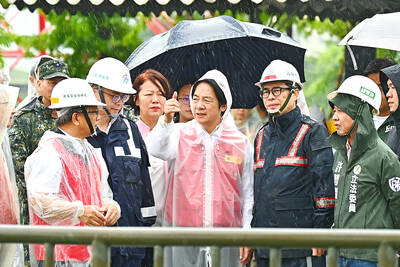
The flooding in Kaohsiung after the recent torrential rains has become an issue for mayoral candidates of both major parties. Chinese Nationalist Party (KMT) Kaohsiung mayoral candidate Ko Chih-en (柯志恩) brought in hydraulic-engineering professor Lee Hong-yuan (李鴻源), who called for comprehensive flood control measures on the Dianbao Creek (典寶溪), according to local media. Ko attacked the Democratic Progressive Party (DPP) for being behind on flood control measures, but as the city administration observed, there are many weaknesses in how the government can mitigate extreme rainfall. Nor is the river entirely under the management of the city. The low-lying Dianbao River
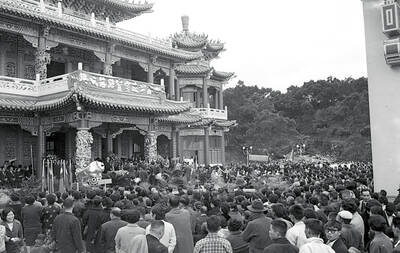
Aug. 31 to Sept. 6 More than 3 million people visited Taipei’s Zhinan Temple (指南宮) in 1973, making it Taiwan’s second-most visited scenic area that year. Built in 1891, the temple had been a tourist destination since the Japanese colonial period, when visitors had to initially take a ferry across the Jingmei River before climbing a winding trail up Houshan (猴山). Its popularity was reflected in popular media. The 1932 tune New Song of the Black Cat and Black Dog (新烏貓烏狗歌) depicted two lovers who prayed at the temple for their marriage. The man

Taiwan Power Co (Taipower, 台電) chairman Tseng Wen-sheng (曾文生) uses a sports metaphor to describe the density of electricity demand. A household is a ping-pong ball, ordinary industry a baseball and a science park a bowling ball. A data center is a shot put. Taiwan is preparing for the shot puts. Four new combined-cycle units at Hsinta (興達) and Taichung (台中), with combined capacity of about 5.2GW, are scheduled to begin supplying or testing on the grid by the end of this year. The Energy Administration’s (能源署) plan adds about 25.98GW of gas-fired capacity between this year and 2035, predominantly fueled
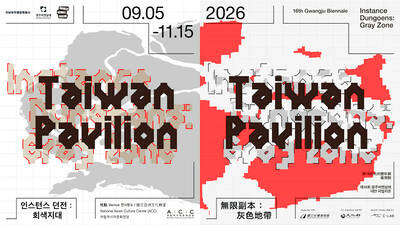
The name “Taiwan” is to appear at South Korea’s Gwangju Biennale when it opens on Saturday, after months of objections from Taiwanese artists and government agencies over an attempted name change. China Pavilion personnel halted installation and left the venue on Friday, after China’s Ambassador to South Korea Dai Bing (戴兵) objected to the restoration of the “Taiwan Pavilion” name. As of Monday, the Chinese side was reportedly preparing to withdraw, although its formal withdrawal had not been completed. The pavilion dispute began on June 10, when the ministry and participating artists said organizers had changed “Taiwan Pavilion” to “NTMoFA Pavilion,” referring


 RSS
RSS