


This is the third week in a row that pies have featured in the Taipei Times’ restaurant review section. Too much of a good thing? Given that prior to March there was a dearth of decent, tasty handmade Western-style pies sold at reasonable prices, perhaps not.
The latest offering is Pie Boy, tucked in an alley off Zhongxiao East Road. The small restaurant is an intimate affair, with Venetian red walls, black wood paneling, two four-seater tables and one two-seater table inside, and a two-seat table on the narrow deck outside. Paper cutouts of two tiki, Maori symbols, and a New Zealand fern leaf adorn the back wall.
David Bernhartt, who was born in the UK but grew up in New Zealand, opened Pie Boy on March 15 as an alternative to the ubiquitous burgers and pasta served in typical ersatz Western joints. The menu is reassuringly simple: steak and cheese (NT$95), chicken and vegetable (NT$90), mince beef (NT$90), vegetarian (mushroom, broccoli and cheese, NT$90) and breakfast pie (NT$90).
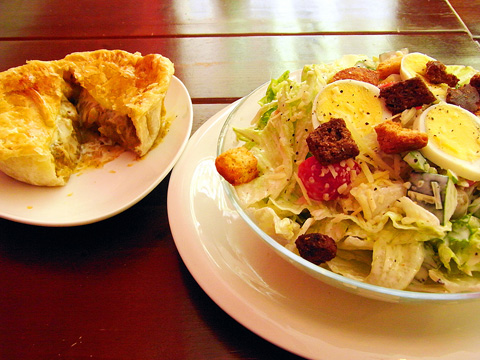
PHOTO: STEVE PRICE, TAIPEI TIMES
The pies’ bases and sides are made of shortcrust pastry and flaky pastry is used for the tops, which provides a subtle combination of textures. Combos are available. But be warned: the steak and cheese pie and wedges (NT$135), which are hand cut and sprinkled with a piquant seasoning and served with either aioli or salsa, is a belly-busting meal deal.
Although a far cry from the purist’s version, Pie Boy’s Caesar salad (NT$100), which uses iceberg lettuce, three slices of boiled egg, green olives, cherry tomatoes, onion, croutons, green pepper, cucumber and grated Parmesan, is a meal in itself and can be ordered with a pie in a combo deal (add NT$70 to the pie’s price for a salad and drink). Compared to Subway’s vegetable salad, which costs NT$95 plus NT$10 for dressing, Pie Boy’s salad comes out on top for value and taste, especially as the fast-food chain recently reduced the amount of processed cheese slices it uses.
The breakfast pie, essentially an omelet in a pastry shell, is a drier alternative to the gravy-filled versions and is, therefore, easier to cut into segments and transport. The vegetables used in the filling — green pepper, onion and tomato — are crunchy and contrast nicely with the velvety texture of the cooked egg.
To get there from the junction of Zhongxiao East and Fuxing South roads, walk westward along the north side of Zhongxiao East Road and turn right at the first traffic lights. Pie Boy is two blocks up the alley on the right. —STEVE PRICE
Ajay Verma, a consultant gastroenterologist at Kettering general hospital in Northamptonshire, says our gut is a “complex machine.” “It is constantly providing us with the nutrition we need, initially to grow and develop, and then for us to survive, thrive and repair from injury and illness.” How can we keep it functioning well? Put simply: “Make sure what you put into it is balanced, and that you clear out its waste products adequately,” Verma says. “In a general gastroenterology clinic, the most common conditions we see are irritable bowel syndrome (IBS), gastroesophageal reflux disease, inflammatory bowel disease and constipation,” says Nisha
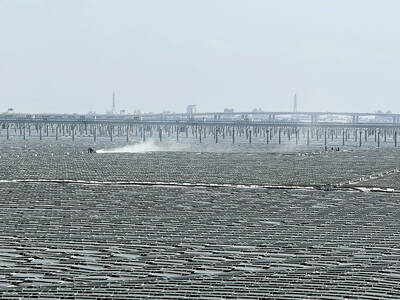
The arithmetic is straightforward and uncomfortable. By the end of 2025, Taiwan had committed itself to a 50-30-20 electricity mix — half natural gas, 30 per cent coal, 20 per cent renewables. The Ministry of Economic Affairs’s (MOEA) own monthly energy reports tell a different story. Natural gas reached 47.8 per cent of generation last year. Coal stood at 35.4 per cent, comfortably above its target ceiling. Renewables came in at 13.1 per cent, well short of the 20 per cent Taipei had pledged a decade earlier. Installed renewable capacity reached roughly half of the 12 gigawatts (GW) the government

Last week US President Donald Trump was asked by a reporter whether he would speak on the phone to the President of Taiwan. “l’ll speak to him. I speak to everybody. We have that situation very well in hand,” Trump said. This marked the second time in a couple of weeks he had said he would talk to the President of Taiwan. In 2016 he famously took a call from then-president Tsai Ing-wen (蔡英文), when he was president-elect. Despite warnings that the apocalypse was nigh because of a phone call, the world quickly forgot about the conversation between two democratically-elected presidents.
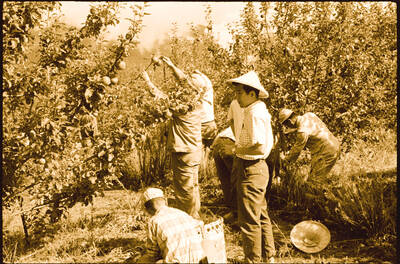
May 25 to May 31 Few believed that apples could be cultivated on a commercial scale in Taiwan’s high mountains. When horticulturalist Cheng Chao-hsiung (程兆熊) first proposed the idea in 1955, both American and Taiwanese colleagues dismissed it as implausible, arguing that temperate fruit could not be reliably grown on a subtropical island, especially on rugged terrain. However, it was this terrain in the Central Mountain Range where many Chinese Civil War veterans were resettled in the late 1950s. With limited job prospects and no family in Taiwan, they were placed on cooperative farms aimed toward self-sufficiency. Some say the conditions


 RSS
RSS