


It's the most widely used psychoactive drug in the world, 80 percent of British adults use it on a weekly basis and globally it's estimated that the market for C8H10N402 (or caffeine, if you prefer) is worth around US$70 billion annually. For most people, it is an integral part of their working lives, providing a much-needed boost at strategic times throughout the day - from the morning wake-up to the mid-afternoon pick-me-up. But are they drinking too much?
Evidence regarding the health effects of caffeine is inconclusive. For every study that seems to link caffeine to issues such as coronary heart disease and high cholesterol, another suggests caffeine could have beneficial properties. But whether or not (a moderate intake of) caffeine is good for you, it is still a drug - and as such it is possible to become addicted to it and, in very extreme situations, to overdose on it - though you'd need to have drunk the equivalent of around 80 cups of coffee.
But for the tired, worn-out worker, caffeine can help get you through the most boring of meetings: with its short-term stimulant effect on the brain, it increases the capacity for physical and mental labor. The only problem comes when the stimulant wears off and you're left with the corresponding trough, in which you feel excessively tired - and you reach for another coffee to get you through it.
Really hardcore coffee drinking can lead to caffeine intoxication, which might manifest itself as extreme restlessness, or even produce symptoms such as a racing pulse or an uncomfortable rushing sensation. And drinking too late into the evening isn't advised. It can take around four hours for caffeine to leave the system and even a low dose can be enough to rob you of sleep.
But there's no need to ditch the latte-run just yet. According to Frankie Phillips, a dietician from the British Dietetic Association, there are also advantages to the coffee break. "If you've got an office full of people taking coffee breaks and ingesting caffeine, then that means that those people are all benefiting from the stimulant effect of caffeine. Going to get a cup of coffee also gives you an opportunity to get away from the desk and be sociable. We also know that people who take regular breaks are more productive, so potentially the efficiency of the workforce is being improved by coffee breaks," she says.
"Some people argue that because caffeine has a diuretic effect on the body it can lead to dehydration, but the way many tend to drink it [in lattes and cappuccinos], it's likely to keep you in positive fluid balance. So, provided its taken in moderation, we don't see coffee as a threat to health."
But many people are still keen to cut their consumption of caffeine - and sales of decaffeinated products are booming. However, reaching a moderate intake can be difficult. Some of the biggest problems associated with caffeine occur when people try to stop using it. Withdrawal symptoms include terrible headaches, panic attacks and extreme irritability.
Phillips has some advice for those who want to switch to a healthier alternative. "If you want to cut down on caffeine it's wise to do it gradually. There have been studies which have looked at the negative effect of suddenly taking caffeine out of the diet. These detox diets where you can't drink anything caffeinated are a classic example of how suddenly stopping caffeine intake can give you the most tremendous headaches.
"If you are concerned about the amount of caffeine you're drinking, our advice would be to reduce your intake gradually. Switch to every other cup being decaffeinated coffee, or just water."
Alternatives to coffee
Want to get the benefits of the coffee break without risking any of the caffeine? Alex Probyn, the world's only tea sommelier, recommends five of the best non-caffeine brews.
Red Bush
This is about the closest thing you can get to tea. It's very high in antioxidants but it's sweeter and a bit smokier than tea, and you can drink it with or without milk.
Peppermint
Mint tea is good because it aids digestion. It's still got the invigoration of flavor, which will wake you up but without any of the caffeine.
Hibiscus
Hibiscus is such a vibrant flavor and color that it's great for a bit of a shock. For some people it's a bit too sharp but if you like tart flavors then it's a good kick-start to your day.
Lemongrass
I love the flavor of lemongrass. It's got that zesty freshness that you'd want to wake you up and it's got lots of antioxidants in it as well.
Camomile
When it's getting towards the end of the working day and you just need to calm down a bit, then camomile has a really floral taste and scent to it and is very good for relaxing with.
Source: the guardian
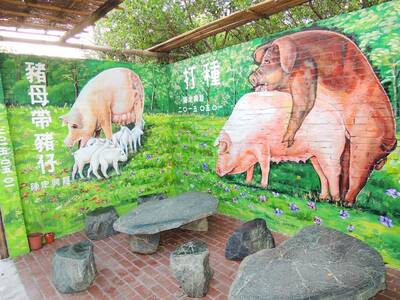
May 6 to May 12 Those who follow the Chinese-language news may have noticed the usage of the term zhuge (豬哥, literally ‘pig brother,’ a male pig raised for breeding purposes) in reports concerning the ongoing #Metoo scandal in the entertainment industry. The term’s modern connotations can range from womanizer or lecher to sexual predator, but it once referred to an important rural trade. Until the 1970s, it was a common sight to see a breeder herding a single “zhuge” down a rustic path with a bamboo whip, often traveling large distances over rugged terrain to service local families. Not only
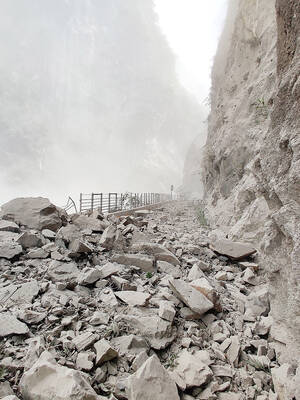
Moritz Mieg, 22, lay face down in the rubble, the ground shaking violently beneath him. Boulders crashed down around him, some stones hitting his back. “I just hoped that it would be one big hit and over, because I did not want to be hit nearly to death and then have to slowly die,” the student from Germany tells Taipei Times. MORNING WALK Early on April 3, Mieg set out on a scenic hike through Taroko Gorge in Hualien County (花蓮). It was a fine day for it. Little did he know that the complex intersection of tectonic plates Taiwan sits

The last time Mrs Hsieh came to Cihu Park in Taoyuan was almost 50 years ago, on a school trip to the grave of Taiwan’s recently deceased dictator. Busloads of children were brought in to pay their respects to Chiang Kai-shek (蔣中正), known as Generalissimo, who had died at 87, after decades ruling Taiwan under brutal martial law. “There were a lot of buses, and there was a long queue,” Hsieh recalled. “It was a school rule. We had to bow, and then we went home.” Chiang’s body is still there, under guard in a mausoleum at the end of a path

Last week the Directorate-General of Budget, Accounting and Statistics (DGBAS) released a set of very strange numbers on Taiwan’s wealth distribution. Duly quoted in the Taipei Times, the report said that “The Gini coefficient for Taiwanese households… was 0.606 at the end of 2021, lower than Australia’s 0.611, the UK’s 0.620, Japan’s 0.678, France’s 0.676 and Germany’s 0.727, the agency said in a report.” The Gini coefficient is a measure of relative inequality, usually of wealth or income, though it can be used to evaluate other forms of inequality. However, for most nations it is a number from .25 to .50


 RSS
RSS