


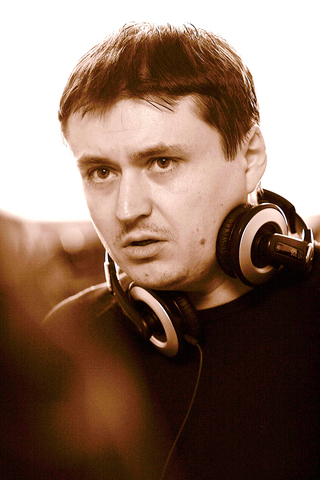
Romanian director Cristian Mungiu on Sunday won the Cannes Film Festival's coveted Palme d'Or for best film for his powerful portrayal of illegal abortion during the final days of dictator Nicolae Ceausescu's regime.
The low-budget film, 4 Luni, 3 Saptamini si 2 Zile (4 Months, 3 Weeks and 2 Days), which tells the harrowing story of a young woman's attempts to arrange an abortion under the communist regime, won the festival's top honors in a 22-movie race for the prize.
"For me it is a fairytale," said Mungiu. "I hope this Palme d'Or is a good signal for the small filmmaker in small countries."
PHOTOS: AGENCIES
This year's Cannes Film Festival has highlighted Romanian cinema's re-emergence on the world stage.
Just 24 hours earlier, one of the festival's other main sections, Un Certain Regard, which promotes upcoming new directors, gave its top award posthumously to another Romanian director, Cristian Nemescu, for his film Nesfarsit (California Dreamin').
Nemescu, 27, died in a car accident in August 2006, before he completed his film about political corruption in a Romanian village.
Nearly 17 years after the movie industry across Central and Eastern Europe was almost wiped out by the implosion of communism, this year's Cannes has helped to underscore the resurgence in filmmaking across the region, with a raft of Eastern European films shown across the festival.
With the story 4 Luni, 3 Saptamini si 2 Zile unfolding in just one day, the movie shows the high price that the young woman and a friend have to pay for the risky abortion.
Speaking at a press conference following his movie's screening during the festival, Mungiu said that abortion had become so widespread across Romania in the early 1990s that he wanted women to think about the moral issues of a termination rather than about "getting caught," as under communism.
"People have a tendency of avoiding and thinking about what they don't like," he said. "People have to think of their consequences."
But he insisted that the film was not just about abortion and should be seen in a much wider context — in particular, the extent to which the Ceausescu dictatorship reached even the most intimate spheres of life in Romania.
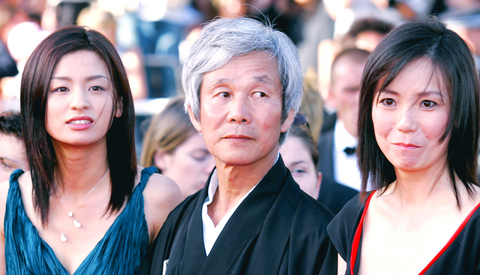
The Cannes jury, presided over by British director Stephen Frears, awarded Japanese director Naomi Kawase the Grand Prix for The Mourning Forest (Mogari no mori), which draws on a theme running through the 12-day festival: people coping with loss and grieving.
With Cannes celebrating its 60th anniversary, the jury awarded a special prize to American director Gus van Sant for his movie Paranoid Park, which told a downbeat, gritty coming-of-age story about a young skateboarder who accidentally kills a man.
Paranoid Park was "a lovely film," said Frears at the awards ceremony.
Van Sant won the festival's top award in 2003 for his movie Elephant.
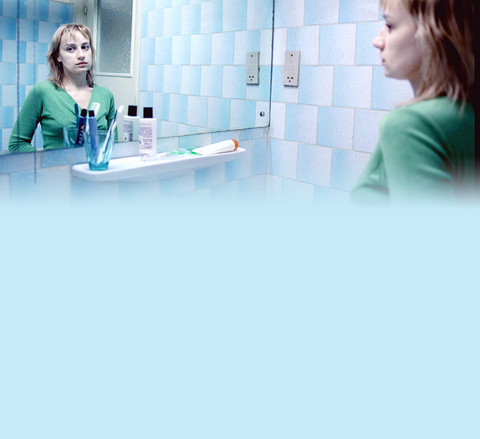
During the course of the gala award ceremony, legendary French actor Alain Delon asked those attending to mark the death 25 years ago of Romy Schneider with 25 seconds of applause.
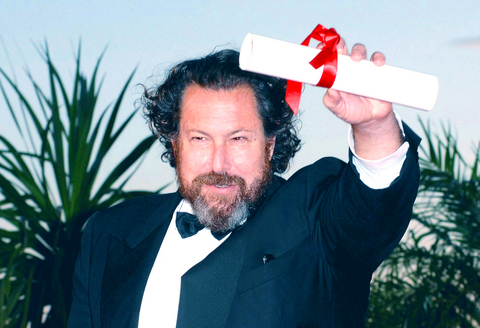
US painter-turned-director Julian Schnabel won the festival's director prize for his visually and emotionally moving The Diving Bell and the Butterfly (Le scaphandre et le papillon), on the life of a man trapped inside his own body.
With a series of strong performances by women throughout the festival, the prize for best actress was keenly awaited, with the jury awarding the prize to Korea's Jeon Do-yeon, for her role in Secret Sunshine by leading Korean director Lee Chang-dong.
She played a woman attempting to find peace after suffering a terrible personal tragedy.
Russia's Konstantin Lavronenko won the festival's best actor award for his portrayal in Russian director Andrei Zviaguintsev's Izgnanie (The Banishment) about a father vacationing with his family when his wife tells him that she is pregnant with someone else's child.
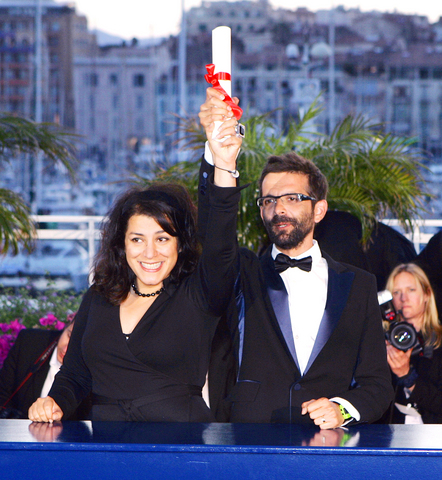
French-based Iranian director Marjane Satrapi's Persepolis, a black-and-white animated movie about coming of age during the Iranian Revolution, shared the jury prize with Mexican director Carlos Reygadas's sparse, slow-moving Stellet Licht (Silent Light).
Set in northern Mexico, Stellet Licht documents the power of religion as it tells the story of a man torn between his wife and a secret love.
German-Turkish director Faith Akin won best screenplay for Auf der Andere Seite (The Edge of Heaven), which was a movie much like the filmmaker's own story about a generation of immigrants caught between two cultures.
After a series of strong contributions to Cannes this year from Israel, the festival's Camera d'Or for best debut film was awarded to Meduzot (Jellyfish) by Israeli filmmakers Shira Geffen and Etgar Keret.
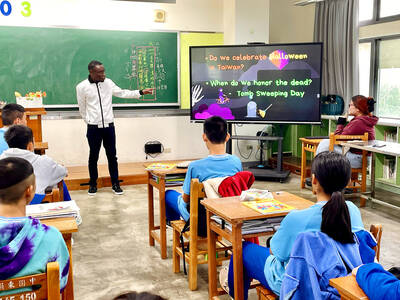
For many people, Bilingual Nation 2030 begins and ends in the classroom. Since the policy was launched in 2018, the debate has centered on students, teachers and the pressure placed on schools. Yet the policy was never solely about English education. The government’s official plan also calls for bilingualization in Taiwan’s government services, laws and regulations, and living environment. The goal is to make Taiwan more inclusive and accessible to international enterprises and talent and better prepared for global economic and trade conditions. After eight years, that grand vision is due for a pulse check. RULES THAT CAN BE READ For Harper Chen (陳虹宇), an adviser

Traditionally, indigenous people in Taiwan’s mountains practice swidden cultivation, or “slash and burn” agriculture, a practice common in human history. According to a 2016 research article in the International Journal of Environmental Sustainability, among the Atayal people, this began with a search for suitable forested slopeland. The trees are burnt for fertilizer and the land cleared of stones. The stones and wood are then piled up to make fences, while both dead and standing trees are retained on the plot. The fences are used to grow climbing crops like squash and beans. The plot itself supports farming for three years.
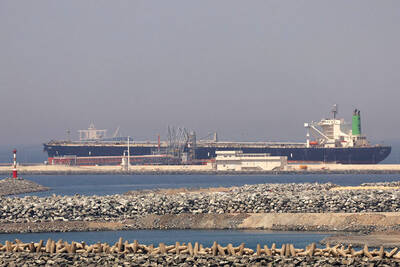
The breakwater stretches out to sea from the sprawling Kaohsiung port in southern Taiwan. Normally, it’s crowded with massive tankers ferrying liquefied natural gas from Qatar to be stored in the bulbous white tanks that dot the shoreline. These are not normal times, though, and not a single shipment from Qatar has docked at the Yongan terminal since early March after the Strait of Hormuz was shuttered. The suspension has provided a realistic preview of a potential Chinese blockade, a move that would throttle an economy anchored by the world’s most advanced and power-hungry semiconductor industry. It is a stark reminder of
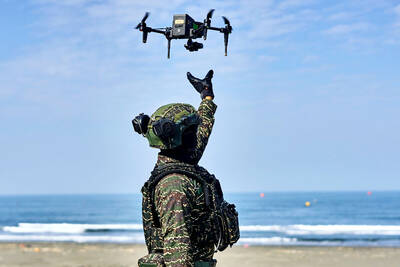
The last couple of weeks spectators in Taiwan and abroad have been treated to a remarkable display of infighting in the Chinese Nationalist Party (KMT) over the supplementary defense budget. The party has split into two camps, one supporting an NT$800 billion special defense budget and one supporting an NT$380 billion budget with additional funding contingent on receiving letters of acceptance (LOA) from the US. Recent media reports have said that the Taiwan People’s Party (TPP) is leaning toward the latter position. President William Lai (賴清德) has proposed NT$1.25 trillion for purchases of US arms and for development of domestic weapons


 RSS
RSS