


Six months ago the style prognosis for the northern hemisphere summer was pretty dire. The world's fashion experts spoke with one voice and announced that this season, the hemlines would be short. Not just mid-thigh short, but excruciatingly, don't-bend-over short.
But now, after a couple of sunny weekends, the shopping landscape looks rather different. Those lofty diktats from the high-end designers, those predictions from the likes of Vogue.com, are being rudely ignored by the British shoppers anyway. Despite having almost no presence on the international catwalks, a new hem length is fast gaining dominance. The high street has fallen for full-length and fabulous. It is the maxi-length dress (or even skirt), in all its floor-skimming, empire-line, thigh-friendly glory, that is set to be the cult buy of the summer.
Reports of maxi-dress demand outstripping supply are rife on the high street. At Miss Selfridge, a floral 70s-style maxi-dress sold out in a day. At Laura Ashley, a reissue of a maxi-dress the label first designed in the 60s sold out on its Web site in just 24 hours, and at ASOS.com, the virtual high-street store dedicated to selling clothes similar to those that celebrities have recently worn, "maxi-dress" is currently the site's second most popular search term, only beaten in frequency by the ever popular "Kate Moss."
How could this have happened? How has the maxi-dress crept under the fashion radar? The answer is that the designers got it wrong: they went too short. The super-short tunic dresses on the Chloe catwalk and the much lauded mini-dresses created by Christopher Kane did inspire high-street copies, but those copies only really appealed to the very young and very skinny. For those not blessed with model limbs, the length proved a turn-off. And no amount of advice from the fashion experts was going to make them think any differently.
Then along came maxi-dresses, and suddenly shoppers in search of a new, fashionable summer dress had an alternative — and one with real advantages. Maxi-dresses shout summer, they're hugely flattering, and you don't need to shave or moisturize to wear one. It's no wonder we are buying them by the armload.
Of course it isn't the first time that the fashion industry has whipped itself up into a frenzy over a trend, only to be shafted by plain commonsense. Metal-clad leggings and turbans are two other non-starters this season, and so far no one seems keen to splash out on the "deluxe sportswear" trend.
One eye on the catwalk
"We're not slaves to the catwalk in (the UK)," says Melanie Rickey, fashion news and features editor at Grazia magazine. "Yes, we look at [the catwalk], but it's an outdated idea to believe we follow it completely — we make our own decisions about what to wear. Mini-skirts will still be around, but maxi-dresses are just more forgiving."
Alison Edmond, creative/fashion director at Harper's Bazaar UK, is a long time fan of the maxi-hem. "The maxi is easier to wear for many more women than skimpy short dresses," she says. "I've worn them since I was 16. I'm not blessed with skinny legs, but I always had a tiny waist and a flat stomach, so they were perfect for my shape." She isn't convinced, however, that the success of the maxi-hem will spell complete disaster for the super-short minis. "Women with fab legs will still buy short dresses and they certainly won't look unfashionable," she says, "but this gives consumers twice the choice, which is great."
Retailers aren't daft, of course. Edmond believes that the high-street designers' use of the maxi-length was a contingency plan designed to hoover up all the women who wouldn't buy minis — and that has played a part in the resurgence of the maxi-hem. "I would imagine that last season's bum-skimmers didn't sell and retailers decided it was wiser to give women more options," she says. Rickey believes that the sudden success of the maxi is proof that the buyers for mid-market high-street shops are often more in touch with customers than high-end designers. "They know what women want," she says.
As with so many trends, celebrity patronage has undoubtedly played its part. At ASOS.com, Oshodi says that "we predicted the look because all the celebs have been wearing it since last summer, like Jessica Alba and Paris Hilton. The buying team came back from LA where the maxi-hem is a bit of a uniform at the moment." Edmond concurs: "It can be quite an LA look. Wear your vintage maxi-dress with your flat Jimmy Choos and you're away."
Yasmin Yusef, creative director at Miss Selfridge, is a proud wearer of the label's sell-out maxi-dress wearer. "For our buyers the idea came from watching how women were wearing vintage maxi-dresses at festivals last year."
Whatever kicked the maxi trend off, it's the forgiving length that will (probably) make it the look of our summer. After all, there aren't many styles of dress that are as universally flattering.
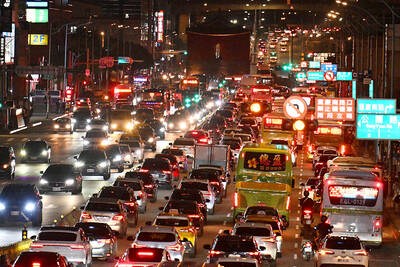
By global standards, the traffic congestion that afflicts Taiwan’s urban areas isn’t horrific. But nor is it something the country can be proud of. According to TomTom, a Dutch developer of location and navigation technologies, last year Taiwan was the sixth most congested country in Asia. Of the 492 towns and cities included in its rankings last year, Taipei was the 74th most congested. Taoyuan ranked 105th, while Hsinchu County (121st), Taichung (142nd), Tainan (173rd), New Taipei City (227th), Kaohsiung (241st) and Keelung (302nd) also featured on the list. Four Japanese cities have slower traffic than Taipei. (Seoul, which has some

Taiwan’s semiconductor industry consumes electricity at rates that would strain most national grids. Taiwan Semiconductor Manufacturing Co (TSMC) alone accounted for more than 9 percent, or 2,590 megawatts (MW), of the nation’s power demand last year. The factories that produce chips for the world’s phones and servers run around the clock. They cannot tolerate blackouts. Yet Taiwan imports 97 percent of its energy, with liquefied natural gas reserves measured in days. Underground, Taiwan has options. Studies from National Taiwan University estimate recoverable geothermal resources at more than 33,000 MW. Current installed capacity stands below 10 MW. OBSTACLES Despite Taiwan’s significant geothermal potential, the

In our discussions of tourism in Taiwan we often criticize the government’s addiction to promoting food and shopping, while ignoring Taiwan’s underdeveloped trekking and adventure travel opportunities. This discussion, however, is decidedly land-focused. When was the last time a port entered into it? Last week I encountered journalist and travel writer Cameron Dueck, who had sailed to Taiwan in 2023-24, and was full of tales. Like everyone who visits, he and his partner Fiona Ching loved our island nation and had nothing but wonderful experiences on land. But he had little positive to say about the way Taiwan has organized its
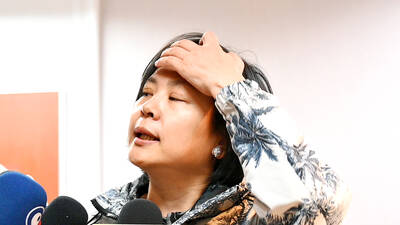
The entire Li Zhenxiu (李貞秀) saga has been an ugly, complicated mess. Born in China’s Hunan Province, she moved to work in Shenzhen, where she met her future Taiwanese husband. Most accounts have her arriving in Taiwan and marrying somewhere between 1993 and 1999. She built a successful career in Taiwan in the tech industry before founding her own company. She also served in high-ranking positions on various environmentally-focused tech associations. She says she was inspired by the founding of the Taiwan People’s Party (TPP) in 2019 by Ko Wen-je (柯文哲), and began volunteering for the party soon after. Ko


 RSS
RSS