


Sansia Township (三峽鎮), Taipei County is widely known as a well-preserved traditional town, but time and tourists had taken their toll, and even the most picturesque parts of the town had began to look a little down at heel. But now, after three-years of renovations and NT$300 millions of funding from Council for Cultural Affairs (文建會), the town is ready to show tourists the best that it has to offer. And the timing couldn't have been better, as the newly refurbished town decks itself in all its Lunar New Year finery.
The story of the Mincyuan old street (民權老街) in Sansia Township began in the Qing Dynasty. Situated at the confluence of Sansia (三峽溪), Tahan (大漢溪) and Heng rivers (橫溪), the small settlement quickly became a hub of the then thriving waterway transport network and grew wealthy from the trade in tea, dyed goods, timber and coal.
The town's Golden Age faded as river transport was superseded by railways and highways. Young people moved to the cities for a better future as their elders were left behind reminiscing about the past glory of Sansia's old street.

PHOTOS COURTESY OF TAIPEI COUNTY GOVERNMENT
In many ways, it is a typical story of old centers of wealth giving way to new conurbations, but in this case, the decline was halted when the Taipei County Government launched the renovation and preservation project on Mincyuan old street in 2004.
"The most difficult part of the project was not the renovation work itself but the seemingly ceaseless communication with the locals to involve them in the planning process," said Chen Kuan-hua (陳冠華) from the Urban Design Division of Taipei City Government (台北縣政府都市計畫課).
Considering that many houses are owned jointed by many heirs, sometimes numbering in the hundreds, reaching a consensus on the renovation projects was a herculean task. But the effort seems to have paid off as the street has been restored to as good an approximation of its original look as knowledge and technical know-how permit.
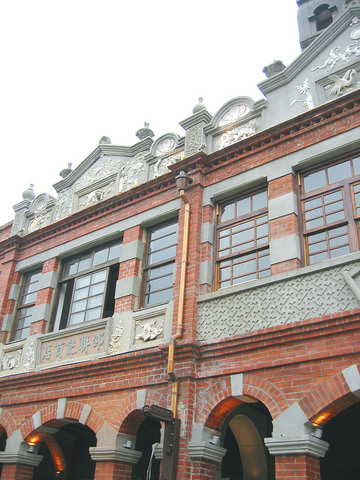
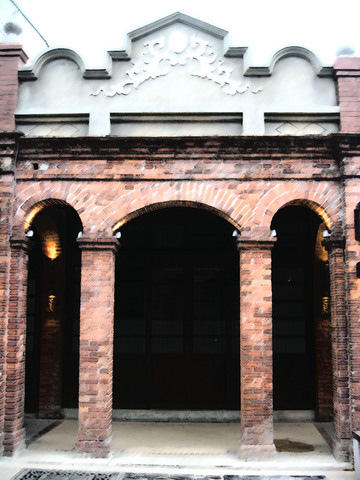
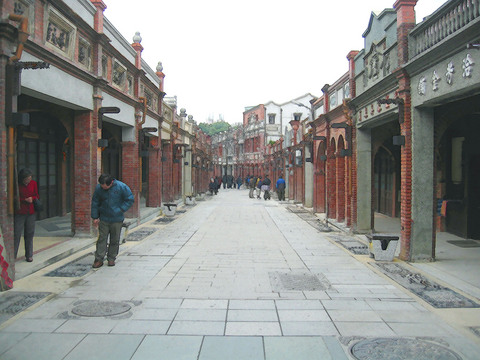
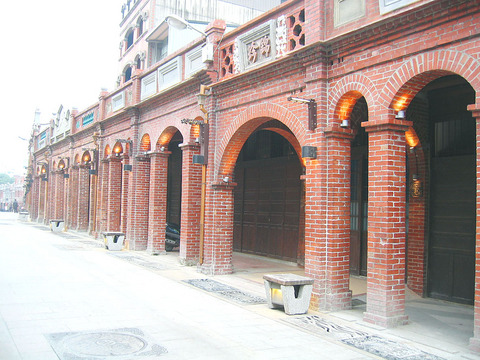
Boasting more than a 100 buildings dating from the final decades of the Qing Dynasty and the early years of the Japanese colonial period (1895-1945), the thoroughfare is lined with street houses adorned with Baroque-style columns and refined sculptured facades. It is a fine example of the popular architectural styles of that time. The facade of each house is stamped with the residents' surname and their trade. Back in the old days, arched arcades, a traditional architectural form commonly seen in the hotter and wetter southern regions, were the social place where locals did their businesses and gathered to socialize.
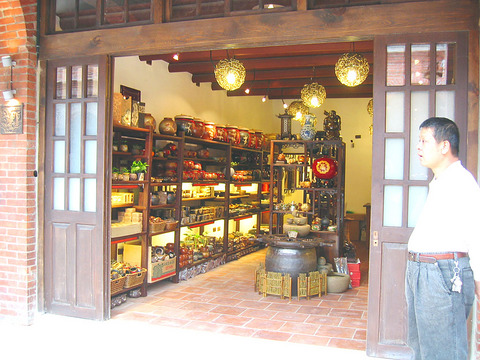
Various businesses have now taken over the street. Most notable are the tea houses, handicraft shops and stores selling hand-dyed clothing using traditional indigo-dyeing techniques unique to the region. Particularly worth visiting are the antique stores that stock items dating back to the Japanese colonial era.
Located on the old street is the town's primary attraction, the Sansia Tsushih Temple (三峽祖師廟), dedicated to Master Chingshui (清水祖師). Originally built in 1769, it has undergone numerous renovations, most recently by artist Li Mei-shu (李梅樹, 1902 to 1983), who led a almost half-century restoration project that began in 1947. The painstaking restoration is widely recognized as being some of the finest work of its kind in Taiwan. The temple's Chinese cypress and camphor wood ceiling and beams are covered in gold leaf and the exquisitely sculptured stone columns featuring birds, dragons, sages and gods are a feast for the eyes.
For those who don't want to while away the Chinese New Year watching facile TV shows and stuffing themselves on rich New Year's victuals, a series of religious and cultural activities will take place in front of the temple. When the clock strikes midnight, heralding the arrival of the first day of the New Year (Feb. 18), devotees will vie to place the first incense stick in the temple's brazier, an act which is believed to bring good luck for the coming year.
The sixth day of the year (Feb. 23) marks the birthday of Master Chingshui and a traditional ceremony is expected to draw tourists from around the country. The sacrificial pig will be paraded around the town and eventually offered to the deity. Amid the clamor of shouting and music, don't forget to pluck a hair from the pig's ear and eat a slice of the sacred pork, as this is also believed to bring wisdom and good fortune.
The Lantern Festival announces the formal end of the New Year festivities, which falls on March 4 this year, and will be celebrated with the magnificent display of lights and lanterns reminiscent of parades held in the town's heyday, and is likely to draw plenty of visitors.
Apart from the boisterous temple fairs, visitors can visit the nearby cultural sights including Li Mei-shu Memorial Gallery (李梅樹紀念館) housing the largest collection of Li's masterpieces and the Sansia Historical Memorial Museum (三峽鎮歷史博物館), a well-preserved colonial building that documents the town's history.

In late October of 1873 the government of Japan decided against sending a military expedition to Korea to force that nation to open trade relations. Across the government supporters of the expedition resigned immediately. The spectacle of revolt by disaffected samurai began to loom over Japanese politics. In January of 1874 disaffected samurai attacked a senior minister in Tokyo. A month later, a group of pro-Korea expedition and anti-foreign elements from Saga prefecture in Kyushu revolted, driven in part by high food prices stemming from poor harvests. Their leader, according to Edward Drea’s classic Japan’s Imperial Army, was a samurai

The following three paragraphs are just some of what the local Chinese-language press is reporting on breathlessly and following every twist and turn with the eagerness of a soap opera fan. For many English-language readers, it probably comes across as incomprehensibly opaque, so bear with me briefly dear reader: To the surprise of many, former pop singer and Democratic Progressive Party (DPP) ex-lawmaker Yu Tien (余天) of the Taiwan Normal Country Promotion Association (TNCPA) at the last minute dropped out of the running for committee chair of the DPP’s New Taipei City chapter, paving the way for DPP legislator Su
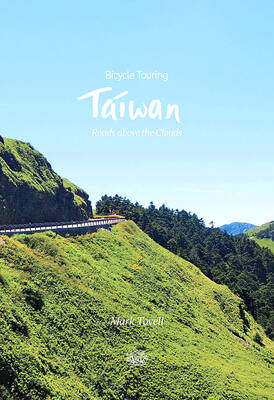
It’s hard to know where to begin with Mark Tovell’s Taiwan: Roads Above the Clouds. Having published a travelogue myself, as well as having contributed to several guidebooks, at first glance Tovell’s book appears to inhabit a middle ground — the kind of hard-to-sell nowheresville publishers detest. Leaf through the pages and you’ll find them suffuse with the purple prose best associated with travel literature: “When the sun is low on a warm, clear morning, and with the heat already rising, we stand at the riverside bike path leading south from Sanxia’s old cobble streets.” Hardly the stuff of your
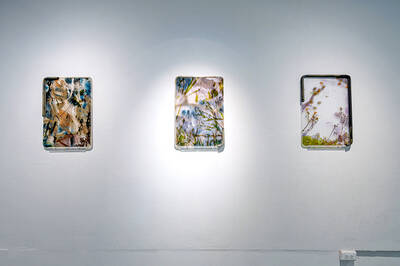
Located down a sideroad in old Wanhua District (萬華區), Waley Art (水谷藝術) has an established reputation for curating some of the more provocative indie art exhibitions in Taipei. And this month is no exception. Beyond the innocuous facade of a shophouse, the full three stories of the gallery space (including the basement) have been taken over by photographs, installation videos and abstract images courtesy of two creatives who hail from the opposite ends of the earth, Taiwan’s Hsu Yi-ting (許懿婷) and Germany’s Benjamin Janzen. “In 2019, I had an art residency in Europe,” Hsu says. “I met Benjamin in the lobby


 RSS
RSS