


Walk down most streets in Taipei and you will inevitably pass a store crammed with several thousand graphic novels and magazines teenagers and young adults lounging inside on couches or loafing at tables. A bookstore or library? No, this is a comic book rental shop, a testament to the country's decades' long fascination with the genre.
The 15th Taipei International Book Exhibition (TIBE, 台北國際書展), currently being held at Taipei World Trade Center (TWTC), offers a great opportunity to get acquainted with graphic literature. Organized by the Taipei Book Fair Foundation and the Government Information Office (GIO), this year's exhibition has attracted 341 local and 370 foreign publishers who will be introducing their books in 1,565 booths spread over three exhibition halls. The exhibition spotlights the most significant works from Taiwan, South Korea, Hong Kong, Japan and China, as well as comic spin-offs like toys, television programs and animated movies.
According to Jerry Lo (羅士翔), Marketing Director of Ching Win Publishing (青文出版社股份有限公司), Taiwan's second-largest publisher of comics, book fairs have always been the best forums for publishers to communicate with their readers. "Recently, however, because of the bad market situation, book fairs have also become a good way of reducing stock," he said, nothing that a publisher's turnover often reaches NT$10 million for one book fair.

PHOTOS COURTESY OF TAIPEI INTERNATIONAL BOOK EXHIBITION
Lo said book fairs and exhibitions make up a small proportion of Ching Win's yearly sales of NT$350 million, but his company uses them unload many of the more than 50 titles it publishes each month. In other words, book fairs are places where readers can buy comics at rock bottom prices.
Translated Japanese manga (or comics) are by far the most popular, though South Korean comics have made a strong showing in the past few years.
Lo attributes the popularity of Japanese comics to a formula they've developed and refined over a many years of experimentation.
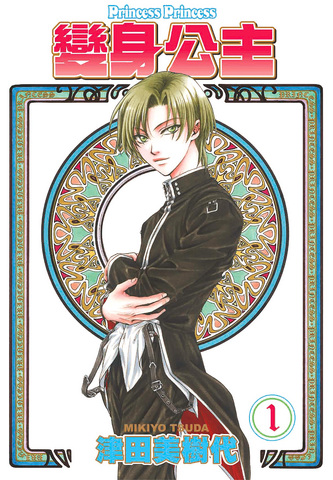
"A successful comic book always contains elements of passion, adventure and friendship," he said. Few local comics are as popular, he added, not so much because of the quality of their illustrations, but because they don't employ this structure in their plots.
Liu Wei-kung (劉維公), a sociologist at Soochow University who researches consumer trends, said the reason why Japanese comics attract a broader readership is because they are not only written for or marketed to children or teenagers. "The culture in Japan is such that comics … also appeal to adults," he said.
It is common in Japan, he said, to see people in their thirties and forties reading comics not only for pleasure but also for information. As such, comics are not viewed as an infantile subculture but seen as an important part of popular culture.
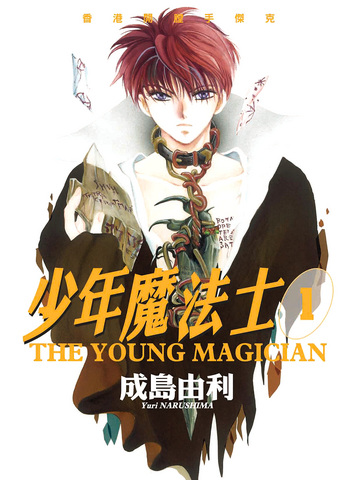
This leads to another reason why Japanese comics remain popular: they cover a range of topics that reflects the diverse interests of their target audience. From how to choose and drink red wine to health issues, any topic can serve as material for a comic provided the formula of passion, adventure and friendship is used, Lo said.
Lo says his company is trying to change the impression people have about their company by publishing books that are also suited to the adult market. "Most people treat us as a publisher that only releases books for the children market. But we have started to publish some comic books suitable to teenagers and adults," he said.
But don't expect adults to be heading to cosplay festivals or competitions dressed as their favorite manga accountant or anime wine connoisseur. Specialized comics still make up a small — but growing — part of Taiwan's market. However, Lo suggests that, as the current generation grows older, they will begin to seek out comics with adult themes such as business or politics that are directly related to their lives.
"Comic books that are closer to the real world and have a direct influence on the readers are the direction we are going in," he said.
One would expect that bookstores would be the largest sellers of comic books, with fairs and exhibitions making up the shortfall. But in Taiwan, comic book rental shops are where comics most are bought and sold.
"Theoretically, rental bookshops are illegal in Taiwan," Lo noted. "However, [they] are the most important retail and distribution system for the comic book business."
Take Eslite (誠品書店), for example. Lo said comics account for only 8 percent of that company's consumer sales. On the other hand, there are more than 800 comic book rental stores in Taipei alone.
But like other non-export-oriented aspects of the local economy, the comic book business has suffered in recent years. Nowadays, a famous comic will usually enjoy a first print run of 60,000 copies. "When the economy was doing well, it wasn't unheard of 100,000 to 120,000 copies of one volume being sold," Lo said.

In late October of 1873 the government of Japan decided against sending a military expedition to Korea to force that nation to open trade relations. Across the government supporters of the expedition resigned immediately. The spectacle of revolt by disaffected samurai began to loom over Japanese politics. In January of 1874 disaffected samurai attacked a senior minister in Tokyo. A month later, a group of pro-Korea expedition and anti-foreign elements from Saga prefecture in Kyushu revolted, driven in part by high food prices stemming from poor harvests. Their leader, according to Edward Drea’s classic Japan’s Imperial Army, was a samurai

The following three paragraphs are just some of what the local Chinese-language press is reporting on breathlessly and following every twist and turn with the eagerness of a soap opera fan. For many English-language readers, it probably comes across as incomprehensibly opaque, so bear with me briefly dear reader: To the surprise of many, former pop singer and Democratic Progressive Party (DPP) ex-lawmaker Yu Tien (余天) of the Taiwan Normal Country Promotion Association (TNCPA) at the last minute dropped out of the running for committee chair of the DPP’s New Taipei City chapter, paving the way for DPP legislator Su

It’s hard to know where to begin with Mark Tovell’s Taiwan: Roads Above the Clouds. Having published a travelogue myself, as well as having contributed to several guidebooks, at first glance Tovell’s book appears to inhabit a middle ground — the kind of hard-to-sell nowheresville publishers detest. Leaf through the pages and you’ll find them suffuse with the purple prose best associated with travel literature: “When the sun is low on a warm, clear morning, and with the heat already rising, we stand at the riverside bike path leading south from Sanxia’s old cobble streets.” Hardly the stuff of your
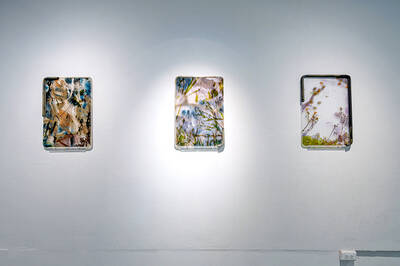
Located down a sideroad in old Wanhua District (萬華區), Waley Art (水谷藝術) has an established reputation for curating some of the more provocative indie art exhibitions in Taipei. And this month is no exception. Beyond the innocuous facade of a shophouse, the full three stories of the gallery space (including the basement) have been taken over by photographs, installation videos and abstract images courtesy of two creatives who hail from the opposite ends of the earth, Taiwan’s Hsu Yi-ting (許懿婷) and Germany’s Benjamin Janzen. “In 2019, I had an art residency in Europe,” Hsu says. “I met Benjamin in the lobby


 RSS
RSS