


What happens when a loosely organized music collective and a bunch of artists who like to paint graffiti and hold jam sessions in abandoned houses throw a party? You get Freak Out Beast (吵年獸), a free music festival, art exhibition and street fair that starts this weekend in Yongkang Park (永康公園).
The second Freak Out Beast music and art festival is being organized by members of KbN, (凱比鳥), whose song Urge (衝動) earned a Golden Horse nomination this year for best original film song. KbN (www.k-b-n.net) is one of Taiwan's better independent bands. If you haven't heard of them it's because they're a real indie band and don't seem to care much about promoting themselves.
"Taipei City is always so empty and boring [during the Lunar New Year]," said organizer and KbN member Jerry Fang (方宜正). "This festival [is for] people to get together, sing together, and have fun together."
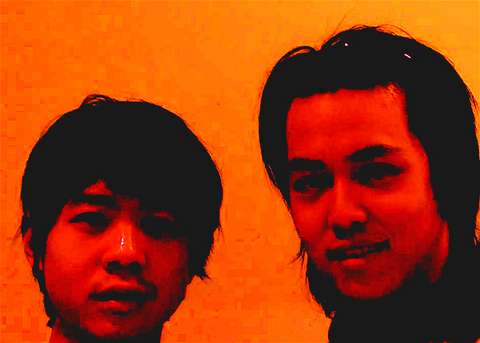
PHOTOS COURTESY OF JERRY FANF
Last year's Freak Out Beast included performances by 20 bands and DJs and drew around 1,000 people to Huashan Culture Park (華山文化園). That venue is currently unavailable, so this year's festival will be spread over four locations. Iost and 4am cafes are hosting art and photography exhibitions, Yongkang Park will host a "creative market" and serve as a stage for outdoor concerts this and next weekend. (A grand finale DJ party that had been scheduled for Feb. 16 at Spot — Taipei Film House (台北光點) will most likely not happen because the film house is undergoing renovations. Check the listings section in next Friday's Taipei Times for updates.)
Unlike mega festivals Formoz and Hohaiyan (海洋音樂祭), Freak Out Beast is low-key, avowedly anti-capitalist, and offers a great chance to connect with young artists and musicians from Taipei's independent music scene.
"I think that this festival is quite a bold attempt because we are not so satisfied with pop music in Taiwan and we're not too satisfied with the music market," said scheduled performer Yang Shu-fan (楊書凡), a 23-year-old linguistics and anthropology student at Fujen Catholic University (輔仁大學) who started writing songs last year when she occupied a ruined building with a group of graffiti artists. "The basic concept of this festival is that we can play indie music for free and we can start our own activities without the support of some big companies or government institutions."
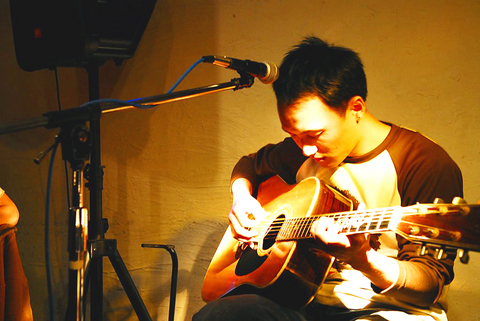
Freak Out Beast is named after the traditional Lunar New Year practice of dancing and using gongs, drums and firecrackers to scare away nian (年), the legendary monster that sneaks into houses to eat humans on New Year's Eve. But since there's no place to plug in an amplifier or drum machine at Yongkang Park, the performances there will be acoustic and unplugged. The 20 or so scheduled musical acts include artists from indie-scene bands like Vera Queen, Nylas and Public Radio. Some will do solo sets, others will have a guitar or two and maybe a conga drum for backup.
"I think simple is the only way to go. I don't need anything more, just a guitar," said Chet Liu (劉鎮), 25, who left KbN and after a period of introspection is launching a solo project. He takes the stage for an hour this Sunday at 3pm for what he said would be a "very friendly set." "This activity … is good for the society," Liu said. "The least art can do to save the world. That's all I'm aiming for."
Rhydian Vaughan, 18, from grunge three-piece The Wreckhords, said preparing for his set is a challenge because he's never been given a live acoustic performance before. "I'll play some cover songs, but mostly … my style, so it's not going to sound very similar to the original song."
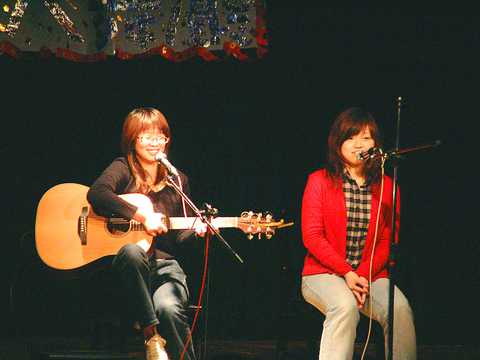
Lee Hong-chich (李鴻志), 30, formerly of the band Earfone (耳邊風), which recently broke up, is excited about Freak Out Beast because it's free and "every musician that has been invited is unsigned. It's a great opportunity for the audience if they are sick and tired of those pop stars from MTV. They can come and see our show and maybe they will find something they like."
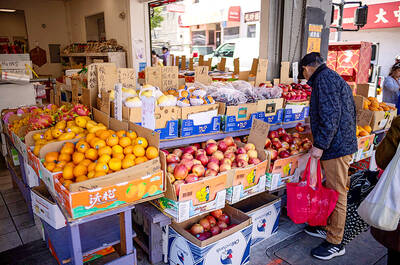
Ajay Verma, a consultant gastroenterologist at Kettering general hospital in Northamptonshire, says our gut is a “complex machine.” “It is constantly providing us with the nutrition we need, initially to grow and develop, and then for us to survive, thrive and repair from injury and illness.” How can we keep it functioning well? Put simply: “Make sure what you put into it is balanced, and that you clear out its waste products adequately,” Verma says. “In a general gastroenterology clinic, the most common conditions we see are irritable bowel syndrome (IBS), gastroesophageal reflux disease, inflammatory bowel disease and constipation,” says Nisha
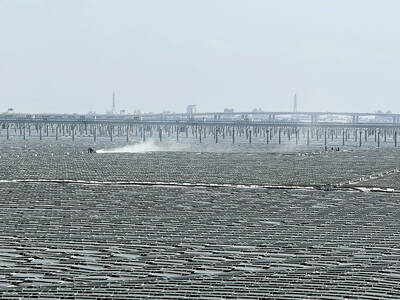
The arithmetic is straightforward and uncomfortable. By the end of 2025, Taiwan had committed itself to a 50-30-20 electricity mix — half natural gas, 30 per cent coal, 20 per cent renewables. The Ministry of Economic Affairs’s (MOEA) own monthly energy reports tell a different story. Natural gas reached 47.8 per cent of generation last year. Coal stood at 35.4 per cent, comfortably above its target ceiling. Renewables came in at 13.1 per cent, well short of the 20 per cent Taipei had pledged a decade earlier. Installed renewable capacity reached roughly half of the 12 gigawatts (GW) the government

Last week US President Donald Trump was asked by a reporter whether he would speak on the phone to the President of Taiwan. “l’ll speak to him. I speak to everybody. We have that situation very well in hand,” Trump said. This marked the second time in a couple of weeks he had said he would talk to the President of Taiwan. In 2016 he famously took a call from then-president Tsai Ing-wen (蔡英文), when he was president-elect. Despite warnings that the apocalypse was nigh because of a phone call, the world quickly forgot about the conversation between two democratically-elected presidents.
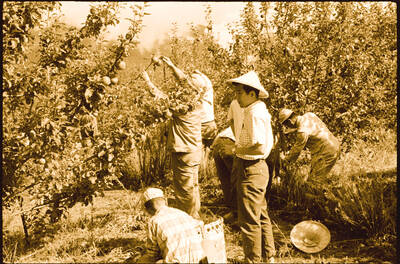
May 25 to May 31 Few believed that apples could be cultivated on a commercial scale in Taiwan’s high mountains. When horticulturalist Cheng Chao-hsiung (程兆熊) first proposed the idea in 1955, both American and Taiwanese colleagues dismissed it as implausible, arguing that temperate fruit could not be reliably grown on a subtropical island, especially on rugged terrain. However, it was this terrain in the Central Mountain Range where many Chinese Civil War veterans were resettled in the late 1950s. With limited job prospects and no family in Taiwan, they were placed on cooperative farms aimed toward self-sufficiency. Some say the conditions


 RSS
RSS