


Forty-eight kilometers outside this down-at-the-heels seaside town, Justin Betombo tends his vanilla plants and cheers the local soccer team as if he had not a care in the world. And in fact, what was once his greatest worry has been almost magically lifted from his shoulders.
In the local prosecutor's office, a file filled with accusations that he had sodomized his nine-year-old niece has vanished.
Betombo was arrested in 2003 after the girl, Kenia, said he had savagely assaulted her. The police obtained his confession, which he later recanted, and a doctor's certificate that Kenia had been sexually violated, rendering her incontinent and anorexic. Twice they sent the case file to the local prosecutor.
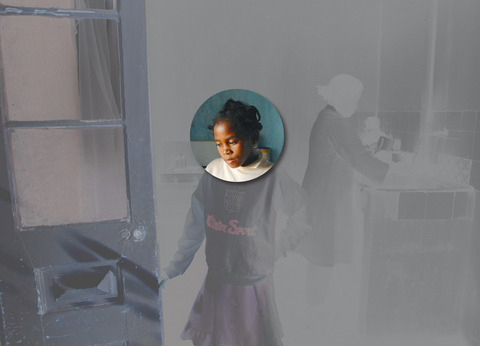
PHOTOS: NY TIMES NEWS SERVICE
There matters ended. Betombo attended one hearing in the prosecutor's office, but Kenia's parents say they were not told about it. The records are nowhere to be found. And Betombo walked away a free man. Kenia's parents, distressed by what they saw as a travesty of justice, asked that her name be published, hoping that her case would set an example.
Among Sub-Saharan Africa's children, such stories are disturbingly common. Even as this region races to adopt many of the developed world's norms for children, including universal education and limits on child labor, one taboo — child sexual abuse — remains stubbornly resistant to change.
In much of the continent, child advocates say, perpetrators are shielded by the traditionally low status of girls, a lingering view that sexual abuse should be dealt with privately and justice systems that constitute obstacle courses for victims.
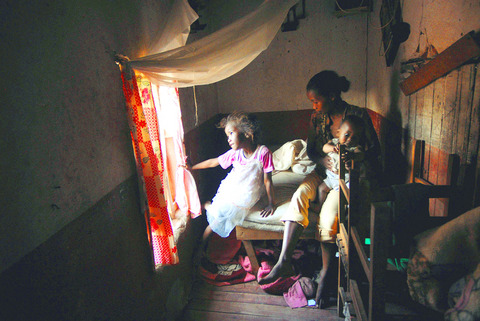
Data are sparse and sexual violence is notoriously underreported. But South African police reports give an inkling of the sweep of child victimization. In the 12 months ending in March 2005, the police reported more than 22,000 cases of child rape. In contrast, England and Wales, with 9 million more people than South Africa, reported just 13,300 rapes of all females in the most recent 12-month period.
"The prevalence of child rape in South Africa goes from really, really high to astronomically high," said Rachel Jewkes, a specialist on sexual violence with South Africa's Medical Research Council.
Africa is not unique in its high rates of abuse. While a survey of nine countries last year by the World Health Organization found the highest incidence of child sexual abuse in Namibia — more than one in five women there reported being sexually abused before age 15 — it also found frequent abuse in Peru, Japan and Brazil, among other nations. Relatives are frequent perpetrators in Africa, as in much of the world. But this continent's children face added risks, especially at school. Half of Malawian schoolgirls surveyed in this year said male teachers or male classmates had touched them in a sexual manner without their permission.
The number of abuse cases is rising in South Africa, Zimbabwe, Zambia, Uganda, Kenya, Sierra Leone and other African countries, statistics show. Whether that means more children are being victimized or more are coming forward — or both — is impossible to determine, experts say.
Researchers cite various reasons why abuse is so common: poverty, which makes it harder for parents to keep children safe; a legacy of violent, oppressed societies, and cultural mores that allow offenders to escape criminal punishment, often by marrying their victims or compensating their victims' families.
But, ultimately, said Jewkes, of the Medical Research Council, the vast gap between the status of men and boys and that of women and girls explains much of the climate of relative tolerance. "If I had to put my finger on one overriding issue, it would be gender inequality," she said.
Breaking taboos
Increasingly, African nations are openly acknowledging the problem, partly because AIDS has made children more likely to fall ill or die from sexual abuse. Campaigns against abuse are under way in Zimbabwe, Lesotho, Swaziland, Kenya, Sierra Leone and elsewhere.
The impact is apparent in Zimbabwe, where a child rights group estimates that at least 2,000 child rape victims have died of AIDS since 1998. "Literally for the first time in Zimbabwe's history, child abuse is no longer a taboo subject," said James Elder, a UNICEF spokesman.
That said, the response is minuscule compared with the extent of abuse, said Pamela Shifman, a child protection specialist at UNICEF headquarters in New York. "We see huge numbers of girls affected," she said. "These crimes are still treated as the fault or the problem of the victim."
South Africa is perhaps furthest along in developing the specialized courts, medical treatment and counseling that have long been standard fare in the West. But even there, Jewkes said, appalling police work — for example not verifying the addresses of suspects and their accusers — routinely dooms prosecutions.
Beyond that, said Joan van Niekerk, national coordinator of Childline, which runs South Africa's child crisis hot lines, children regularly complain that coping with the criminal justice system is worse than the sexual abuse itself. Like much of the region, Madagascar, an island of 18 million off Africa's southeastern coast, is making some headway, but still falls short of even South Africa's low standard.
Since 2000, UNICEF has set up 11 child-protection teams of doctors, educators and judges to inform the public about sex abuse and assist victims. Hassan Mouigni, who leads vice investigations at the main police station in Antanarivo, Madagascar's capital of 1.4 million, sees some results. This year, he said, the station has investigated 95 cases, compared with 40 in all of 2003.
But medical and legal authorities say the vast majority of families still hew to a tradition of accepting payment from perpetrators. The few who press charges are plunged into a criminal justice process that Mouigni calls deeply frustrating.
He can offer victims who arrive at his station little more than an officer behind a typewriter — no counselors, no video cameras to record testimony, no toy-filled rooms or friendly intermediaries. Instead, girls as young as five are expected to confront their tormentors face to face. Perhaps most daunting, impoverished families must produce at least US$15 to cover investigation costs like gloves and paper for medical exams.
That was nearly enough to deter Claudine Ravoniarisoa, who appeared at Mouigni's station one recent Thursday with her 15-year-old daughter. Wringing her hands nonstop, the girl told officers that a neighbor had raped her while her mother was hospitalized. "He destroyed my life and my body," she said.
But once her mother learned of the costs, she decided to identify the perpetrator only as "X."
"I have no money to pursue this," she protested, while an officer tried to persuade her otherwise.
In another room, Domoima Rahamtanirima pressed a case against her brother-in-law in the molestation of her five-year-old, Menja. For two weeks afterward, Rahamtanirima said, the girl cried when she urinated.
Rahamtanirima borrowed money for the required medical exam. Nothing was left to buy the medicine the doctor prescribed for Menja. Her file complete, the little girl traipsed in her frilly white dress to a courthouse as packed with accusers, accused and their supporters as a New York subway station at rush hour. She waited four hours, then sat down at a table before them all and, in a tiny voice, identified her uncle, seated across from her, as her assailant.
"We had to do it," said her mother, who said that everyone in her village knew about the case and asked that her daughter's name and picture be used. "Everybody should be aware that things like this should not happen to children."
Kenia's parents, Antoine and Joazandry Moravelo, are equally passionate about the need for justice for their daughter. But after four fruitless years, they have all but given up hope. Though her photograph and name have appeared in local newspapers, they say, no one has been held accountable.
Kenia, the sixth of eight children, moved in with her aunt and uncle Lydia and Justin Betombo at the age of eight after the couple promised to educate her. Sharing the care of children is common in Africa, and the Betombos, who lived 45 minutes away, had more than the Moravelos: a car and a two-room, tree-shaded house with sheet metal walls instead of their thatched-roof reed hut.
But Kenia said the house was no haven. She said, "My uncle showed me his penis whenever he had a chance, and I always ran away." Her aunt's stock response, she said, was, "Don't talk about that."
One night in mid-2002, when her aunt was out, Kenia said, her uncle summoned her to his bed. "Because I refused, he came over to my bed," she said. Afterward, she said, he told her, "If you talk about what happened, I will kill you."
The violence of silence
She said she told her aunt anyway, and was instructed to keep quiet. The physical consequences of the attack, however, were hard to hide.
Kenia lost control over her bowels, had to quit school and was increasingly confined to the house. For six months or more, her only treatment came from a traditional healer who told her to boil herbs in water and wash with them.
Finally, emaciated and weak, Kenia approached a neighbor. "She said, 'I am sick; I am sick,' and she was crying," said Suzanne Mboty, who knew Kenia's parents. Hours after the neighbor reached his village, Moravelo retrieved Kenia. "She was so thin, so thin, I couldn't believe it," he said. Her mother said Kenia could not even sit down.
"I opened her bag, and I saw all her underwear full of feces," she said. "I said, 'My God, what is this?'"
Kenia refused to say. But at the local health clinic, the nurse held up a pair of scissors and threatened to operate if Kenia did not talk.
That began nearly four years of medical procedures for Kenia, including a colostomy, two operations to close it, and repeated hospitalizations for wasting, incontinence and anorexia. Her mother said she sometimes refuses to eat because defecation is painful. Medical reports indicate that the muscle controlling defecation has been largely destroyed and her anal canal is heavily scarred.
The family is rent: Kenia's parents were forced to sell their rice field and move to Diego-Suarez in the north for Kenia's treatment. Most of their other children remained behind, in the care of elder siblings. Kenia, now 13, is temporarily in Antanarivo, where a doctor is trying to treat her with a specialized diet.
A surgeon who examined her recently said a full recovery is unlikely. The uncertainty preys on Kenia, her mother said. "Sometimes she tells me, 'My body is hurting. I have so many problems. I don't go to school. I just feel this sickness all around me,' " she said.
The family's legal efforts have met even less success. Kenia's father lodged a complaint with the cash-strapped police, but the officers had no car; he hired a taxi so they could pick up Betombo for questioning. Frightened and sobbing, Kenia confronted her uncle at the chaotic station. Betombo and his wife denied Kenia's account. But ultimately — after the police beat him, Betombo said — he signed a confession, was arrested and was carted off to the prosecutor's office in nearby Antalaha.
Kenia's father said that a few days later friends told him that Justin Betombo was "free and happy" back in his village.
Betombo said he had convinced the prosecutor that his confession was false. Kenia's parents say they were never summoned to contradict him.
"I took this girl in as my daughter," Betombo said. "I really can't understand why they say that I could have done such an awful thing to her. I think they were jealous of me and they wanted to ruin my life."
Sambava's police department again sent the file to the prosecutor's office months later. But Sophie Ramahakaraha, the prosecutor in charge, now says that she has no record or memory of it.
Real instances of child rape are rare, she said. "Very often the parents are poor and they use this procedure to get money," she said.
But to Daul Randriamalaza, a Sambava police inspector, there is no question about who was the victim here.
"I don't want to talk about corruption here, but that is what could have happened in this case," he said as a clutch of prisoners peered out between the bars of the station's tiny cell.
"I have children myself. How can I be happy about this?"


Taiwan’s English education system is being pulled apart by three opposing forces. Bilingual Nation 2030 pulls students toward English and global communication. Artificial Intelligence (AI) readiness pulls them toward digital judgment, verification and AI-mediated work. But Taiwan’s old exam culture pulls them back toward memorization, grammar drills, timed reading and correct answers. If the education system keeps using old exams to define success, it risks producing graduates who are neither genuinely bilingual nor genuinely AI-ready, but trained for tasks machines can already perform. The first force is Bilingual Nation 2030. Launched in 2018, the policy aimed to “help Taiwan’s workforce connect

“Taiwan’s Opposition Leader Comes to US With a Message Straight Out of Beijing” read a May 31 headline in the Wall Street Journal. Top US administration officials and members of Congress almost certainly read the WSJ, and if there was a bullet point takeaway that people in Washington should absorb ahead of Chinese Nationalist Party (KMT) Chair Cheng Li-wun’s (鄭麗文) arrival in DC on June 9, that headline is it. The last few columns have discussed this very topic, and the timing is not coincidental. While those top officials likely do not read the Taipei Times, judging by the number

With weighty, anxiety-inducing geopolitical topics dominating the headlines, checking in on the wild and weird state of local politics can take some of the edge off. This November’s elections will determine who will be in charge of fixing potholes in your neighborhood, not the potholes in Taiwan’s complicated geopolitical space. Recently, after an online interview with a Taipei-based journalist, I commented that Taipei journalists never go further than the MRT can take them. He laughed and agreed. Naturally, the Taipei mayoral race is eating up much of the press attention. TAIPEI CITY Democratic Progressive Party (DPP) candidate Puma Shen (沈伯洋) has

As someone who normally steers clear of books with “transcendence” or “metaphysics” in their subtitles, this reviewer — a casual observer of local belief systems since the 1990s — found Fabian Graham’s Money God Temples in Taiwan a challenging read. Those who’ve only dipped their toes into temple culture will likely need to parse several sections with special care if they’re to keep up with the author, a British ethnographic researcher whose previous books have investigated religious practices among ethnic Chinese in Southeast Asia. This scholarly volume examines a facet of Taiwan’s religious landscape that didn’t exist a century ago, and


 RSS
RSS