


Jason Kutcher was out. Then he was out again.
Kutcher, a 24-year-old legislative affairs assistant, had knocked the big, red rubber ball into the hole between first and second base and shambled toward first.
“Go, Jason, go!” his teammates chorused. “Run! Run!”
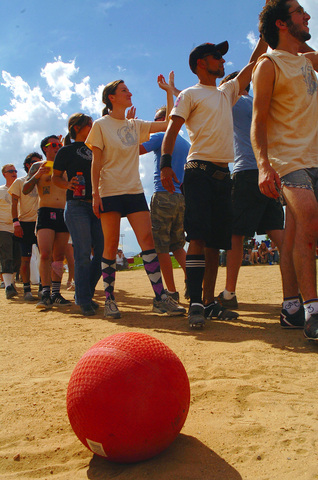
PHOTO: NY TIMES NEWS SERVICE
But the young woman playing first for the Project Kickball team in Washington's DC Kickball league scooped up the ball and stepped on the bag for the out. Then, for good measure, she pegged the ball at Kutcher's stomach, tagging him out yet again.
“That was fun for me, too,” he said, back on the sideline. “Humiliating and emasculating at the same time.”
But humiliation and emasculation don't carry quite the same weight when the player is laughing, the game is kickball, the name of your team is too risque to appear in a family newspaper, and the stakes are, well, playground pride. (For the record, Project Kickball won, 4-0.) Standing on the grassy field as the sun set behind the Washington Monument, Kutcher was merely one of tens of thousands of young adults in the US who are playing kickball in organized leagues.
That only a few fans showed up — a lone girlfriend, a few friends, a jogger who stopped to watch and a handful of players waiting for their own game — didn't much matter to the four teams that played the early games one recent weeknight and then, perhaps more important, headed to a local pub afterward.
This is kickball, after all — yes, kickball, of recess necessity and grammar school superstars — and half the fun is just in playing a game that once seemed destined for playground nostalgia.
Washington lays claim to being a center of organized kickball. Besides DC Kickball and other smaller leagues, the city is home to the World Adult Kickball Association, or WAKA, the sport's largest sanctioning body.
“It's a youth-oriented thing, so it has this great reminiscing quality, and everyone remembers being great for some reason,” said Johnny LeHane, a WAKA founder. “It's something everyone can play.”
If part of kickball's appeal is its simplicity, WAKA's founding in 1998 was simpler still — just four young guys in the Washington area looking to do something that was fun and that would allow them to, yes, drink beer and meet young women.
Even as the association expanded nationwide, the game stayed much the same — five innings, a minimum of four men and four women on the field at all times (11 altogether) and, of course, a nearly mandatory postgame trip to a cherished bar. The sport most closely resembles baseball, but with the playground twist in the form of the big, red ball that players must kick before running the bases.
In Los Angeles, Christopher Noxon and a few of his buddies started playing Sunday pickup games in their neighborhood in 1994. “It really was sort of not very athletic, misfit, struggling professionals who were working off hangovers in the park,” he said.
He also knew a trend when he saw one, which led him to write Rejuvenile: Kickball, Cartoons, Cupcakes and the Reinvention of the American Grown-Up (Crown), which describes the phenomenon of eternally young grown-ups; it was published in June.
Kickball's popularity, he says, reflects the tension between poetic ideas of childhood and the notion of a more serious adult self. The “rejuvenile,” he argues, manages to bridge that gap, and the resurgence of kid games like kickball is a manifestation of the breakdown of traditional age norms and social roles.
“Unlike other ostensibly adult leisure activities, kid games are inherently about fun,” Noxon said in a telephone interview. “There's too much self-improvement and status accrual and purposefulness in things like going to the gym or doing yoga or racquetball. I think the essential appeal is that they just want their play to be more playful.
“Kickballers sort of relish the fact that it's a stupid game. They wear it as a badge of pride. It's their way of announcing to the world: `I'm not done. There's still fun here. I may be grown up, but I'm not going to go quietly into that dark night.’”
Whether it's the game itself or the drinking, WAKA now has leagues in more than 20 states — from New Hampshire to New Mexico — with more than 20,000 players on 1,000 teams in 100 divisions. In the summer of 2005, the association even helped set up a league for Marines stationed in Fallujah — the Iraq Semper Fi Division. WAKA is in the middle of its fall season, which stretches from August to October and lasts about 10 weeks.
At least a handful of other significant kickball organizations exist. An Internet search turned up 18 different groups, including Brooklyn Kickball and the Little Rock Kickball Association.
And, as with any playground-style pursuit, kickball isn't without its shouting matches. WAKA and DC Kickball, a smaller rival league, are currently caught up in a federal lawsuit, with WAKA charging the competition with copyright infringement (for using their rules) and defamation. WAKA is suing DC Kickball for more than a few weeks' allowance — seeking US$356,000 in compensatory and punitive damages.
Today, WAKA is releasing a free version of its rules, though it was unclear how this would affect the case. Carter Rabasa, the founder of DC Kickball, said, “I suppose it's a good thing, but I would still maintain that the rules for a game like kickball are, and have always been, part of the public domain, so I don't really feel like WAKA's in any position to release any part of the public domain to the public.”
Hardcore fans who care about the game more than litigation can turn to www.kickball365.com, a giant message board forum, to discuss everything from why they love kickball to rule changes they'd like to see. (A recent regional tournament in Annapolis, Md., where the winner of a tie game was determined by playing rock-paper-scissors, brought particular scorn.)
WAKA held its ninth annual world championship, the Founders Cup, in Miami last July, and attracted more than 300 fans to most games. Fifty-six teams were invited, and 11 showed up, most of them coming from the Washington region and Florida. The Kick Asphalts, from Reston, Virginia, won, and Wilner's team, Off in Public, finished second.
Which is a long way from teams like Kutcher's, who don't take themselves too seriously. During their loss to Project Kickball the other night, the team's captain shouted encouragement to a young woman who awaited the pitch.
“Rachel, the ball comes fast!” she called.
Her teammates laughed, and then Rachel popped out.
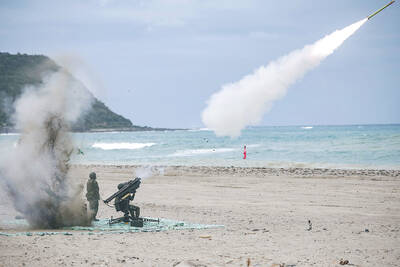
In late October of 1873 the government of Japan decided against sending a military expedition to Korea to force that nation to open trade relations. Across the government supporters of the expedition resigned immediately. The spectacle of revolt by disaffected samurai began to loom over Japanese politics. In January of 1874 disaffected samurai attacked a senior minister in Tokyo. A month later, a group of pro-Korea expedition and anti-foreign elements from Saga prefecture in Kyushu revolted, driven in part by high food prices stemming from poor harvests. Their leader, according to Edward Drea’s classic Japan’s Imperial Army, was a samurai

The following three paragraphs are just some of what the local Chinese-language press is reporting on breathlessly and following every twist and turn with the eagerness of a soap opera fan. For many English-language readers, it probably comes across as incomprehensibly opaque, so bear with me briefly dear reader: To the surprise of many, former pop singer and Democratic Progressive Party (DPP) ex-lawmaker Yu Tien (余天) of the Taiwan Normal Country Promotion Association (TNCPA) at the last minute dropped out of the running for committee chair of the DPP’s New Taipei City chapter, paving the way for DPP legislator Su
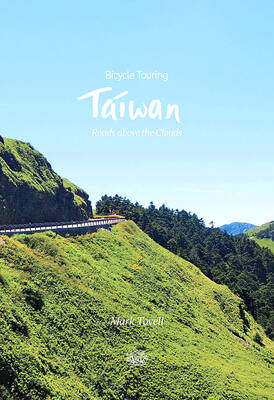
It’s hard to know where to begin with Mark Tovell’s Taiwan: Roads Above the Clouds. Having published a travelogue myself, as well as having contributed to several guidebooks, at first glance Tovell’s book appears to inhabit a middle ground — the kind of hard-to-sell nowheresville publishers detest. Leaf through the pages and you’ll find them suffuse with the purple prose best associated with travel literature: “When the sun is low on a warm, clear morning, and with the heat already rising, we stand at the riverside bike path leading south from Sanxia’s old cobble streets.” Hardly the stuff of your
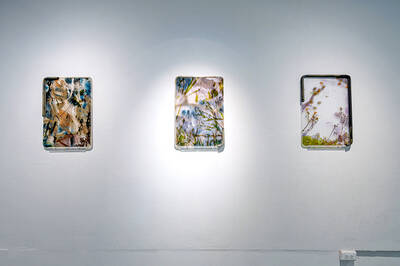
Located down a sideroad in old Wanhua District (萬華區), Waley Art (水谷藝術) has an established reputation for curating some of the more provocative indie art exhibitions in Taipei. And this month is no exception. Beyond the innocuous facade of a shophouse, the full three stories of the gallery space (including the basement) have been taken over by photographs, installation videos and abstract images courtesy of two creatives who hail from the opposite ends of the earth, Taiwan’s Hsu Yi-ting (許懿婷) and Germany’s Benjamin Janzen. “In 2019, I had an art residency in Europe,” Hsu says. “I met Benjamin in the lobby


 RSS
RSS