


Taiwan is not well known for its love of dogs, but the advent of the Year of the Dog (the red fire dog to be precise), has seen the shameless exploitation of the age-old and somewhat obscure adage that "dogs bring good fortune" (
Why dogs should bring good fortune is not particularly clear. While urban Asian society has largely bought into the idea of dogs as man's best friend, this is an import without deep roots in local society. Working dogs are virtually unheard of in Asia, so the majority of thoroughbred puppies seen at Taipei's growing number of pet shops, or those of less certain antecedents given away outside the Jianguo Flower Market (
Scouring the riches of Chinese literature through the ages will not reveal a Lassie or a Rin Tin Tin. There is no Snoopy, Marmaduke, Scooby Doo, or Tin Tin's Snowy. In fact, dogs, if they feature at all, tend to appear on the dinner menu, most often for the aphrodisiac qualities of the meat. Fido was only man's best friend when he was properly digested and washed down with a liberal helping of strong spirits. This may have given the diner the sensation of glorious wellbeing, good fortune of a sort, but the dog respon-sible certainly had to pay the ultimate price. This brings to mind a joke about the eating habits of the Chinese.

ILLUSTRATION: HO HUEI-TSE
If Adam and Eve had been Chinese, humankind would be without sin and still living in the Garden of Eden. Why? Because if Adam and Eve had been Chinese, they would have thrown away the apple and eaten the snake.
After all, you cannot get at the real goodness of a thing unless you eat it. One of the many fortune telling Web sites also points out that as this is the year of the fire dog, it could also be called the Year of the Hot Dog. However you look at it, the dog seems to lose out.
But, today, dogs in Taiwan now feature less as an item on the menu, once called rather euphemistically "fragrant meat" (香肉), with dark tales of dog stews being sold in secluded outlets in Taipei County. The friendly, cuddliness of dogs has come to the fore, largely as a result of the Japanese film Farewell, Kuro by director Jyoji Matsuoka, which was a minor sensation here. It was an occasion on which a dog certainly brought good fortune to the small art house cinemas that screened the movie.
Dogs were given another boost with the recent news story of the Husky "Paopao" that saved a new-born child from drowning in a toilet bowl when his mother collapsed after giving birth.
But let us hope that all this positive publicity does not end by bringing all sorts of misfortune onto dogs themselves. The government seems to have some vague awareness of the problem, and the Ministry of Agriculture last week made announcements in preparation for an expected rise in dog sales during the coming year. Unfortunately, rather than warning about canine welfare, the announcement focused on the fear that illegally imported dogs might constitute a health hazard for humans.
It could be said, with the greater exposure to doggy culture from the West, many dogs do enjoy reasonably good environments, but usually only if their owners already have the considerable good fortune of living in one of Taipei's more salubrious suburbs. With the year of the dog coming up, these pampered pets are likely to enjoy the now massive range of doggy paraphernalia that is available in any department store and will likely be appearing in new quilted jackets and rhinestone collars to welcome in "their year."
The connection between dogs and good fortune seems terribly skewed in Taiwan, so it is probably best to leave real dogs out of the equation altogether and focus on the abstract qualities that fortunetellers have ascribed to this canine year. On the whole, unlike more ambivalent beasts such as snakes, tigers and rats, the good qualities of the dog seem to outnumber the bad, with trustworthiness and loyalty ranking high on the list.
They make staunch friends, are good at business, bad at love, have a keen sense of justice and always root for the underdog. Some astrologers suggest that people born in the year of the dog are prone to dogmatism, but that simply makes you wonder if even astrologers can't resist the appeal of a bad pun.
Detailed accounts, in English, of how the year will work out for you, depending on your own birth sign, lucky element, your partner's birth sign, time of birth, and so on can be found at www.chinesefortunecalendar.com/2006.htm, for those who are interested in such things. It is a pretty mixed bag, which is hardly surprising, but let us hope that for dogs, their owners, and all others, the Year of the Dog will indeed bring prosperity and good fortune.
And apropos of nothing in particular, Groucho Marx once said: "Outside of a dog, a book is a man's best friend. And inside of a dog, it's too dark to read."
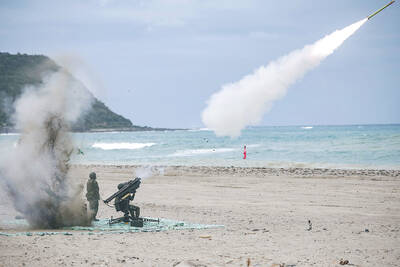
In late October of 1873 the government of Japan decided against sending a military expedition to Korea to force that nation to open trade relations. Across the government supporters of the expedition resigned immediately. The spectacle of revolt by disaffected samurai began to loom over Japanese politics. In January of 1874 disaffected samurai attacked a senior minister in Tokyo. A month later, a group of pro-Korea expedition and anti-foreign elements from Saga prefecture in Kyushu revolted, driven in part by high food prices stemming from poor harvests. Their leader, according to Edward Drea’s classic Japan’s Imperial Army, was a samurai

The following three paragraphs are just some of what the local Chinese-language press is reporting on breathlessly and following every twist and turn with the eagerness of a soap opera fan. For many English-language readers, it probably comes across as incomprehensibly opaque, so bear with me briefly dear reader: To the surprise of many, former pop singer and Democratic Progressive Party (DPP) ex-lawmaker Yu Tien (余天) of the Taiwan Normal Country Promotion Association (TNCPA) at the last minute dropped out of the running for committee chair of the DPP’s New Taipei City chapter, paving the way for DPP legislator Su

It’s hard to know where to begin with Mark Tovell’s Taiwan: Roads Above the Clouds. Having published a travelogue myself, as well as having contributed to several guidebooks, at first glance Tovell’s book appears to inhabit a middle ground — the kind of hard-to-sell nowheresville publishers detest. Leaf through the pages and you’ll find them suffuse with the purple prose best associated with travel literature: “When the sun is low on a warm, clear morning, and with the heat already rising, we stand at the riverside bike path leading south from Sanxia’s old cobble streets.” Hardly the stuff of your
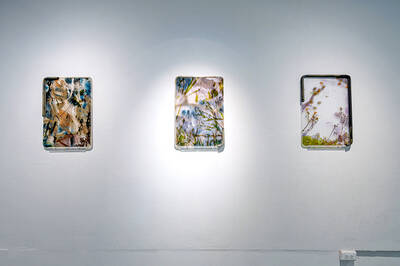
Located down a sideroad in old Wanhua District (萬華區), Waley Art (水谷藝術) has an established reputation for curating some of the more provocative indie art exhibitions in Taipei. And this month is no exception. Beyond the innocuous facade of a shophouse, the full three stories of the gallery space (including the basement) have been taken over by photographs, installation videos and abstract images courtesy of two creatives who hail from the opposite ends of the earth, Taiwan’s Hsu Yi-ting (許懿婷) and Germany’s Benjamin Janzen. “In 2019, I had an art residency in Europe,” Hsu says. “I met Benjamin in the lobby


 RSS
RSS