


The rugged souls living in this remote desert enclave have been poked, pinched and plucked, all in the name of science. It is not always easy, they say, to be the subject of a human experiment.
"I thought I was being bewitched," Koitaton Garawale, a weathered cattleman, said of the time a researcher plucked a few hairs from atop his head. "I was afraid. I'd never seen such a thing before."
Another member of the tiny and reclusive Ariaal tribe, Leketon Lenarendile, scanned a handful of pictures laid before him by a researcher whose unstated goal was to gauge whether his body image had been influenced by outside media.
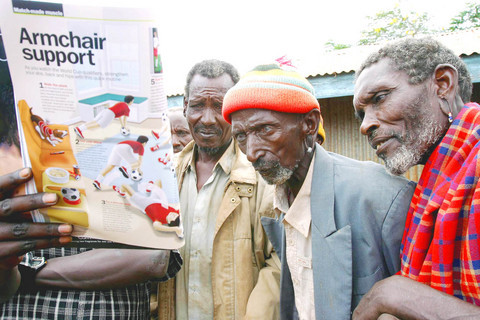
PHOTO: NY TIMES
"The girls like the ones like this," he said, repeating the exercise later and pointing to a rather slender man much like himself. "I don't know why they were asking me that," he said.
Anthropologists and other researchers have long searched the world for people isolated from the modern world. The Ariaal, a nomadic community of about 10,000 people in northern Kenya, have been seized on by researchers since the 1970s, after one -- an anthropologist, Elliot Fratkin -- stumbled upon them and began publishing his accounts of their lives in academic journals.
Other researchers have done studies on everything from their cultural practices to their testosterone levels. National Geographic focused on the Ariaal in 1999, in an article on vanishing cultures.
But over the years, more and more Ariaal -- like the Masai and the Turkana in Kenya and the Tuaregs and Bedouins elsewhere in Africa -- are settling down. Many have migrated closer to Marsabit, the nearest town, which has cellphone reception and even sporadic Internet access.
The scientists continue to arrive in Ariaal country, with their notebooks, tents and bizarre queries, but now they document a semi-isolated people straddling modern life and more traditional ways.
"The era of finding isolated tribal groups is probably over," said Fratkin, a professor at Smith College who has lived with the Ariaal for long stretches and is regarded by some of them as a member of the tribe.
For Benjamin Campbell, a biological anthropologist at Boston University who was introduced to the Ariaal by Fratkin, their way of life, diet and cultural practices make them worthy of study.
Other academics agree. Local residents say they have been asked over the years how much livestock they own, how many times they have had diarrhea in the last month (often) and what they ate the day before yesterday (usually meat, milk or blood).
Ariaal women have been asked about the work they do, which seems to exceed that of the men, and about local marriage customs, which compel their prospective husbands to hand over livestock to their parents before the ceremony can take place.
The wedding day is one of pain as well as joy since Ariaal women -- girls, really -- have their genitals cut just before they marry and delay sex until they recuperate. They consider their breasts important body parts, but nothing to be covered up.
The researchers may not know this, but the Ariaal have been studying them all these years as well.
The Ariaal note that foreigners slather white liquid on their white skin to protect them from the sun, and that many favor short pants that show off their legs and the clunky boots on their feet. Foreigners often partake of the local food but drink water out of bottles and munch on strange food in wrappers between meals, the Ariaal observe.
The scientists leave tracks as well as memories behind. For instance, it is not uncommon to see nomads in T-shirts bearing university logos, gifts from departing academics.
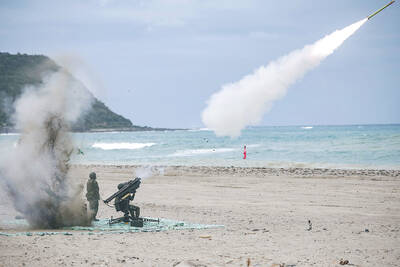
In late October of 1873 the government of Japan decided against sending a military expedition to Korea to force that nation to open trade relations. Across the government supporters of the expedition resigned immediately. The spectacle of revolt by disaffected samurai began to loom over Japanese politics. In January of 1874 disaffected samurai attacked a senior minister in Tokyo. A month later, a group of pro-Korea expedition and anti-foreign elements from Saga prefecture in Kyushu revolted, driven in part by high food prices stemming from poor harvests. Their leader, according to Edward Drea’s classic Japan’s Imperial Army, was a samurai

The following three paragraphs are just some of what the local Chinese-language press is reporting on breathlessly and following every twist and turn with the eagerness of a soap opera fan. For many English-language readers, it probably comes across as incomprehensibly opaque, so bear with me briefly dear reader: To the surprise of many, former pop singer and Democratic Progressive Party (DPP) ex-lawmaker Yu Tien (余天) of the Taiwan Normal Country Promotion Association (TNCPA) at the last minute dropped out of the running for committee chair of the DPP’s New Taipei City chapter, paving the way for DPP legislator Su
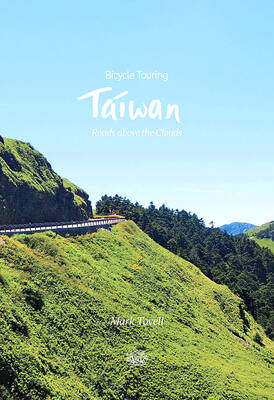
It’s hard to know where to begin with Mark Tovell’s Taiwan: Roads Above the Clouds. Having published a travelogue myself, as well as having contributed to several guidebooks, at first glance Tovell’s book appears to inhabit a middle ground — the kind of hard-to-sell nowheresville publishers detest. Leaf through the pages and you’ll find them suffuse with the purple prose best associated with travel literature: “When the sun is low on a warm, clear morning, and with the heat already rising, we stand at the riverside bike path leading south from Sanxia’s old cobble streets.” Hardly the stuff of your
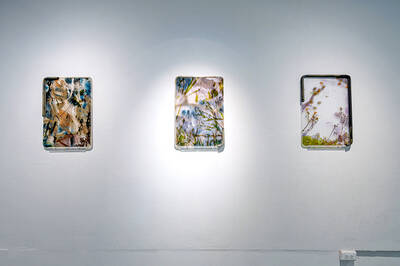
Located down a sideroad in old Wanhua District (萬華區), Waley Art (水谷藝術) has an established reputation for curating some of the more provocative indie art exhibitions in Taipei. And this month is no exception. Beyond the innocuous facade of a shophouse, the full three stories of the gallery space (including the basement) have been taken over by photographs, installation videos and abstract images courtesy of two creatives who hail from the opposite ends of the earth, Taiwan’s Hsu Yi-ting (許懿婷) and Germany’s Benjamin Janzen. “In 2019, I had an art residency in Europe,” Hsu says. “I met Benjamin in the lobby


 RSS
RSS