


Few would be surprised to learn that the artist with the second biggest debut ever for a reggae album on the Billboard 200 carries the surname Marley.
Yet, the honor belongs not to the late, great reggae superstar Bob Marley, but his son, Damian.
Welcome to Jamrock, Damian "Jr. Gong" Marley's third album, has been one of this year's unexpected hits, largely on the strength of the title song, a heart-pumping blend of reggae and hip-hop that crashed urban radio stations this summer. Released in September, the album sold 86,000 copies, landing at number seven for its first week. Nearly two months later, the album remains in the top 100. (Several weeks later, Sean Paul topped Marley's accomplishment when The Trinity sold more than 107,000 copies.) It's been quite the year for Marley, who recently won Vibe's magazine's "Boomshot" award honoring Caribbean music, and electrified the ceremony's audience with his performance of Welcome to Jamrock.
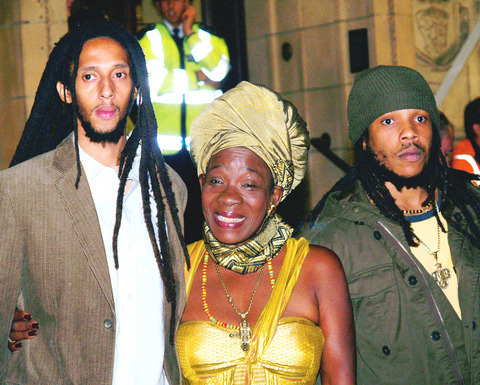
PHOTO: AFP
"It's a great feeling. I feel very blessed," says Marley during a recent telephone interview. "We worked very hard on this album, and the response from the people has been very rewarding."
By the time Welcome to Jamrock was released, Marley was already a Grammy-winning artist. His 2001 album, Halfway Tree picked up the prestigious award for best reggae album, but it was his latest effort that introduced him outside of the reggae community.
"The beauty of [Welcome to Jamrock] is that it lays the groundwork for a new generation," says Kyle Russell, who runs reggae4i.com, and owner of KRucial Reggae, a Somerville-based booking and management agency. "I think people are digging him, people are loving it. I think they like the alternative hybrid combination of dancehall, reggae, and hip-hop. I think it's a very important statement of where the music is today."
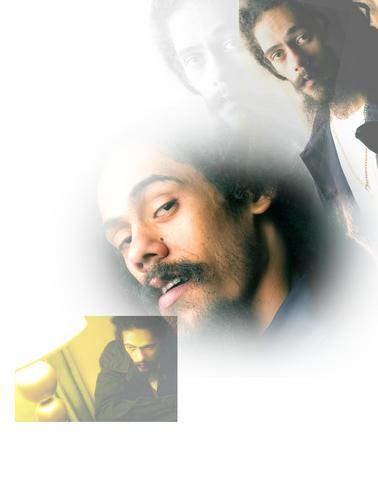
Still, Marley, 27, maintains that he did not record Welcome to Jamrock, which features such guests as Bobby Brown, Nas, and Black Thought from the Roots, as a conscious attempt to cross over.
"I didn't think about that at all," he says. "There was no different approach. We just made it with the feelings of how we like to hear music. We want our music to reach all kinds of different people."
As with his father, some of Marley's music burns with sociopolitical fire. Welcome to Jamrock and Move! make ferocious statements about hardscrabble life in modern Jamaica. Still, Marley also knows his way around a party jam, as he proves with the feisty tracks All Night and The Master Has Come Back.
The youngest of Bob Marley's 12 children, Marley was two years old when his father died of cancer in 1981. Though the elder Marley was only 36, he left behind a legacy of spirited, uplifting music that has inspired such fellow artists as Bruce Spring-steen, Bono, and Lauryn Hill. Rolling Stones guitarist Keith Richards, a friend of Bob Marley's, once opined that the Jamaican superstar was such a towering figure in reggae that he took the future of the music with him when he died.
Of course, several reggae artists have garnered attention in the nearly 25 years since Bob Marley's death -- including Shabba Ranks, Shaggy, and Marley's eldest son, Ziggy, a multiple Grammy winner. (Another brother, Stephen, was a member of Ziggy's Melody Makers, and also appears on Welcome to Jamrock.)
Still, it can be tricky as the child of a famous musician. Some progeny are notoriously difficult when asked about their renowned parents. For example, so reticent was the late Jeff Buckley in discussing his father, folk singer Tim Buckley, he would sometimes end an interview as soon as his father's name was mentioned.
Yet, shirking his bloodline has never been an issue for Marley, whose nickname "Jr. Gong" is even a nod toward his father, whose moniker was "Tuff Gong," a reference to the elder Marley's hot-tempered manner.
Being Bob Marley's son has "never been a challenge, you know what I mean?" the younger Marley says. "My father has always been a light on my career. He can steer people to me. They may not know who I am, but if they see that name Marley, they may pick up my CD and check it out."
In the same vein, Marley will not only talk about his father, but has performed his dad's songs in concert, including Exodus and Could You Be Loved.
"I love his songs, and they're our songs also," Marley says. "It's like a team, and I happen to be one of the persons up to bat right now. It's my father's music, but it's my music, too."

In late October of 1873 the government of Japan decided against sending a military expedition to Korea to force that nation to open trade relations. Across the government supporters of the expedition resigned immediately. The spectacle of revolt by disaffected samurai began to loom over Japanese politics. In January of 1874 disaffected samurai attacked a senior minister in Tokyo. A month later, a group of pro-Korea expedition and anti-foreign elements from Saga prefecture in Kyushu revolted, driven in part by high food prices stemming from poor harvests. Their leader, according to Edward Drea’s classic Japan’s Imperial Army, was a samurai

The following three paragraphs are just some of what the local Chinese-language press is reporting on breathlessly and following every twist and turn with the eagerness of a soap opera fan. For many English-language readers, it probably comes across as incomprehensibly opaque, so bear with me briefly dear reader: To the surprise of many, former pop singer and Democratic Progressive Party (DPP) ex-lawmaker Yu Tien (余天) of the Taiwan Normal Country Promotion Association (TNCPA) at the last minute dropped out of the running for committee chair of the DPP’s New Taipei City chapter, paving the way for DPP legislator Su
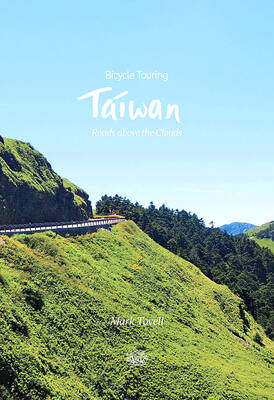
It’s hard to know where to begin with Mark Tovell’s Taiwan: Roads Above the Clouds. Having published a travelogue myself, as well as having contributed to several guidebooks, at first glance Tovell’s book appears to inhabit a middle ground — the kind of hard-to-sell nowheresville publishers detest. Leaf through the pages and you’ll find them suffuse with the purple prose best associated with travel literature: “When the sun is low on a warm, clear morning, and with the heat already rising, we stand at the riverside bike path leading south from Sanxia’s old cobble streets.” Hardly the stuff of your

Located down a sideroad in old Wanhua District (萬華區), Waley Art (水谷藝術) has an established reputation for curating some of the more provocative indie art exhibitions in Taipei. And this month is no exception. Beyond the innocuous facade of a shophouse, the full three stories of the gallery space (including the basement) have been taken over by photographs, installation videos and abstract images courtesy of two creatives who hail from the opposite ends of the earth, Taiwan’s Hsu Yi-ting (許懿婷) and Germany’s Benjamin Janzen. “In 2019, I had an art residency in Europe,” Hsu says. “I met Benjamin in the lobby


 RSS
RSS