


A genetic experiment to unlock the secrets of the aging process has created organisms that live six times their usual lifespan, raising hopes that it might be possible to slow aging in humans.
The geneticists behind the study say the increase in lifespan is so striking, they believe they have found one of the most fundamental mechanisms that controls the rate at which living creatures age.
The tests were carried out in single-celled organisms, forcing them into what the researchers refer to as an "extreme survival mode."
Instead of growing quickly and showing signs of aging, the organisms became resilient to damage and were better able to repair the genetic defects that build up with age, often leading to cancer in later life.
"When you do this genetic manipulation, you can get some of the longest lifespans ever described," said Valter Longo, a biomedical gerontologist at the University of Southern California. "We have good reason to believe this genetic effect is conserved in other organisms. We're working with mice and human cells now and are already starting to see the same response."
A large body of research has already shown that severely restricting diet can boost the lifespan of flies, worms and mice by around 40 percent. Scientists believe that drastically cutting calories triggers a switch in an organism's behavior, from growing and being able to reproduce, to a state of stasis in which growth and aging are put on hold at the expense of reproductive capability, until more food is available.
Scientists are now trying to mimic the effect by tinkering with genes in the hope of developing anti-aging treatments that work without having to cut food intake.
"We're not too far from being able to exploit this understan-ding to at least start thinking about drugs that can put humans in an anti-aging mode. That doesn't mean we'll necessarily live six times longer, but it means we could slow down the DNA damage we accumulate as we age, and that could protect us from cancer," he said.
In the experiment, Dr Longo's team took yeast cells and knocked out two key genes, named Sir2 and SCH9. The latter governs the cells' ability to convert nutrients into energy.
They found that instead of dying after a week, the cells lived for up to six weeks. Dr Longo said parallel experiments on human liver cells appeared to replicate the effect, but refused to elaborate until the results have been published.
The researchers believe that the Sir2 gene normally plays a role in restricting an organism's lifespan, and allows energy from the food it eats to be directed into growth and reproduction. By blocking the gene, the cells were essentially tricked into believing food was scarce and switched them into a survival mode.
"When you start increasing lifespan by five or six times, it means you're really playing with the life and death programs of organisms. We're telling the organisms to go into a completely different mode of slow aging, said Dr Longo.
"What they're doing is saying `I cannot afford to age. I still have to generate offspring, but I don't have enough food to do it now.'"
Research has now begun to test whether the effect works in mice. According to Dr Longo, lab mice bred with the equivalent gene knocked out appear to live longer, but are smaller, infertile and often suffer muscular defects, suggesting the gene is necessary for normal foetal development.
The research is a big step in a small field that has been progressing at pace since the advent of the new tools of genetics.
Another paper published in the US journal Science describes the discovery of 10 new genes that are thought to regulate longevity in yeast cells. "Even though yeast is a simple, single-cell organism, it's still capable of revealing mecha-nisms in the aging process," said the study's lead researcher, Stanley Field of the University of Washington in Seattle.
According to Dr Longo, studies in animals are likely to continue for the next 10 years before tests in humans. If the same genetic mechanisms prove to exist in humans, he believes it could lead to drugs that suppress aging, particularly after people have had families.
Were drugs to become avai-lable that dramatically exten-ded lifespan, the social impact of a population boom could have serious consequences for homes and pension provision.
Aubrey de Grey, a bio-medical gerontologist at Cambridge University and advocate for therapies that greatly extend life, believes that while the problems should not be underestimated, it is unethical not to pursue anti-aging research.
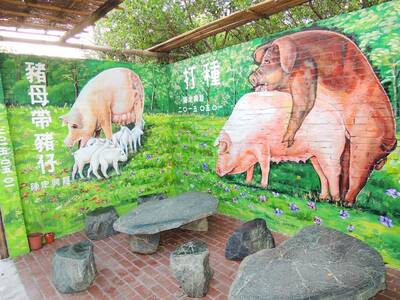
May 6 to May 12 Those who follow the Chinese-language news may have noticed the usage of the term zhuge (豬哥, literally ‘pig brother,’ a male pig raised for breeding purposes) in reports concerning the ongoing #Metoo scandal in the entertainment industry. The term’s modern connotations can range from womanizer or lecher to sexual predator, but it once referred to an important rural trade. Until the 1970s, it was a common sight to see a breeder herding a single “zhuge” down a rustic path with a bamboo whip, often traveling large distances over rugged terrain to service local families. Not only

Ahead of incoming president William Lai’s (賴清德) inauguration on May 20 there appear to be signs that he is signaling to the Chinese Communist Party (CCP) and that the Chinese side is also signaling to the Taiwan side. This raises a lot of questions, including what is the CCP up to, who are they signaling to, what are they signaling, how with the various actors in Taiwan respond and where this could ultimately go. In the last column, published on May 2, we examined the curious case of Democratic Progressive Party (DPP) heavyweight Tseng Wen-tsan (鄭文燦) — currently vice premier

The last time Mrs Hsieh came to Cihu Park in Taoyuan was almost 50 years ago, on a school trip to the grave of Taiwan’s recently deceased dictator. Busloads of children were brought in to pay their respects to Chiang Kai-shek (蔣中正), known as Generalissimo, who had died at 87, after decades ruling Taiwan under brutal martial law. “There were a lot of buses, and there was a long queue,” Hsieh recalled. “It was a school rule. We had to bow, and then we went home.” Chiang’s body is still there, under guard in a mausoleum at the end of a path

Last week the Directorate-General of Budget, Accounting and Statistics (DGBAS) released a set of very strange numbers on Taiwan’s wealth distribution. Duly quoted in the Taipei Times, the report said that “The Gini coefficient for Taiwanese households… was 0.606 at the end of 2021, lower than Australia’s 0.611, the UK’s 0.620, Japan’s 0.678, France’s 0.676 and Germany’s 0.727, the agency said in a report.” The Gini coefficient is a measure of relative inequality, usually of wealth or income, though it can be used to evaluate other forms of inequality. However, for most nations it is a number from .25 to .50


 RSS
RSS