


On June 13, 1935, the boxer James J. Braddock fought the fight of a lifetime. Born in Hell's Kitchen when that New York neighborhood still warranted that rough-and-tumble epithet, the 30-year-old heavyweight was the son of immigrants whose bloodlines and hardscrabble woes traced back to Ireland. Said to have weighed more than 7.7kg at birth, the adult Braddock tipped the scales around 81.6kg, stood nearly 2.6m and was in the possession of a 190cm reach. His most famous opponent, the Livermore Larruper, Max Baer, had a 206cm reach, bringing him dauntingly close to Braddock's lopsided grin.
In Cinderella Man, his movie about Braddock and the fight of his life, the director Ron Howard brings you viscerally close to understanding how that sideways smile was almost erased. Played by Russell Crowe with moist eyes and restless animal vigor, the pugilist known as the Cinderella Man entered the ring against Baer (an excellent Craig Bierko) with the odds 10-to-1 against him. The story of how this well-regarded boxer down on his luck faced those odds is one of the most celebrated in American sport, so it's a wonder it has never before been told on-screen. Filled with ups and heartbreaking downs, it is a story that can put a lump in your throat, though given Howard's inclination toward hokum, a lump on which you might easily gag.
Howard begins his film with a quote from Damon Runyon, who bequeathed Braddock his fairy-tale nickname. (According to Jeremy Schaap's fast-moving book, also titled Cinderella Man, the fighter was more prosaically known as Irish Jim Braddock.) The Runyon quote constitutes the best writing in the film, which features a serviceable screenplay by Cliff Hollingsworth and the higher-profile Akiva Goldsman. Goldsman also wrote Howard's much-lauded, multiple Academy Award-winning film, A Beautiful Mind, a work similarly steeped in nostalgia and hooey, the latter exemplified by the image of Crowe corrugating his meaty brow to play a tormented math genius. Crowe, a vibrantly physical screen presence, looks far more persuasive slicked with sweat and slugging other men.
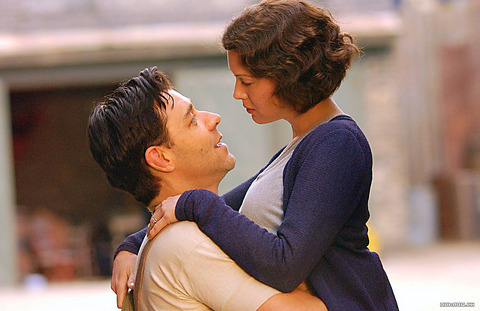
In 1928, the year Cinderella Man opens, Braddock seemed to have all the right moves. Then a light heavyweight, the boxer was young, supremely healthy and both talented enough and dumb enough to earn a good living with his fists. The Crash changed his fortune as well as his optimistic outlook, and thereafter Braddock entered an agonizing downward spiral. Within a few years, he and his wife, Mae, played in the film by Renee Zellweger as a sniffling, squinting Kewpie doll, were living in a basement apartment with their young children and trying to keep the wolf from the door. In 1934, when his manager, Joe Gould (Paul Giamatti), asked Braddock if he wanted a fight, the boxer was wielding a baling hook on the Jersey docks. Almost a year had passed since his last bout.
Like Gary Ross's Seabiscuit, the legend of the little Depression-era horse that could, Cinderella Man is a shamefully ingratiating old-fashioned weepie. To his credit, Howard does not wave the flag as vigorously as Ross, though the new film's tagline ("When America was on its knees, he brought us to our feet") prepares you for the worst. In any event, given that Howard and his writers would be hard-pressed to bend this underdog narrative to our current political nightmare, it's a good thing they don't venture down that path. And with this material, there really is no need. Lightly stained a nicotine brown and topped by two male actors who could steal a movie from a basket of mewling kittens and an army of rosy-cheeked orphans, the film is as calculating and glossy a hard-luck tale as any cooked up on the old M-G-M lot.
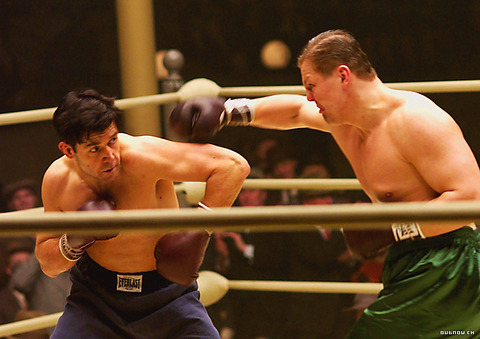
The Braddock and Baer match affords the film its climax, but it's the face-off between Crowe and Giamatti that gives it bite. Neither performer is at the top of his form here -- Crowe's crowning achievement remains The Insider, Giamatti's, unsurprisingly, is Sideways -- but they duet nicely. Crowe, his face more sharply beveled than it has been in years, plays Braddock as a reluctant warrior, a good guy who seems almost abashed to lead with his fists. The actor doesn't pump up the heroics, which would have been a poor fit for the unassuming Braddock, but breathes life into the Everyman that both the country and its sportswriters needed. Out of the ring and opposite Giamatti, Crowe eases into the boxer's soft side, at times beautifully; in the ring, he's repulsively believable.
PHOTOS: AFP
Giamatti does a lot of his acting with his eyebrows, which doesn't make the performance any less enjoyable. Gould was as much fixer as manager, and the actor makes you see the man's every angle as cleanly as if they were drawn with a ruler and compass. In his book, Schaap repeats one contemporary observer's theory that if Gould had been a better manager, Braddock would not have suffered so many career downturns. Howard and his collaborators don't test those particular murky waters, but they make sure we see boxing is an ugly game no matter how likable the players. In one of the most effective scenes, Gould frantically urges Braddock to break his opponent's nose and "fill his face with blood." This is a fight movie where the blood doesn't dribble.
With a killer of a sports story and two top-flight actors, Howard can't go terribly wrong. A fine craftsman, the director has in recent films been drawn to increasingly darker themes, perhaps because, in the age-old calculus of mainstream production, dark equals heft. In his last film, The Missing, a taut western pegged to the hoariest frontier cliche (white women kidnapped by marauding Indians), Howard employed a somber palette and let (or just watched) his two leads, Cate Blanchett and Tommy Lee Jones, cut loose. The director pretty much repeats the same formula here, aided by the same talented cinematographer he used for The Missing, Salvatore Totino, and his longtime editors Mike Hill and Dan Hanley, whose hard cutting intensifies the blunt force of every punch.
The fights are brutal, at times floridly so, and crucial to the film's own blunt force. Like some musical song-and-dance numbers, they break into the main storyline, providing much-needed relief from Braddock's gratingly soft-focus marriage. Taken together, the fights also create a leaner, meaner parallel narrative. One of the satisfactions of Cinderella Man is that, in the end, the story that unfolds inside the ring is not the same one that Howard, his screenwriters and the composer Thomas Newman seem keen to sell. Their Cinderella Man is the decent little guy who affirms what movie people call the triumph of the human spirit. The story Crowe tells, with Giamatti riding shotgun as a gleeful Mephistopheles, is that of a man who, having sampled the blood of others, clearly enjoyed the taste.

In late October of 1873 the government of Japan decided against sending a military expedition to Korea to force that nation to open trade relations. Across the government supporters of the expedition resigned immediately. The spectacle of revolt by disaffected samurai began to loom over Japanese politics. In January of 1874 disaffected samurai attacked a senior minister in Tokyo. A month later, a group of pro-Korea expedition and anti-foreign elements from Saga prefecture in Kyushu revolted, driven in part by high food prices stemming from poor harvests. Their leader, according to Edward Drea’s classic Japan’s Imperial Army, was a samurai

The following three paragraphs are just some of what the local Chinese-language press is reporting on breathlessly and following every twist and turn with the eagerness of a soap opera fan. For many English-language readers, it probably comes across as incomprehensibly opaque, so bear with me briefly dear reader: To the surprise of many, former pop singer and Democratic Progressive Party (DPP) ex-lawmaker Yu Tien (余天) of the Taiwan Normal Country Promotion Association (TNCPA) at the last minute dropped out of the running for committee chair of the DPP’s New Taipei City chapter, paving the way for DPP legislator Su
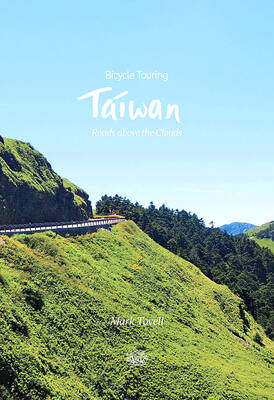
It’s hard to know where to begin with Mark Tovell’s Taiwan: Roads Above the Clouds. Having published a travelogue myself, as well as having contributed to several guidebooks, at first glance Tovell’s book appears to inhabit a middle ground — the kind of hard-to-sell nowheresville publishers detest. Leaf through the pages and you’ll find them suffuse with the purple prose best associated with travel literature: “When the sun is low on a warm, clear morning, and with the heat already rising, we stand at the riverside bike path leading south from Sanxia’s old cobble streets.” Hardly the stuff of your

Located down a sideroad in old Wanhua District (萬華區), Waley Art (水谷藝術) has an established reputation for curating some of the more provocative indie art exhibitions in Taipei. And this month is no exception. Beyond the innocuous facade of a shophouse, the full three stories of the gallery space (including the basement) have been taken over by photographs, installation videos and abstract images courtesy of two creatives who hail from the opposite ends of the earth, Taiwan’s Hsu Yi-ting (許懿婷) and Germany’s Benjamin Janzen. “In 2019, I had an art residency in Europe,” Hsu says. “I met Benjamin in the lobby


 RSS
RSS