


After his first four days in solitary confinement at a US military prison in Iraq, Cyrus Kar was taken from his small cell and brought before two FBI agents, who before questioning him gave him a sheet of paper listing his rights.
"I have the right to a lawyer?" Kar, an aspiring filmmaker from Los Angeles, said he asked as he scanned the list.
"Yes," he said he was told by one of the agents, whom he knew only as Robert.
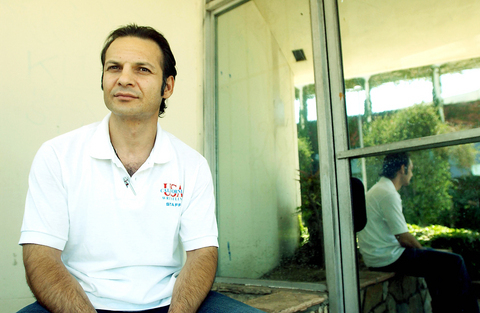
PHOTO: NY TIMES
"Do you actually have lawyers here?" Kar inquired.
"No," he quoted the agent as explaining. "The last guy who requested one is still waiting two years later, in Afghanistan."
The episode was emblematic, Kar said, of the 55 days he spent imprisoned in Iraq, struggling to prove his innocence to what he described as an inflexible, often surreal bureaucracy that seemed in no hurry to sort out the guilt or innocence even of a man who carried a US passport and had served in the US Navy.
"Certainly there were some evil, evil people in there," Kar, 44, said of Camp Cropper, the prison where he was held, a few cell doors down from one of Saddam Hussein's brothers. "But they are casting a very wide net, and anything that's scooped up in it will be thrown in a cell, and they'll sort it out later."
Kar, a naturalized US citizen who was born in Iran and went to the US as a boy, had gone to Iraq to film part of a historical documentary about Cyrus the Great, who founded the Persian Empire in the sixth century BC.
After two weeks in Iraq, Kar and his Iranian cameraman were arrested on May 17 by the Iraqi police, who found two plastic bags filled with washing-machine timers in the trunk of a taxi they had hired to drive them to the Shiite town of Balad, 75km north of Baghdad. US military officials, who said such timers are commonly used to make insurgent bombs, held the two men and the taxi driver as "imperative security threats to Iraq."
Kar and his cameraman, Farshid Faraji, were released July 10; the driver, who officials say proved to be the owner of the timers, remains in custody, a military spokesman said. A senior military spokesman in Iraq said Kar had been treated fairly and according to "well-established procedures."
"These are serious matters of life and death, and there's a process -- which takes some time -- to gather all the information," said a Pentagon spokesman, Bryan Whitman. "The military took a very serious and deliberate approach to this case."
Kar said he was well treated by the military guards, whom he described as honorable young men and women who, for the most part, just wanted to go home. But he spoke angrily of the officers in charge, who he said ignored his repeated requests to see a US Embassy official and left him in solitary confinement for 23 hours a day.
In a long interview, his first since returning home last week, Kar described an ordeal that seemed to mix Orwell or Kafka with flashes of the comical and the absurd.
Kar, a wiry former Silicon Valley sales executive who speaks in passionate bursts about film, politics and other subjects that fascinate him, said he had known the risks of going to Iraq. But after traveling for the project to Afghanistan, Kazakhstan, Turkey and Iran, he was determined to film at Babylon, the ancient city that was central to the story of Cyrus the Great.
A few days after receiving their Iraqi visas on April 30, Kar and the cameraman left Tehran and traveled into Iraq. They filmed in northern Iraq for about 10 days, then drove to Baghdad on May 13 with a Kurdish guide.
Kar said they were stopped and questioned by the Iraqi security forces almost daily, but were always sent on their way after showing their passports and visas. He said his Iranian passport and Iranian cameraman were liabilities with some Iraqi policemen and soldiers still bitter about the Iran-Iraq war. Still, Kar said, he was more concerned that insurgents might find his American passport and Veterans Affairs identity card.
That morning, the two filmmakers went to find a driver for a quick return trip to Balad. They did not like the looks of the driver they found, Kar said, but the man agreed to charge a bit less than they had paid the day before. Once more, they were stopped at a checkpoint near Balad. "Everything was fine," Kar said. "Then they popped the trunk."
Within little more than an hour after they were driven to a police substation, Kar said, the Iraqi police officials appeared to have determined that the 35 timers belonged to the driver, not his passengers. When two US soldiers walked into the police station, Kar recalled thinking: "Yay! The cavalry's here."
Instead, the three men were handcuffed, blindfolded and led away to an adjacent US operating base without even a question, he said. About 2am, Kar said, he was finally brought in for an interrogation by two soldiers he presumed to be from military intelligence.
"You're in big trouble," he recalled the younger soldier telling him as he protested his innocence. "You're an American terrorist enemy combatant. You're the next John Walker Lindh."
After interrogating the driver, Kar said, the older soldier told him that the driver had admitted the timers were his. But when the three men were brought to the interrogation room again the next day, it was to be photographed together kneeling before a map of Iraq on which their camera equipment and the 35 timers had been carefully arranged.
The men were driven first to a detention camp at Tikrit. Then Kar and Faraji were taken by helicopter to Abu Ghraib prison in Baghdad, where their treatment immediately got rougher.
In a crowded processing room, Kar said, guards yelled and cursed at the two men, with one of them shouting: "You terrorist! You here to kill Americans?"
Another soldier screamed at Faraji to strip, although the crowd of soldiers around him included women, Kar said.
"What hit me was, there was no mercy," Kar recalled.
"I couldn't have more respect for the rank-and-file soldiers, but the system is broken," Kar said. "When an Iraqi is detained there, he comes out angry and wanting payback."
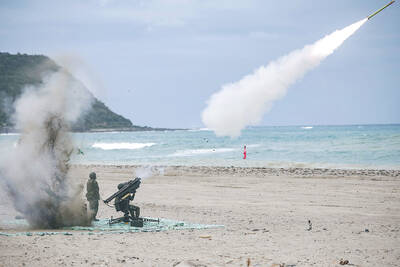
In late October of 1873 the government of Japan decided against sending a military expedition to Korea to force that nation to open trade relations. Across the government supporters of the expedition resigned immediately. The spectacle of revolt by disaffected samurai began to loom over Japanese politics. In January of 1874 disaffected samurai attacked a senior minister in Tokyo. A month later, a group of pro-Korea expedition and anti-foreign elements from Saga prefecture in Kyushu revolted, driven in part by high food prices stemming from poor harvests. Their leader, according to Edward Drea’s classic Japan’s Imperial Army, was a samurai

The following three paragraphs are just some of what the local Chinese-language press is reporting on breathlessly and following every twist and turn with the eagerness of a soap opera fan. For many English-language readers, it probably comes across as incomprehensibly opaque, so bear with me briefly dear reader: To the surprise of many, former pop singer and Democratic Progressive Party (DPP) ex-lawmaker Yu Tien (余天) of the Taiwan Normal Country Promotion Association (TNCPA) at the last minute dropped out of the running for committee chair of the DPP’s New Taipei City chapter, paving the way for DPP legislator Su

It’s hard to know where to begin with Mark Tovell’s Taiwan: Roads Above the Clouds. Having published a travelogue myself, as well as having contributed to several guidebooks, at first glance Tovell’s book appears to inhabit a middle ground — the kind of hard-to-sell nowheresville publishers detest. Leaf through the pages and you’ll find them suffuse with the purple prose best associated with travel literature: “When the sun is low on a warm, clear morning, and with the heat already rising, we stand at the riverside bike path leading south from Sanxia’s old cobble streets.” Hardly the stuff of your
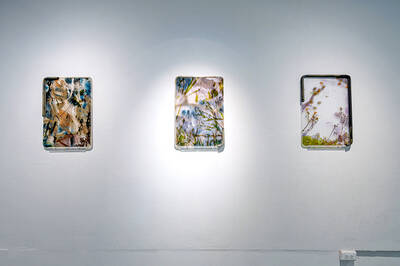
Located down a sideroad in old Wanhua District (萬華區), Waley Art (水谷藝術) has an established reputation for curating some of the more provocative indie art exhibitions in Taipei. And this month is no exception. Beyond the innocuous facade of a shophouse, the full three stories of the gallery space (including the basement) have been taken over by photographs, installation videos and abstract images courtesy of two creatives who hail from the opposite ends of the earth, Taiwan’s Hsu Yi-ting (許懿婷) and Germany’s Benjamin Janzen. “In 2019, I had an art residency in Europe,” Hsu says. “I met Benjamin in the lobby


 RSS
RSS