


Taipei hosts so many film festivals, it's not surprising anymore to see art-house films from master directors all over the world. But the Taipei Film Festival (
"What distinguishes the Taipei Film Festival from other festivals," says the festival programmer, Wen Tien-shian (
After showing films from Paris and Prague (2002), Kyoto and Melbourne (2003), and Madrid and Barcelona (2004), this year's festival will focus on Russia as the event shows films from St Petersburg and Moscow, major cities that nourish a rich Russian cultural heritage that includes cinema among many other arts.
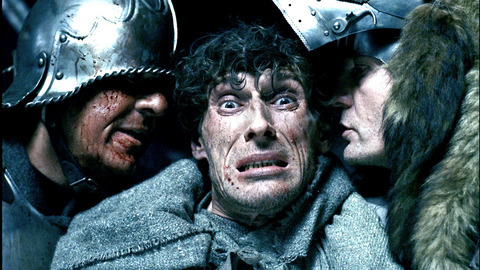
The festival program will include films from some Russian filmmaking greats, such as Sergei Eisenstein (October), Andrei Tarkovsky (Andrei Rublyov, The Sacrifice, The Mirror) and Alexander Sokurov, many of whose cinematic oeuvres will be presented. But let's just say these are the hors-d'oeuvres of a veritable feast.
The festival also will present the new faces of the Russian socio-economic climate who have appeared since the collapse of the USSR. The recent Russian films capture the rise of capitalism, the problem of the ever-rising unemployment and the Chechen War.
Mars (2004) and You I Love (2004) are the two best examples that portray the catastrophes faced by Russians in the painful transition from a socialist-Stalinist society to a capitalist system.
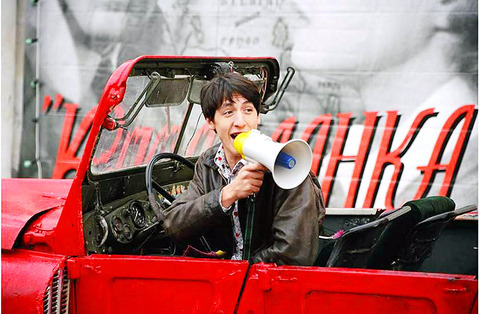
Mars tells the story of a boxer who fails to pursue his career and finds himself in a train that is trapped in a small town named after the communist father, Karl Marx. But because of damage to a neon light, the town's sign Marx becomes Mars.
The ridiculousness of the situation is exacerbated by the fact that all the town's inhabitants are gathered in the train station to sell fur toys -- their livelihood after being laid off. The shabby economic situation has transformed the once Communist paradise into an alien zone.
Sex is usually the best means to observe society in chaos, and You I Love uses the confusion of love and sex to reflect the bewilderment and loss of morality in contemporary Russian society. The story tells of a sexy news anchor who hooks up with a young man working in an American advertising company in Moscow. The sex cures a disease she suffers from, but surprisingly, the very night of the tryst, the young man falls for a beautiful boy and makes love passionately with him, too. He finds himself suddenly confused in a whirlwind of sexual adventure.

If unemployment and loss of morality are a reflection of a society in crisis, then the Chechen War is a crisis itself; and a few of the films selected for the festival address this delicate issue. House of Fool is set entirely in Chechnya, captures the craziness of war. The connection between an insane asylum and the war is made clear when we compare this film with Samuel Fuller's masterpiece Shock Corridor.
Granny is another sentimental film that touches the Chechen issue. Having dug ditches during World War II, grandmother Tosia dedicated her whole life to her family but finds herself threatened with the prospect of becoming homeless when everyone refuses to take her in, except for one grandson, who welcomes her but lives in Chechnya and becomes homeless due to the war. The criticism of the Russian government's policy toward Chechnya is subtly enveloped in this warm melodrama.
The true film buff will find total satisfaction in the festival's section Unforgotten Classics: A tribute to Lenfilm Studio, where many beautifully shot studio productions are presented.
The festival's closing film, Night Watch (2004), is similar to the epic Lord of the Rings and swept Russia's box-office records -- a sign marking the resurrection of gigantic studio productions in the country.
The best cinema is often produced in the worst of times -- a journey through Russian movies will demonstrate the complexity of the world of cinema.
For ticket information, please consult the English Web site: http://www.tiff.org.tw/Eng/Index.aspx or call (02) 3322 1623.

In late October of 1873 the government of Japan decided against sending a military expedition to Korea to force that nation to open trade relations. Across the government supporters of the expedition resigned immediately. The spectacle of revolt by disaffected samurai began to loom over Japanese politics. In January of 1874 disaffected samurai attacked a senior minister in Tokyo. A month later, a group of pro-Korea expedition and anti-foreign elements from Saga prefecture in Kyushu revolted, driven in part by high food prices stemming from poor harvests. Their leader, according to Edward Drea’s classic Japan’s Imperial Army, was a samurai

The following three paragraphs are just some of what the local Chinese-language press is reporting on breathlessly and following every twist and turn with the eagerness of a soap opera fan. For many English-language readers, it probably comes across as incomprehensibly opaque, so bear with me briefly dear reader: To the surprise of many, former pop singer and Democratic Progressive Party (DPP) ex-lawmaker Yu Tien (余天) of the Taiwan Normal Country Promotion Association (TNCPA) at the last minute dropped out of the running for committee chair of the DPP’s New Taipei City chapter, paving the way for DPP legislator Su

It’s hard to know where to begin with Mark Tovell’s Taiwan: Roads Above the Clouds. Having published a travelogue myself, as well as having contributed to several guidebooks, at first glance Tovell’s book appears to inhabit a middle ground — the kind of hard-to-sell nowheresville publishers detest. Leaf through the pages and you’ll find them suffuse with the purple prose best associated with travel literature: “When the sun is low on a warm, clear morning, and with the heat already rising, we stand at the riverside bike path leading south from Sanxia’s old cobble streets.” Hardly the stuff of your

Located down a sideroad in old Wanhua District (萬華區), Waley Art (水谷藝術) has an established reputation for curating some of the more provocative indie art exhibitions in Taipei. And this month is no exception. Beyond the innocuous facade of a shophouse, the full three stories of the gallery space (including the basement) have been taken over by photographs, installation videos and abstract images courtesy of two creatives who hail from the opposite ends of the earth, Taiwan’s Hsu Yi-ting (許懿婷) and Germany’s Benjamin Janzen. “In 2019, I had an art residency in Europe,” Hsu says. “I met Benjamin in the lobby


 RSS
RSS