


A Winter in China is a highly accomplished novel set in China in the 1930s. The background to the action is the so-called "rape of Nanking" in 1937 and 1938 by invading Japanese troops. But the author is not one to approach this task by relying on mere horrors to hold his readers. Instead, he opts to evoke a very distinctly English sensibility, and the terrible events of that time are largely seen from the point of view of a young and urbane Englishwoman. The result is a restrained and often witty novel about events that have usually been given a much more no-holds-barred treatment.
Sally Marsden is a recent graduate in English Literature who is persuaded to travel to China to visit the man everyone expects her to marry. This man, Hugh Jerrold, is an elite member of the expatriate community in Nanjing (here called Nanking).
The book begins dramatically enough, though the author's fastidiousness and quiet irony are present even at the start. A small group -- the British ambassador, an American photographer called Peter Moss and a German representative of Siemens corporation, plus Sally and Hugh -- sets out to inspect a rural temple and the caves nearby. On the way home their car is attacked by a military aircraft, the driver killed and the ambassador wounded.
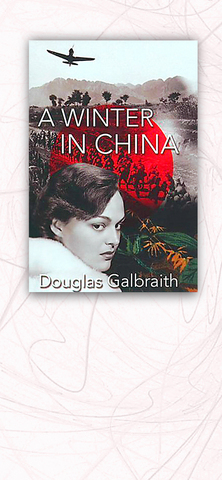
This sets the scene for what is to come: The expatriates' comfortable lives are about to be disrupted by the Japanese invasion of China, and this is their first taste of what it is going to be like. The wit and slightly bored indifference that characterize their lives is confronted by violence, pain and death. And things quickly get a great deal worse.
There follows a series of flash-backs: Sally's decision in England to go to China, her father's telegram trying to get her back because of the "international situation," and her arrival in Shanghai. Events then move to Nanjing and the Japanese assault on the city. Most of the expatriates leave by riverboat for the coast, but on account of hostile shelling, the boat leaves prematurely. Hugh is on it, but Sally is left behind.
Ever the well-meaning Briton, she quickly becomes involved in charitable work with refugees. The dozen or so expatriates left in the city enjoy a strange immunity; it is rumored that Hitler sent a telegram to Tokyo insisting that their Safety Zone, including his arms salesman, be respected. It is thus from the viewpoint of a protected foreigner that Sally comes to observe some of the brutalities of the Nanjing occupation.
The author is not, it would seem, a man to relish describing rapes and murder, and having both observed by a well-educated English lady. He, Sally and the reader all understand full well what is happening when the attempted disguises of young Chinese girls who have shaved their heads and dirtied their faces are seen through and they are raped under the trees by Japanese soldiers. But narrating these events as perceived by a young Englishwoman allows the author the opportunity to maintain his reserve -- something for which he was no doubt very grateful.
Douglas Galbraith then takes an even greater risk in depicting the Christmas and New Year's celebrations of the embattled expats as high comedy. There are two ways to interpret this: Either the author is challenging himself to take the most unlikely tack in describing these horrific days, or he is commenting on the way human beings relate to terrible events by resorting to farce. My guess is that he is doing both of these at once.
Nonetheless, Sally does experience the events in Nanjing directly one day when she goes on an unaccompanied walk through the city. There she witnesses gang-rape and the results of mass shootings and mutilation. This is, as it were, the author's antidote to the escapist high jinks that went on just before.
During her time in the city Sally also has a brief fling with Peter, the American photographer. For the rest of the book you aren't sure which of the two men in her life she will opt for, and the issue isn't resolved until the last page. There is even a mildly explicit sex scene on the liner heading home without the name of her partner in bed being revealed.
One interesting aspect of the novel is the author's undisguised dislike of journalists. Perhaps he has been one himself -- self-loathing is a common affliction among reporters. But the fact remains that seemingly wherever the opportunity arises, newspapers and those who work on them are ridiculed. There are many examples; news reports naturally figure frequently in a story like this. One paper runs the soothing and hypocritical headline "Imperial Army sheathes Bayonets in Harmonious Nanking."
Elsewhere the following dialogue occurs when Peter is filling out a form: "Any special skills in that box please."
"I'm a journalist."
"Just name and nationality then."
There's no doubt that Galbraith has done his homework. He is as well-versed on the movies of the day as he is on the developments in European politics, and even the English poet W. H. Auden's visit (with Christopher Isherwood) to China in the same era is quietly inserted in the tale.
Essentially this novel seeks to look beneath the surface of 1930s expatriate lives in China. Everyone knows there were beheadings and cocktail parties going on side by side, but Galbraith offers us a great deal more. His heroine, for one thing, has many of the qualities he proves he has himself: wit, skepticism, irony and a long historical perspective. Other characters are handled well, too, but none as in-depth as she is.
Whatever else it is, this is a highly intelligent novel. In some ways it may be too intelligent for its own good. It just manages to miss out, for example, on the stylishness and instantly identifiable tone of classic writers like Anthony Powell or Evelyn Waugh, two authors with whom Galbraith otherwise has quite a lot in common.

In late October of 1873 the government of Japan decided against sending a military expedition to Korea to force that nation to open trade relations. Across the government supporters of the expedition resigned immediately. The spectacle of revolt by disaffected samurai began to loom over Japanese politics. In January of 1874 disaffected samurai attacked a senior minister in Tokyo. A month later, a group of pro-Korea expedition and anti-foreign elements from Saga prefecture in Kyushu revolted, driven in part by high food prices stemming from poor harvests. Their leader, according to Edward Drea’s classic Japan’s Imperial Army, was a samurai

The following three paragraphs are just some of what the local Chinese-language press is reporting on breathlessly and following every twist and turn with the eagerness of a soap opera fan. For many English-language readers, it probably comes across as incomprehensibly opaque, so bear with me briefly dear reader: To the surprise of many, former pop singer and Democratic Progressive Party (DPP) ex-lawmaker Yu Tien (余天) of the Taiwan Normal Country Promotion Association (TNCPA) at the last minute dropped out of the running for committee chair of the DPP’s New Taipei City chapter, paving the way for DPP legislator Su
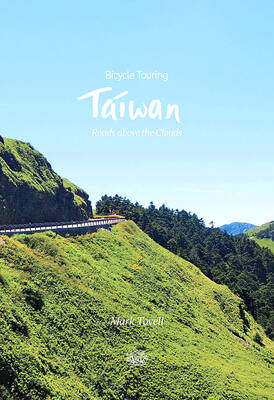
It’s hard to know where to begin with Mark Tovell’s Taiwan: Roads Above the Clouds. Having published a travelogue myself, as well as having contributed to several guidebooks, at first glance Tovell’s book appears to inhabit a middle ground — the kind of hard-to-sell nowheresville publishers detest. Leaf through the pages and you’ll find them suffuse with the purple prose best associated with travel literature: “When the sun is low on a warm, clear morning, and with the heat already rising, we stand at the riverside bike path leading south from Sanxia’s old cobble streets.” Hardly the stuff of your
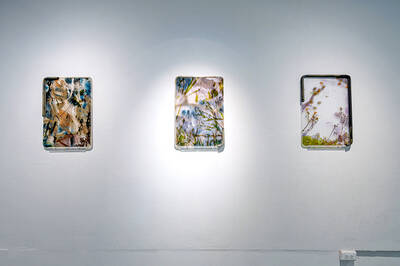
Located down a sideroad in old Wanhua District (萬華區), Waley Art (水谷藝術) has an established reputation for curating some of the more provocative indie art exhibitions in Taipei. And this month is no exception. Beyond the innocuous facade of a shophouse, the full three stories of the gallery space (including the basement) have been taken over by photographs, installation videos and abstract images courtesy of two creatives who hail from the opposite ends of the earth, Taiwan’s Hsu Yi-ting (許懿婷) and Germany’s Benjamin Janzen. “In 2019, I had an art residency in Europe,” Hsu says. “I met Benjamin in the lobby


 RSS
RSS