


Life isn't safe for the poor souls who find themselves in Ian McEwan novels. They get their throats slit by near strangers in Venice, take fatal tumbles from hot air balloons, get menaced by delusional stalkers and Nazi-trained black dogs or disappear in the Blitz's downpour of fire and bricks.
Even after death, the fun goes on: Bodies are buried in cement or hacked to bits in a bathtub.
McEwan isn't the jolliest writer, but his skill at weaving together suspense, psychological depth and beautiful prose makes him among Britain's best, exemplified by the literary flowering of his best-selling Atonement.
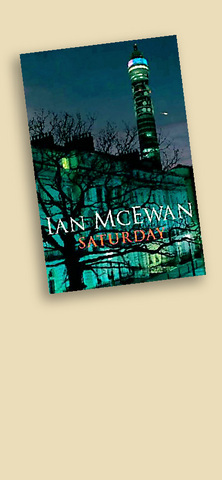
Now comes his follow-up novel, Saturday, which dapples familiar darkness with glimmers of light. There's menace here, but also, for McEwan, tenderness and domestic contentment to an unusual degree.
His response to the darkening events begun by Sept. 11, Saturday begins with an image that seems to herald fresh apocalypse. London neurosurgeon Henry Perowne wakes in the predawn hours in February 2003 and watches from his bedroom window as a plane sputters, in flames, toward Heathrow Airport.
Henry suspects terrorism, then learns that isn't the case as he listens to the early morning news in the kitchen with his 18-year-old son, Theo.
A talented blues guitarist, Theo offers his philosophy about the current world: "When we go on about the big things, the political situation, global warming, world poverty, it all looks really terrible ... But when I think small, closer in -- you know, a girl I've just met, or this song we're going to do with Chas, or snowboarding next month, then it looks great. So this is going to be my motto -- think small."
Saturday considers things both large and small, and how sometimes, one can turn into the other. In the same way, the novel itself focuses down (it covers only this single day of Henry's weekend) but its ideas -- about war, religion, parenthood, aging and the constant threat of violence -- ripple outward.
With his wife, Rosalind, a newspaper attorney, gone to an emergency court hearing, Henry looks forward to a Saturday full of little pleasures: a game of squash with his colleague Jay, shopping for fresh seafood at the market and finally making dinner for his family -- including his daughter Daisy and father-in-law Grammaticus, both poets, and both visiting from France.
Then he runs into Baxter, literally. Trying to drive around roadblocks set up for the thousands of people flooding London to protest the coming war in Iraq, Henry sideswipes a car. Baxter, a young thug inside it, steps out with two cronies and starts a confrontation that escalates toward violence -- until Henry uses his medical knowledge to defuse the situation.
This ugly event hangs over the rest of Henry's day. It even turns his friendly squash game into a territorial struggle between friends. The encounter has dangerous fallout for Henry's entire family that evening, returning McEwan to sinister turf familiar from his past novels.
The threat of the unknown -- for the Perownes and for the entire globe -- is the main subject in Saturday, allowing McEwan to muse on the fragility of happiness in the face of unexpected dangers. Indulging his worst fears about civilization's collapse, Henry imagines the future: "The old folk crouching by their peat fires will tell their disbelieving grandchildren of standing naked in mid-winter under jet streams of hot clean water, of lozenges of scented soaps and of viscous amber and vermilion liquids they rubbed into their hair to make it glossy and more voluminous than it really was, and of thick white towels as big as togas, waiting on warming racks."
But McEwan pulls us back from this brink and saves, for now, the Perownes' safety. There's something almost revolutionary, at a time when dysfunction is the norm in fiction, in his decision to write about a happy, talented family and an enduring marriage. He even finds sympathy for Baxter, whose foul nature comes from complicated sources.
Saturday isn't perfect. The use of Matthew Arnold's poem Dover Beach as a plot point feels like a stretch. Also the measured, calm coda following the book's frightening climax doesn't ring true. Still, it's a thoughtful, measured and mature look at our world today, as we try to keep it spinning forward and not back.
Ian McEwan was born on June 21, 1948, in Aldershot, England. He studied at the University of Sussex. While completing his MA degree in English Literature at the University of East Anglia, he took a creative writing course taught by Malcolm Bradbury and Angus Wilson.
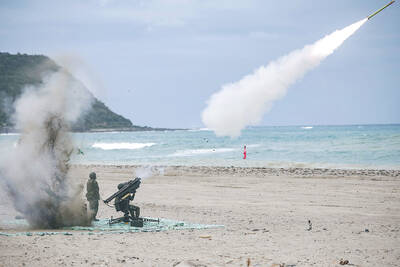
In late October of 1873 the government of Japan decided against sending a military expedition to Korea to force that nation to open trade relations. Across the government supporters of the expedition resigned immediately. The spectacle of revolt by disaffected samurai began to loom over Japanese politics. In January of 1874 disaffected samurai attacked a senior minister in Tokyo. A month later, a group of pro-Korea expedition and anti-foreign elements from Saga prefecture in Kyushu revolted, driven in part by high food prices stemming from poor harvests. Their leader, according to Edward Drea’s classic Japan’s Imperial Army, was a samurai

The following three paragraphs are just some of what the local Chinese-language press is reporting on breathlessly and following every twist and turn with the eagerness of a soap opera fan. For many English-language readers, it probably comes across as incomprehensibly opaque, so bear with me briefly dear reader: To the surprise of many, former pop singer and Democratic Progressive Party (DPP) ex-lawmaker Yu Tien (余天) of the Taiwan Normal Country Promotion Association (TNCPA) at the last minute dropped out of the running for committee chair of the DPP’s New Taipei City chapter, paving the way for DPP legislator Su
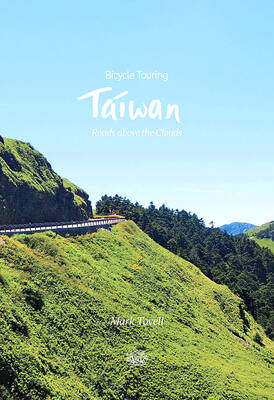
It’s hard to know where to begin with Mark Tovell’s Taiwan: Roads Above the Clouds. Having published a travelogue myself, as well as having contributed to several guidebooks, at first glance Tovell’s book appears to inhabit a middle ground — the kind of hard-to-sell nowheresville publishers detest. Leaf through the pages and you’ll find them suffuse with the purple prose best associated with travel literature: “When the sun is low on a warm, clear morning, and with the heat already rising, we stand at the riverside bike path leading south from Sanxia’s old cobble streets.” Hardly the stuff of your
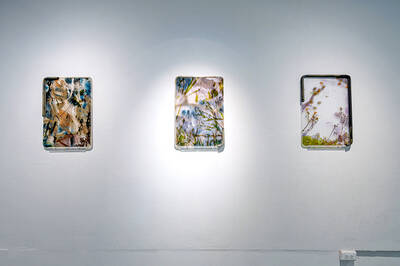
Located down a sideroad in old Wanhua District (萬華區), Waley Art (水谷藝術) has an established reputation for curating some of the more provocative indie art exhibitions in Taipei. And this month is no exception. Beyond the innocuous facade of a shophouse, the full three stories of the gallery space (including the basement) have been taken over by photographs, installation videos and abstract images courtesy of two creatives who hail from the opposite ends of the earth, Taiwan’s Hsu Yi-ting (許懿婷) and Germany’s Benjamin Janzen. “In 2019, I had an art residency in Europe,” Hsu says. “I met Benjamin in the lobby


 RSS
RSS