


Taiwan's pride and joy, supermodel Lin Chih-ling (
Also appearing at the same awards ceremony was another Taiwanese beauty, Stephanie Hsiao (
The two beauty queens may look cozy together in the press photos and may have swapped niceties, but reading between the lines there is the inevitable

PHOTO: TAIPEI TIMES
competition.
For film director Tsai Ming-liang (蔡明亮), this past week has been a a big success. Box-office receipts of his latest work, The Wayward Cloud (天邊一朵雲), reached NT$7 million just two-and-a-half days after it hit the big screen. It is an amazing commercial achievement for the Taiwanese film industry since most Taiwanese films ticket sales are usually under NT$1 million. The subject matter of the film has drawn all kinds of audience members to try out the art-house experience. For example, many middle-aged, weird-looking men have reportedly emerged from nowhere to invade the theaters located in age-discriminatory, trendy districts. Tsai was said to welcome such new fans, believing it's a sign of greater acceptance of his work.
Family values and baby talk are still hot this week. Actress Lee Chien-rong (李蒨蓉) made her first public appearance yesterday after confirming the news of her second pregnancy. Lee proudly showed off her baby-bearing belly at Fendi's 2005 spring collection fashion show and couldn't stop her baby talk throughout the show. Singer Shun Zi (順子) is getting chubbier these days. When asked if she got pregnant before her November wedding, Shun Zi modestly replied that she wouldn't do something like ``get on the bus before buying a ticket.''

PHOTO: TAIPEI TIMES
Even though the gossip-generating couple, Jay Chou (

PHOTO: TAIPEI TIMES
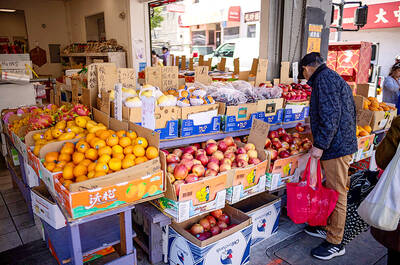
Ajay Verma, a consultant gastroenterologist at Kettering general hospital in Northamptonshire, says our gut is a “complex machine.” “It is constantly providing us with the nutrition we need, initially to grow and develop, and then for us to survive, thrive and repair from injury and illness.” How can we keep it functioning well? Put simply: “Make sure what you put into it is balanced, and that you clear out its waste products adequately,” Verma says. “In a general gastroenterology clinic, the most common conditions we see are irritable bowel syndrome (IBS), gastroesophageal reflux disease, inflammatory bowel disease and constipation,” says Nisha
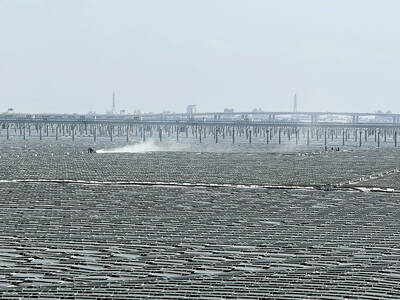
The arithmetic is straightforward and uncomfortable. By the end of 2025, Taiwan had committed itself to a 50-30-20 electricity mix — half natural gas, 30 per cent coal, 20 per cent renewables. The Ministry of Economic Affairs’s (MOEA) own monthly energy reports tell a different story. Natural gas reached 47.8 per cent of generation last year. Coal stood at 35.4 per cent, comfortably above its target ceiling. Renewables came in at 13.1 per cent, well short of the 20 per cent Taipei had pledged a decade earlier. Installed renewable capacity reached roughly half of the 12 gigawatts (GW) the government
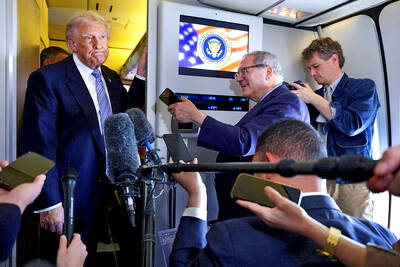
Last week US President Donald Trump was asked by a reporter whether he would speak on the phone to the President of Taiwan. “l’ll speak to him. I speak to everybody. We have that situation very well in hand,” Trump said. This marked the second time in a couple of weeks he had said he would talk to the President of Taiwan. In 2016 he famously took a call from then-president Tsai Ing-wen (蔡英文), when he was president-elect. Despite warnings that the apocalypse was nigh because of a phone call, the world quickly forgot about the conversation between two democratically-elected presidents.
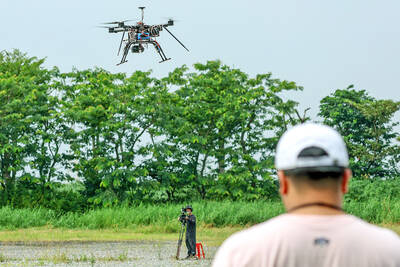
Taiwan’s drone exports are taking off, fuelled by the war in Ukraine, as Taiwanese companies seek a stake in the fast-growing global market for unmanned aerial vehicles (UAV). Low-cost drones used for reconnaissance and strikes are in high demand as governments around the world boost defense spending in the face of intensifying conflicts. A relative new player in the increasingly competitive industry, Taiwan’s pitch is to be an “Asian hub” for the production of UAVs and components free of Chinese materials, or “non-red.” That means its UAVs can be up to three times more expensive than their Chinese competitors, like the world’s biggest


 RSS
RSS